Rank with the Right Content
Two pages can target the same keyword and still perform completely differently in Google. One ranks at the top and converts well, while the other barely gets traffic. The difference is rarely about backlinks or word count. It usually comes down to one factor: intent mismatch.
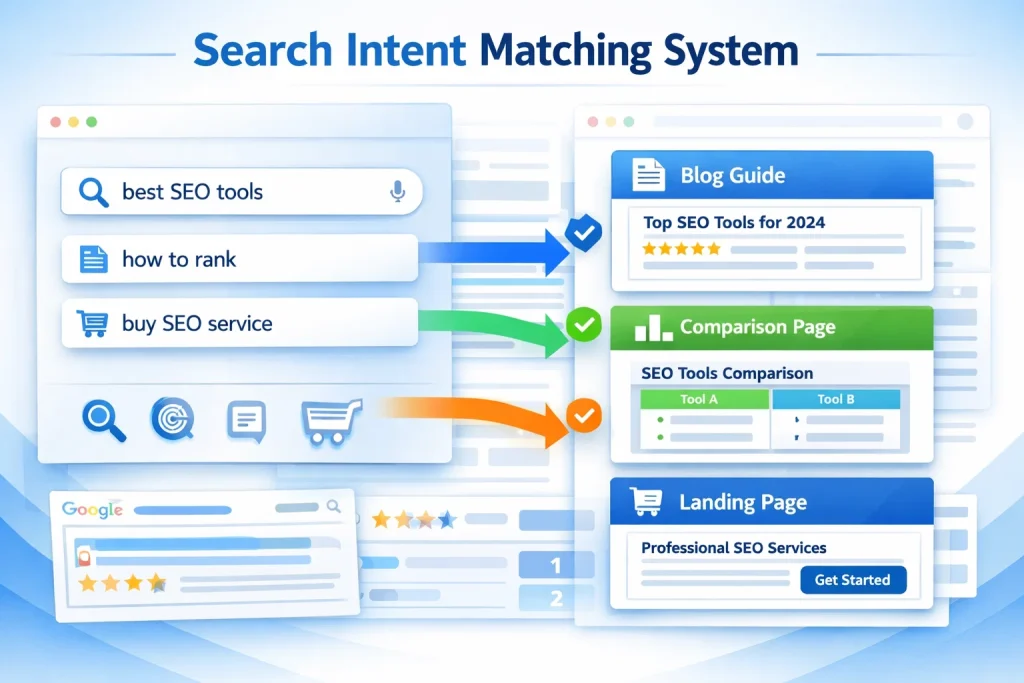
Search engines are built to understand what users actually want, not just what they type. A query like “best SEO tools” is not just a keyword—it signals comparison behavior. If your page is a generic informational blog instead of a comparison guide, it will struggle to perform, even if it is well written.
This is why understanding search intent has become a core SEO skill. It allows you to align content with what users expect, improving both rankings and engagement quality.
What Is Search Intent in SEO
Search intent refers to the underlying purpose behind a user’s search query. It explains why someone is searching, not just what they are searching for.
Search engines like Google prioritize pages that best satisfy this intent. That means your content must go beyond keywords and directly match user expectations in format, depth, and structure.
Why Keywords Alone Are Not Enough
Keywords only tell you what users are searching. They do not explain what outcome the user wants. Two people can search the same term but expect completely different results.
This is why keyword targeting without intent analysis often leads to poor rankings or low engagement, even if traffic appears.
How Google Understands User Intent
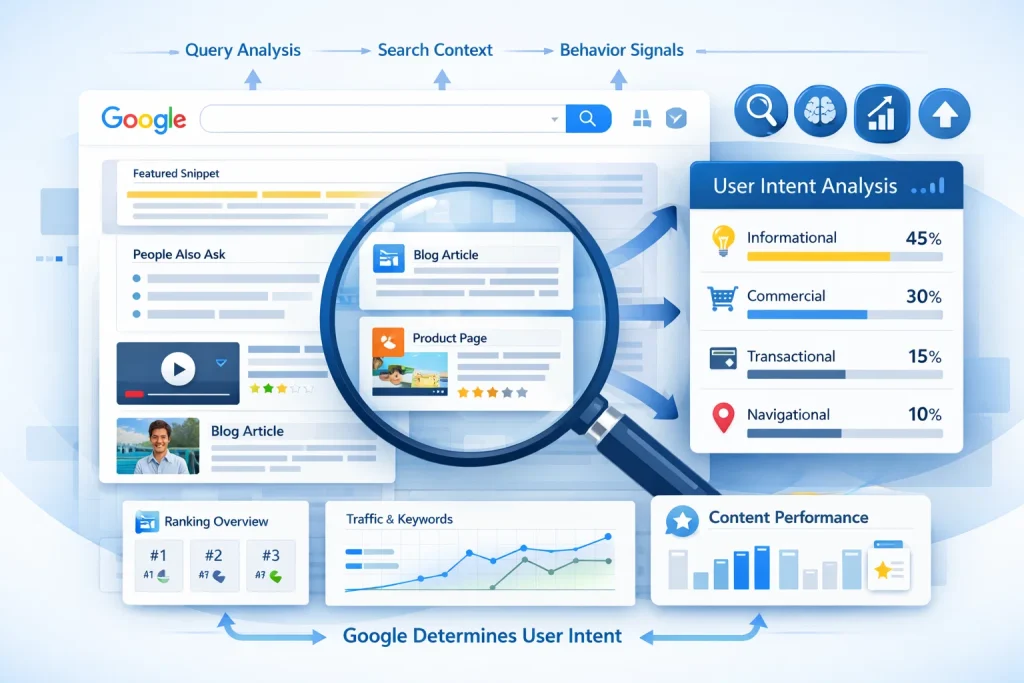
Google analyzes patterns across millions of searches. It studies click behavior, content formats, bounce rates, and engagement signals to determine what type of content best satisfies a query. Over time, it ranks pages that consistently match user expectations for that intent.
Types of Search Intent in SEO
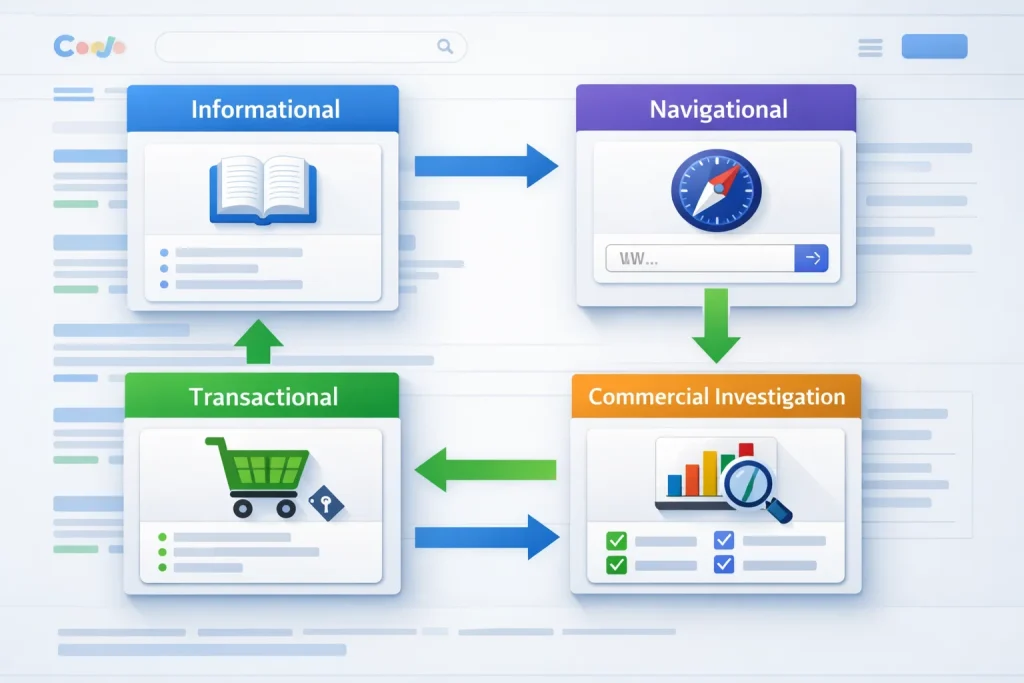
Search intent can be grouped into four main categories. Each type represents a different stage of the user journey and requires a different content approach.
Before choosing keywords or writing content, it is important to understand which intent you are targeting, because the wrong format can completely reduce your ranking potential.
- Informational intent
- Navigational intent
- Transactional intent
- Commercial investigation
Why Search Intent Matters for SEO Rankings
Search intent plays a direct role in how Google evaluates content relevance. Even if a page is optimized technically, it will not perform well if it fails to satisfy user intent.
Matching intent improves user satisfaction signals such as time on page and engagement, which indirectly influence rankings. It also increases conversion potential because users find exactly what they expect.
Understanding intent allows you to design content that aligns with both search engines and user behavior.
- Improves ranking potential
- Reduces bounce rate
- Increases dwell time
- Improves conversions
- Aligns with Google algorithms
How to Identify Search Intent from SERPs
One of the most effective ways to identify search intent is by analyzing the search engine results page (SERP). Google already shows you what type of content it believes best satisfies the query.
By studying the top-ranking pages, you can reverse-engineer intent and align your content accordingly.
Analyze Top Ranking Pages
Look at the first page of results. If most pages are blog guides, the intent is informational. If they are product pages, the intent is transactional. This pattern reveals what Google prioritizes.
Check Content Format (Blogs, Product Pages, Videos)
Content format is a strong indicator of intent. Tutorials, listicles, landing pages, and comparison pages all signal different user expectations.
Look at SERP Features
Features like featured snippets, “People Also Ask,” shopping ads, or video results provide additional clues about what users want from that query.
Keyword Modifiers and Search Intent Signals
Certain words within keywords act as direct indicators of intent. These modifiers help you quickly categorize search behavior without guessing.
Understanding these signals allows you to structure content correctly from the beginning instead of adjusting it later.
- “how,” “what,” “guide” → informational
- “buy,” “price,” “order” → transactional
- “best,” “top,” “review” → commercial investigation
- brand names → navigational
Matching Content with Search Intent
Identifying intent is only the first step. The real SEO impact comes from aligning your content format and structure with that intent.
If the content does not match what users expect, they will leave quickly, and rankings will suffer over time.
Content Format Alignment
Each intent type requires a different format. Informational queries need guides, commercial queries need comparisons, and transactional queries need landing pages.
Content Depth and Structure
The level of detail also matters. Informational content often requires depth, while transactional pages focus more on clarity and conversion elements.
CTA Placement Based on Intent
Calls-to-action should match intent. Informational content should guide users, while transactional content should push conversions more directly.
Common SEO Mistakes in Search Intent Optimization
Many websites fail in SEO not because of poor content, but because they misunderstand intent. They target keywords without analyzing what users actually expect to see.
This leads to content that may rank temporarily but fails to sustain performance due to poor engagement metrics.
- Targeting wrong intent
- Ignoring SERP analysis
- Over-optimizing keywords
- Mismatched content format
- Weak user experience
Does Blog Content Help Target Search Intent
Blog content is especially powerful for capturing informational and early-stage commercial intent. It allows you to answer questions, educate users, and build trust before they reach a buying decision.
When structured properly, blogs also support other pages by guiding users deeper into your website through internal linking.
- Targets informational queries
- Supports conversion pages
- Builds trust
- Improves internal linking
- Expands keyword reach
Step-by-Step Process to Identify Search Intent
A structured approach ensures you consistently target the right intent across all content. Without a process, intent analysis becomes guesswork.
Following a repeatable system helps maintain accuracy and improves long-term SEO performance.
- Choose a keyword
- Analyze SERP
- Identify intent type
- Study competitors
- Create matching content
Final Thoughts on Search Intent for SEO
Search intent is one of the most important factors in modern SEO because it directly connects user behavior with ranking performance. Keywords alone are no longer enough to guarantee visibility or engagement.
Websites that consistently analyze intent and align their content accordingly are more likely to rank higher, attract qualified traffic, and achieve stronger conversions. Instead of focusing only on keywords, successful SEO strategies focus on understanding and satisfying user intent at every stage.
FAQs about identifying search intent
1. What is search intent in SEO?
Search intent is the reason behind a user’s search query and what they expect to find.
2. What are the types of search intent?
The main types are informational, navigational, transactional, and commercial investigation.
3. How do you identify search intent?
By analyzing SERPs, content formats, and keyword modifiers.
4. Why is search intent important for SEO?
It ensures your content matches user expectations, improving rankings and engagement.
5. How does Google determine search intent?
Google uses user behavior signals, click patterns, and content relevance analysis.
6. Can one keyword have multiple intents?
Yes, some keywords can show mixed intent depending on context and user behavior.
7. How do you optimize content for search intent?
By aligning content format, structure, and depth with what users expect from that query.