
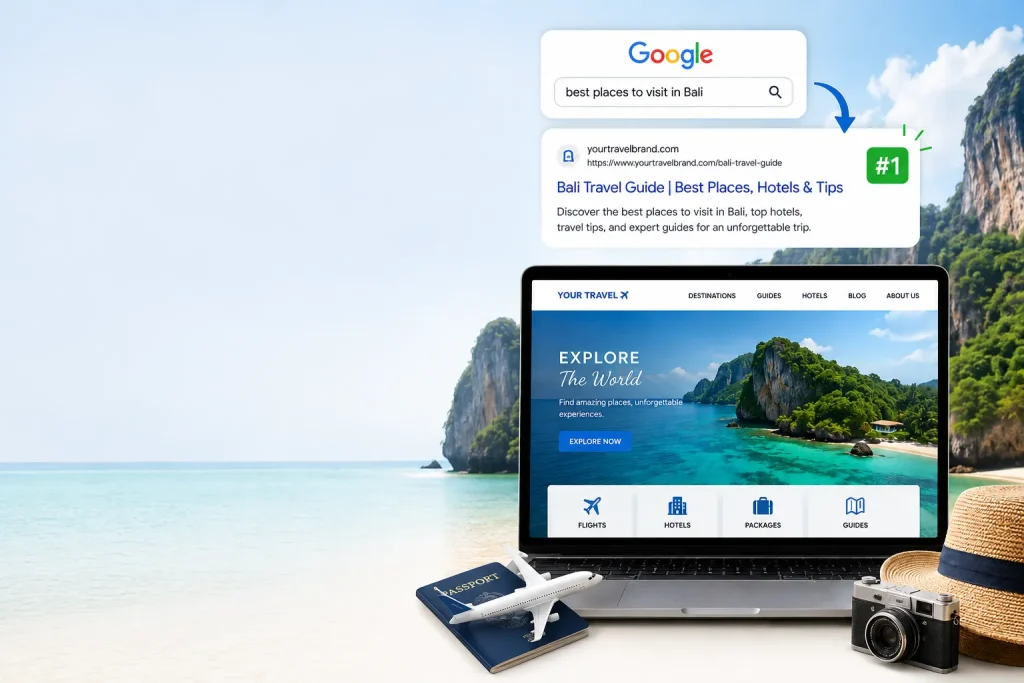
Travel Website SEO Optimization Tips
The travel industry is more competitive than ever, and most travelers begin their journey with a Google search. They type queries like “best places to visit in Bali,” “cheap Europe travel packages,” or “luxury safari tours Africa” long before they ever book.
In this environment, travel website SEO isn’t a side project—it’s a core growth engine. Effective travel website SEO optimization directly impacts your visibility, authority, and bookings. Ranking higher on Google means capturing more early-stage travelers, generating organic traffic at a lower customer acquisition cost, and turning casual readers into paying customers.
After analyzing top competitors in the travel SEO industry, including leading SEO agencies and travel marketing blogs, one thing becomes clear: the websites dominating Google are not just using keywords — they’re building authority, publishing experience-driven content, optimizing technical SEO, and creating complete travel ecosystems around user intent.
This guide combines competitor insights with advanced SEO strategies to help travel businesses improve rankings, increase traffic, and generate more bookings.
What Is Travel Website SEO?
Definition of Travel Website SEO
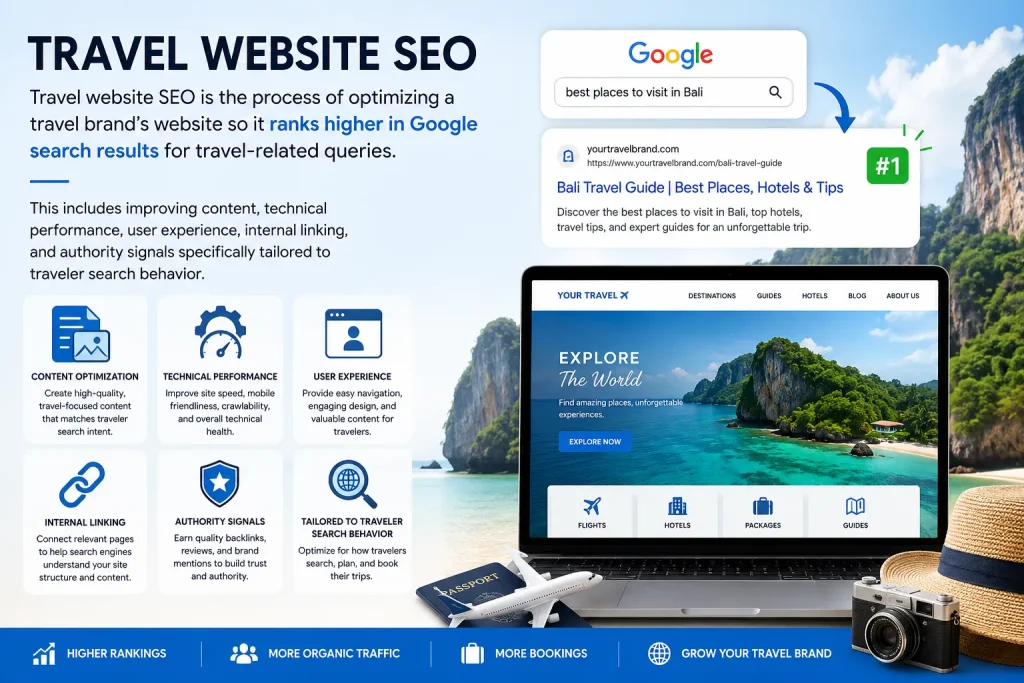
Travel website SEO is the process of optimizing a travel brand’s website so it ranks higher in Google search results for travel-related queries. This includes improving content, technical performance, user experience, internal linking, and authority signals specifically tailored to traveler search behavior.
Unlike general SEO, travel SEO focuses heavily on:
- Destination-based keywords
- Seasonal search trends
- Booking intent
- Local search optimization
- Experience-based content
- Visual storytelling
A successful travel website SEO optimization strategy helps travel brands appear when travelers search for:
- Destination ideas
- Hotel recommendations
- Tour packages
- Travel itineraries
- Budget travel tips
- Luxury travel experiences
Why SEO Matters in the Travel Industry
Travelers rarely make impulsive booking decisions. Instead, they:
- Compare destinations
- Read travel blogs
- Watch videos
- Check reviews
- Research itineraries
- Compare prices
This research process creates massive SEO opportunities. When your travel website ranks for traveler questions, your brand becomes a trusted source before competitors even appear. Organic traffic also provides long-term value. Unlike paid ads, which stop producing results when spending ends, SEO-driven content can continue generating traffic and bookings for years.

How Travel Websites Rank on Google
Google uses hundreds of ranking factors, but the most important for travel websites include:
- High-quality travel content
- Search intent optimization
- Technical SEO
- Mobile usability
- Page speed
- Internal linking
- Backlink authority
- User experience signals
- EEAT (Experience, Expertise, Authoritativeness, Trustworthiness)
Competitor analysis shows that the highest-ranking travel websites consistently improve these areas over time.
How Google Evaluates Travel Websites
Search Intent Matching
Google now prioritizes intent over simple keyword placement. Travel searches generally fall into two categories:
Informational Intent
Examples:
- Best places to visit in Venice
- Things to do in Thailand
- Best time to visit the Maldives
Commercial Intent
Examples:
- Venice tour packages
- Cheap flights to Bali
- Luxury safari tours in Africa
The best-performing travel websites create content specifically tailored to each type of search intent.
Content Quality and EEAT
Travel is one of the industries where Google heavily evaluates EEAT:
- Experience
- Expertise
- Authoritativeness
- Trustworthiness
Travel websites that demonstrate:
- Real travel experiences
- Local insights
- Detailed itineraries
- Honest recommendations
- Transparent pricing
Often rank better than generic content websites. Google increasingly rewards authentic, experience-driven travel content.
User Experience Signals
Google measures how users interact with your website. Important UX metrics include:
- Bounce rate
- Time on page
- Mobile usability
- Navigation quality
- Core Web Vitals
Travel websites with slow speeds, poor navigation, or intrusive pop-ups often lose rankings and conversions simultaneously.
Freshness and Content Updates
Travel information changes constantly:
- Prices change
- Attractions open or close
- Travel rules evolve
- Weather patterns shift
Updating travel content regularly signals freshness and trustworthiness to Google. Outdated travel guides often lose rankings over time.
Keyword Research Tips for Travel Website SEO Optimization
Find High-Intent Travel Keywords
Successful travel SEO begins with understanding what travelers are actually searching for.
Examples:
- Best places to visit in Bali
- Cheap Europe travel packages
- Luxury safari tours in Africa
- Family-friendly Maldives resorts
These keywords indicate strong user intent and higher conversion potential.
Target Long-Tail Keywords
Long-tail keywords are less competitive and often convert better.
Examples:
- 7-day Bali itinerary for couples
- Budget Europe trip from Bangladesh
- Family safari packages in Kenya
Long-tail searches help newer travel websites compete more effectively.
Build Destination-Based Topic Clusters
Competitor analysis shows that top travel websites organize content into destination clusters.
Example: Bali Content Cluster
- Bali itinerary
- Bali nightlife
- Bali beaches
- Bali travel budget
- Bali hotels guide
This creates topical authority and helps Google understand your expertise on a destination.
Perform Competitor Keyword Gap Analysis
Use tools like:
- Ahrefs
- SEMrush
- Google Search Console
to identify keywords that competitors rank for that your website currently misses. This strategy uncovers valuable content opportunities quickly.
Create High-Quality Travel Content That Ranks
Destination Guides
Destination guides remain one of the strongest SEO assets for travel websites. High-performing guides include:
- Costs
- Best attractions
- Transport tips
- Local food recommendations
- Seasonal advice
- Safety information
Comprehensive content performs better than thin pages.
Travel Itineraries
Detailed itineraries reduce decision fatigue for travelers.
Examples:
- 3-Day Paris Itinerary
- 7-Day Thailand Backpacking Route
- Complete Italy Honeymoon Guide
These pages often rank well because they directly solve traveler planning problems.
Travel Comparison Articles
Comparison content works extremely well for both SEO and conversions.
Examples:
- Bali vs Phuket
- Budget vs Luxury Europe Tours
- Maldives vs Bora Bora
These articles target travelers who are close to making booking decisions.
Seasonal Travel Content
Seasonal content captures recurring search demand.
Examples:
- Best time to visit Ladakh
- Winter travel destinations in Europe
- Bali rainy season travel guide
This content remains valuable year after year.
Visual and Video Content
Competitor research shows that visual-heavy travel content performs significantly better.
Travel brands should use:
- Short-form videos
- Reels
- Photo galleries
- Interactive maps
- Drone footage
Visual content improves:
- Engagement
- Time on site
- Social sharing
- Conversion rates
Build a Travel Content Funnel
One major weakness in competitor articles is the lack of a funnel strategy. Instead of publishing random blogs, successful travel websites create content funnels:
| Funnel Stage | Content Type |
|---|---|
| Awareness | Destination blogs |
| Consideration | Comparison guides |
| Decision | Tour pages & booking pages |
| Retention | Email newsletters & travel updates |
This approach moves readers naturally from inspiration to booking.
On-Page SEO Optimization Tips for Travel Websites
Optimize SEO Titles
Include target keywords naturally.
Example:
“Complete Bali Travel Guide for First-Time Visitors”
Avoid clickbait titles.
Use Keyword-Rich Meta Descriptions
Meta descriptions improve click-through rates.
Example:
“Discover the best Bali itinerary, hotels, beaches, and travel tips with this complete SEO-optimized guide.”
Use Proper Heading Structure
Organize content using:
- H1
- H2
- H3
This improves readability and helps Google understand your content hierarchy.
Optimize Travel Images
Use:
- Compressed images
- Descriptive filenames
- Keyword-rich alt text
Example:family-trip-bali-beach.jpg
Alt text:
“Family enjoying Bali sunset beach”
Add Internal Links Strategically
Internal linking helps distribute authority across your website.
Link:
- Blogs to booking pages
- Destination guides to itineraries
- Comparison articles to package pages
This improves both SEO and conversions.
Technical SEO Tips for Higher Rankings
Improve Site Speed
Slow travel websites lose traffic and bookings.
Optimize:
- Images
- Hosting
- JavaScript
- Caching
- CDN delivery
Page speed directly impacts rankings and user experience.
Mobile Optimization
Most travel searches happen on mobile devices.
Google prioritizes:
- Responsive design
- Mobile usability
- Core Web Vitals
Poor mobile experiences hurt rankings significantly.
Use HTTPS Security
HTTPS builds trust and acts as a lightweight ranking factor.
Structured Data for Travel Websites
Use schema markup such as:
- FAQ schema
- Review schema
- Hotel schema
- Tour schema
Structured data improves visibility in rich snippets and AI-powered search results.
How Travel Websites Build Topical Authority
Top-ranking travel websites don’t publish random articles.
They build deep topical authority.
Example:
Italy Travel Hub
- Italy itinerary
- Italy travel budget
- Italy food guide
- Best cities in Italy
- Italy transportation tips
All pages interlink strategically. This signals expertise to Google.
Link Building Strategies for Travel SEO
Guest Posting
Write for reputable travel blogs to earn backlinks.
Digital PR Campaigns
Create data-driven travel reports and pitch them to media publications.
Influencer Collaborations
Partner with travel creators who can mention and link back to your website.
Create Linkable Assets
Examples:
- Free destination PDFs
- Printable itineraries
- Interactive travel maps
- Budget calculators
These assets naturally attract backlinks.
Local SEO for Travel Agencies and Tour Operators
If you run a local travel business, local SEO becomes essential.
Optimize:
- Google Business Profile
- Customer reviews
- Local keywords
- City landing pages
Examples:
- Travel agency in Dubai
- Nepal trekking tours
- Cox’s Bazar tour packages
Local SEO improves visibility for regional searches.
AI Search and the Future of Travel SEO
Competitor articles rarely discuss AI SEO in depth, which creates an opportunity to outperform them.
AI Search Is Changing Travel SEO
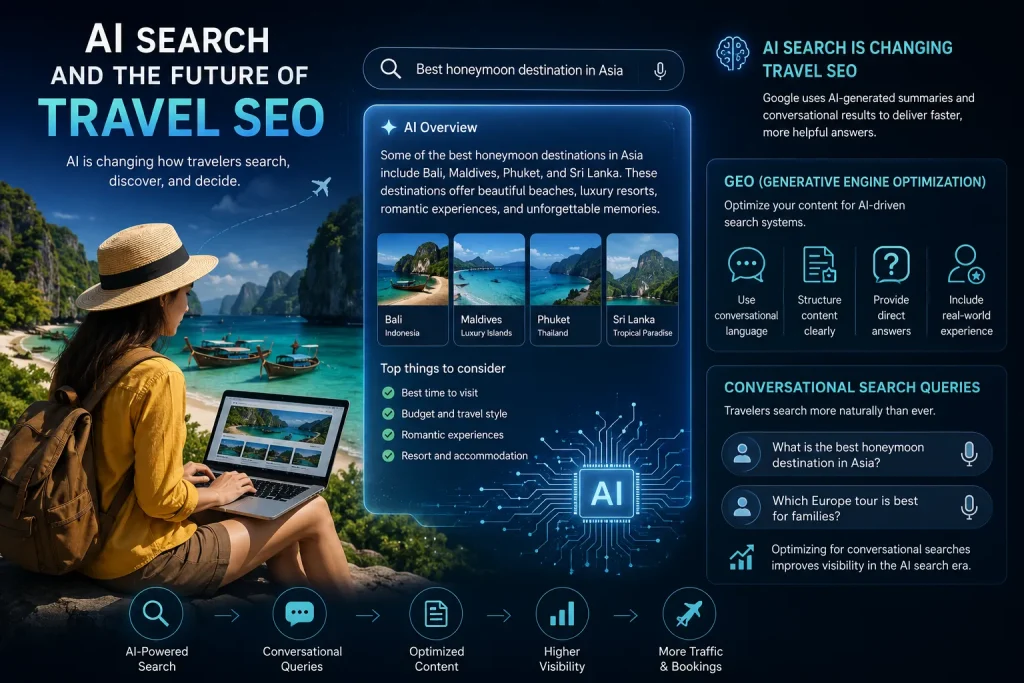
Google increasingly uses AI-generated summaries and conversational search results. This changes how travelers discover content.
GEO (Generative Engine Optimization)
GEO focuses on optimizing content for AI-driven search systems.
Travel websites should:
- Use conversational language
- Structure content clearly
- Provide direct answers
- Include real-world experience
Conversational Search Queries
Travelers increasingly search naturally:
- What is the best honeymoon destination in Asia?
- Which Europe tour is best for families?
Optimizing for these conversational searches improves visibility in AI search environments.
Common Travel SEO Mistakes
Many travel websites fail because they:
- Publish thin content
- Ignore search intent
- Overuse keywords
- Neglect mobile optimization
- Use slow websites
- Skip internal linking
- Fail to update old content
Avoiding these mistakes creates a major competitive advantage.
BlogWriting.Services help travel websites rank higher on Google by turning content into a strategic growth engine instead of an afterthought. The platform delivers SEO‑optimized travel blogs—destination guides, itineraries, hotel posts, comparison articles, and local‑experience stories—built around search intent, high‑intent keywords, and EEAT‑focused storytelling.
By implementing keyword‑driven topic clusters, funnel‑aligned content, and consistent publishing, it strengthens topical authority, improves user engagement, and sends clearer signals to Google. It also structures content for AI search, featured snippets, and conversational queries, while weaving in strategic CTAs that guide readers from inspiration to booking, turning organic traffic into measurable conversions.

