Rank Higher with Smart Content
Many websites publish content consistently but still struggle to rank. They target keywords, write blogs, and optimize pages, yet traffic remains low and inconsistent. The problem is not always content quality or effort. In most cases, the issue is lack of structure.
Search engines no longer evaluate pages in isolation. Instead, they assess how well your entire website covers a topic. If your content feels scattered or disconnected, it becomes difficult for search engines to understand your expertise.
This is where topical relevance becomes critical. It is not about publishing more content, but about building a connected system of content that signals authority, depth, and consistency within a specific subject area.
What Is Topical Relevance in SEO
Topical relevance refers to how well your website covers a specific subject and how clearly your content pieces are connected around that topic. It helps search engines understand that your site is not just targeting random keywords but is focused on a defined niche.
Topical Relevance vs Topical Authority
Topical relevance is about coverage and connection, while topical authority is the result of doing it well over time. When your content consistently demonstrates relevance across multiple related topics, authority naturally follows.
Why Search Engines Value Topic Coverage
Search engines aim to deliver the most reliable and complete answers. A website that covers a topic from multiple angles is more likely to provide value than one that only targets isolated keywords. This is why structured content ecosystems outperform scattered content strategies.
Why Topical Relevance Matters for SEO Rankings
Modern SEO is no longer just about keyword placement. Search engines analyze how content pieces relate to each other and whether a website demonstrates a clear understanding of a subject. Without topical relevance, even well-written pages may struggle to rank.
A strong topical structure helps search engines connect your pages, understand their purpose, and rank them more confidently. It also improves user experience by guiding visitors through related content.
- Improves keyword rankings
- Builds trust with search engines
- Enhances content discoverability
- Strengthens internal linking
- Supports long-term SEO growth
Keyword Research for Topical Relevance
Keyword research for topical relevance is not about finding individual keywords. It is about identifying groups of related queries that form a complete topic. This shift in approach allows you to build content clusters instead of isolated pages.
Instead of targeting one keyword per page, you focus on covering all variations, subtopics, and user intents within a niche. This creates a strong foundation for building relevance.
Keyword Grouping Strategy
Group keywords based on similarity and intent. For example, instead of treating “on page SEO,” “on page SEO checklist,” and “on page SEO techniques” as separate topics, you cluster them together.
Search Intent Mapping
Each keyword group should align with a specific user intent, such as informational, navigational, or transactional. This ensures your content meets user expectations.
Long-Tail Keyword Coverage
Long-tail keywords help expand your topical coverage. They allow you to target specific queries that support your main topic and improve overall relevance.
Building Topic Clusters and Pillar Pages
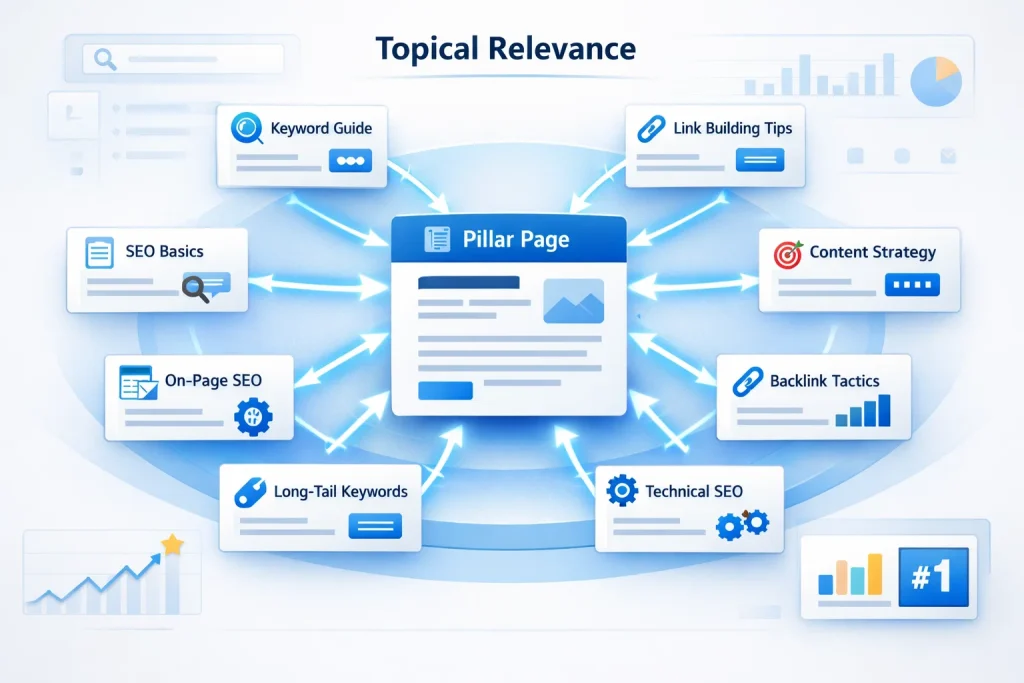
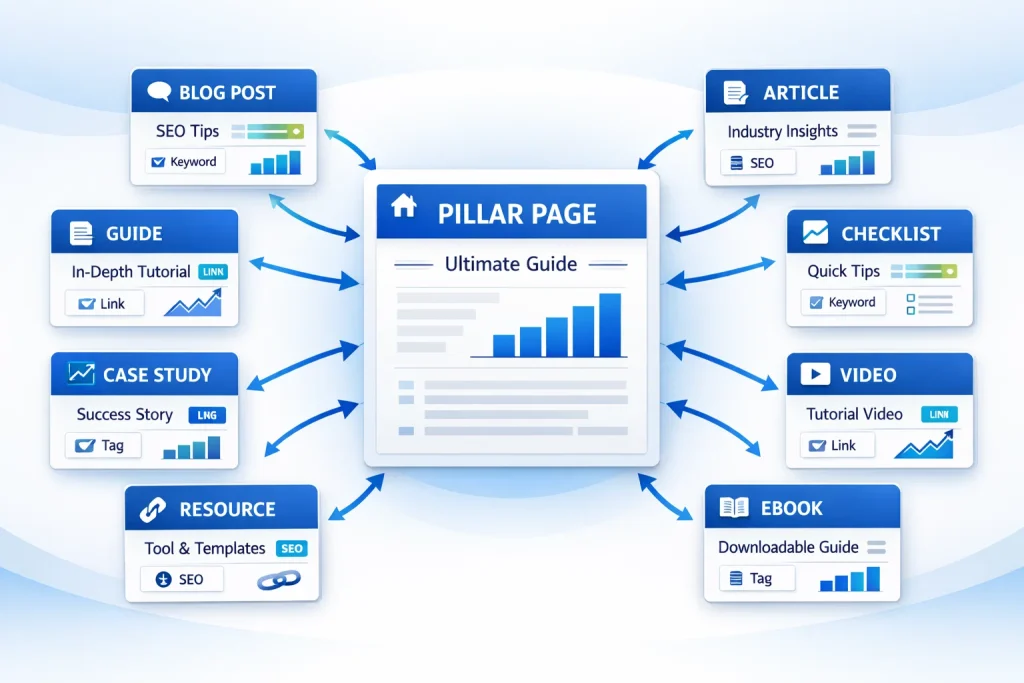
Topic clusters are one of the most effective ways to build topical relevance. They organize your content into a structured system where one main page is supported by multiple related pages.
This approach not only improves SEO but also makes your website easier to navigate and understand.
What Is a Pillar Page
A pillar page is a comprehensive piece of content that covers a broad topic in detail. It acts as the central hub for related content.
Supporting Content Strategy
Supporting articles focus on subtopics and link back to the pillar page. These pages provide additional depth and target specific keyword variations.
Cluster Linking Structure
All supporting pages should link to the pillar page and to each other where relevant. This creates a strong internal linking network that reinforces topical relevance.
Internal Linking Strategy for Topical Relevance
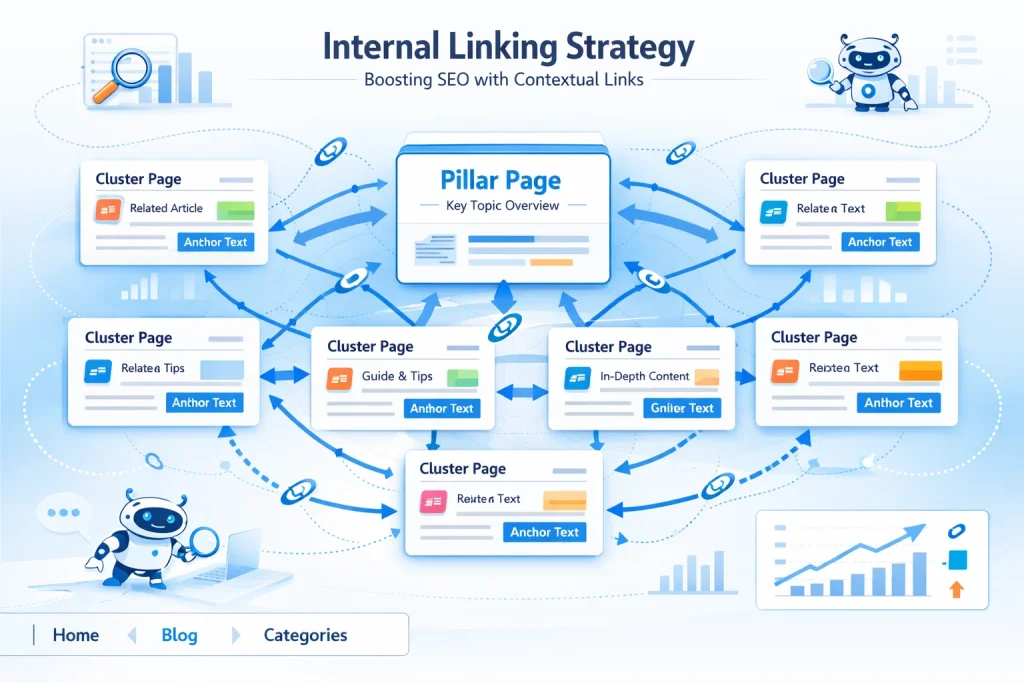
Internal linking is the backbone of topical relevance. Without proper linking, even well-structured content clusters lose their effectiveness. Search engines rely on internal links to understand relationships between pages and distribute authority across your site.
A strong internal linking strategy ensures that all your content works together as a unified system rather than isolated pieces.
- Link related articles
- Use keyword-rich anchor text
- Connect pillar and cluster pages
- Avoid orphan pages
- Maintain logical hierarchy
Content Depth vs Breadth in Topical Relevance
Topical relevance depends on both content depth and content breadth. These two strategies work together to create a complete content ecosystem.
Deep Content for Authority
Deep content builds authority by covering a topic comprehensively. It ensures that your main pages provide maximum value and answer user queries in detail.
Broad Content for Coverage
Broad content expands your reach by targeting multiple related keywords and subtopics. It helps you capture a wider audience and support your core pages.
Common Mistakes When Building Topical Relevance
Many websites fail to build topical relevance because they approach SEO without a clear strategy. They publish content randomly, ignore structure, and fail to connect their pages effectively.
These mistakes prevent search engines from understanding the website’s focus and reduce overall ranking potential.
- Targeting random keywords
- Weak internal linking
- Thin content
- Ignoring search intent
- Lack of structure
Does Blog Content Help Build Topical Relevance
Blog content plays a crucial role in expanding and supporting your topical relevance strategy. It allows you to continuously add new content that strengthens your overall topic coverage.
A well-maintained blog helps connect different parts of your website and improves both SEO performance and user engagement.
- Expands keyword coverage
- Supports pillar pages
- Builds authority
- Improves internal linking
- Drives organic traffic
Step-by-Step Strategy to Build Topical Relevance
Building topical relevance requires a structured and consistent approach. Without a clear plan, it is easy to create disconnected content that fails to deliver results.
A step-by-step strategy ensures that every piece of content contributes to your overall SEO goals and strengthens your website’s authority.
- Choose a core topic
- Build a pillar page
- Create supporting content
- Implement internal linking
- Update and expand content
Final Thoughts on Building Topical Relevance for SEO
Topical relevance is one of the most important factors in modern SEO. It shifts the focus from individual pages to a complete content ecosystem that demonstrates expertise and consistency.
Websites that organize their content strategically, connect their pages effectively, and cover topics comprehensively are more likely to achieve long-term ranking success. Instead of chasing individual keywords, focus on building a strong topical foundation that supports sustainable growth.
FAQs about Topical Relevance for SEO
1. What is topical relevance in SEO?
Topical relevance refers to how well your website covers and connects content around a specific subject.
2. How does topical relevance improve rankings?
It helps search engines understand your expertise, making it easier for your pages to rank for related keywords.
3. What is the difference between topical relevance and authority?
Relevance is about coverage and structure, while authority is the trust built over time from consistent relevance.
4. How many articles are needed for topical relevance?
There is no fixed number, but the goal is to cover all important subtopics within your niche.
5. What are topic clusters in SEO?
Topic clusters are groups of related content linked to a central pillar page to improve structure and relevance.
6. Does internal linking help topical relevance?
Yes, internal linking connects your content and helps search engines understand relationships between pages.
7. How long does it take to build topical relevance?
It typically takes several months of consistent content creation and optimization.