
Many startups struggle to grow because they have limited marketing budgets. Paid ads can bring quick traffic, but they are expensive and stop working when the budget ends. This creates a big challenge for new businesses.
Blogging offers a smart and low-cost solution. It helps startups attract organic traffic without spending money on ads. Instead of paying for every click, you create content that brings visitors over time.
With the right strategy, blogging can help you rank on search engines, build trust, and grow your business. In this guide, you will learn how blogging helps startups compete and win without big budgets.

Why Blogging Matters for Startups
Blogging is one of the most effective marketing tools for startups. It does not require a large investment, but it can deliver long-term results.
First, blogging is a low-cost marketing channel. Once you publish a blog post, it can continue to bring traffic for months or even years. You do not need to pay for every visitor.
Second, blogging helps you get organic traffic. Your blog posts can rank on search engines and attract users who are already searching for information. This type of traffic is highly valuable.
Finally, blogging allows startups to compete with bigger brands. Large companies may have more resources, but small businesses can focus on niche topics and provide better, more helpful content.
How Blogging Improves SEO
Blogging plays a key role in improving your website’s SEO. It helps your site become more visible in search results.
One major benefit is that blogging targets more keywords. Your service pages can only target a few keywords, but blog posts allow you to rank for many different search terms.
Blogging also helps you rank for long-tail keywords. These keywords are easier to rank and bring more targeted visitors. They often lead to better conversion rates.
Another benefit is that blogging increases the number of indexed pages on your website. The more pages you have, the more chances you have to appear in search results.
Blogging also supports internal linking. You can link your blog posts to important pages, which helps search engines understand your site structure and improves rankings.
Blogging Builds Trust and Authority
Trust is very important for online success. Blogging helps you build that trust with your audience. When you create helpful content, you educate your readers. You answer their questions and solve their problems. This makes your brand more reliable.
Blogging also shows your expertise. When you share knowledge and insights, people start to see you as an expert in your field.
It also helps customers make decisions. Blog posts like comparisons, guides, and case studies can help users choose your product or service. Over time, this trust turns visitors into customers.

Types of Blog Content That Work
Not all blog content brings results. You need to focus on content that solves real problems and matches what users search for. When your content is helpful and clear, it attracts more visitors and builds trust.
How-to guides are one of the most effective types of content. They provide step-by-step solutions to specific problems. Users often search for these guides when they need help. This makes them a strong source of organic traffic.
Beginner tutorials also perform well. Many users look for simple, easy-to-understand explanations before making decisions. These tutorials help new users understand your topic and build confidence in your brand.
Comparison articles are useful for users who are deciding between options. These posts clearly explain the differences and benefits. They often bring high-converting traffic because users are close to making a decision.
List posts, such as “top 10 tips,” are easy to read and very popular. They present information in a simple format. This makes it easier for users to understand and engage with your content.
Case studies and real examples build strong trust. They show real results and experiences. When users see proof, they are more likely to trust your business and take action.
Smart Blogging Strategy for Startups
To get real results, you need a clear and focused blogging strategy. Random content does not work well. You should plan your topics based on what your audience is searching for. A smart strategy helps you grow faster with less effort.
Start by focusing on low-competition keywords. These keywords are easier to rank, especially for new websites. They also bring targeted visitors who are more likely to engage with your content. This helps you build traffic step by step.
Use topic clusters to organize your content. Create one main pillar page on a broad topic. Then write several supporting blog posts on related subtopics. Link all these pages together. This improves your SEO structure and helps search engines understand your content better.
Consistency is also very important. You should publish content regularly and keep your website updated. Updating old blog posts can improve rankings and bring new traffic. Over time, consistent effort builds authority and long-term growth.
Blogging vs Paid Ads
Here is a clear comparison that shows why blogging wins for startups:
| Aspect | Blogging | Paid Ads |
|---|---|---|
| Traffic duration | Long-term (keeps working) | Stops when the budget ends |
| Cost | Low after initial effort | Expensive and ongoing |
| Trust level | High (builds authority) | Lower (feels promotional) |
| ROI over time | Compounds and grows | No long-term value |
| Control | You own the content | Platform controls visibility |
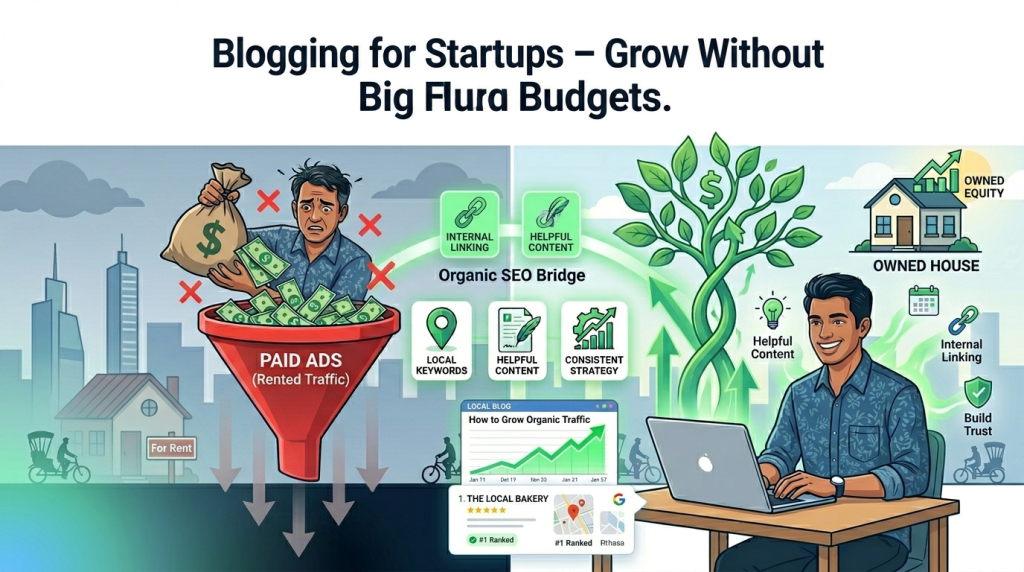
Blogging builds assets you own. Paid ads only rent attention.
Common Mistakes to Avoid
Many startups make these errors and waste months of effort:
- Writing only promotional content that sounds like sales pitches.
- Ignoring keyword research and guessing what to write.
- Forgetting to link blog posts to product or service pages.
- Publishing once and then stopping for weeks or months.
Avoid these mistakes. Focus on helpful, well-researched content that you publish regularly.
Real Growth Example
Consider a small SaaS startup in Dhaka that sells project management tools. They started blogging in early 2025 with just two posts per month.
In the first three months, they targeted long-tail keywords like “free project management tool for small teams in Bangladesh.” Traffic grew slowly. By month six, they had published 15 targeted posts and built topic clusters.
After 12 months, their organic traffic increased 380%. Several blog posts ranked in the top 5 for local searches. The best part? They spent almost nothing on ads. The blog now drives the majority of their sign-ups every month.
Conclusion
Blogging is one of the smartest investments a startup can make. It delivers long-term organic traffic without requiring a big budget. You build trust, improve SEO, and create content that keeps working for years. Focus on helpful topics, stay consistent, and link your posts strategically.
Start small. Write your first blog post this week. Over time, your startup will rank higher, attract better leads, and grow steadily.
Consistency beats big spending every time. What will your first blog post be about? Share your idea in the comments below. I would love to help you brainstorm topics that can actually rank. Ready to start? Open a new document and write one helpful paragraph today. Your future customers are already searching for the answers you can give them.
