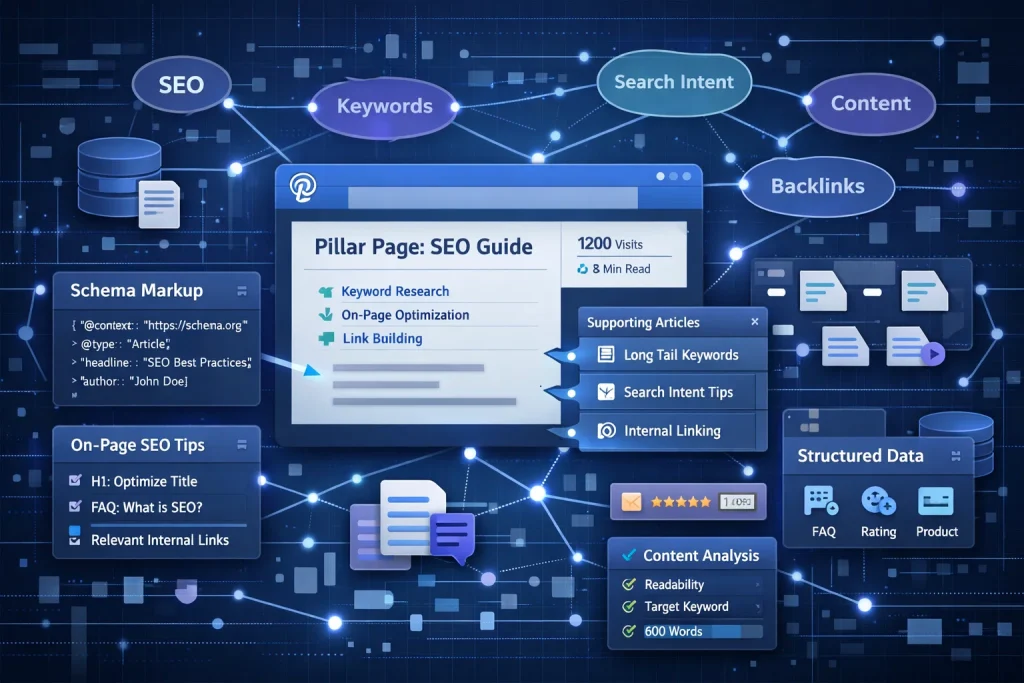
Complete Guide to Smarter Rankings
Ranking content today is less about inserting the right keywords and more about proving that your content truly understands a topic. Many WordPress websites still rely heavily on keyword-focused optimization and plugins, assuming that ticking basic SEO boxes is enough to compete.
The reality is different. Search engines now evaluate how well your content connects ideas, answers related questions, and builds a complete understanding of a subject. If your pages lack context and depth, they struggle to compete—even if they are technically optimized.
This is where semantic SEO becomes essential. For WordPress websites, it provides a structured way to connect content, improve relevance, and build stronger visibility in search results.
What Is Semantic SEO
Semantic SEO is the process of optimizing content based on meaning, context, and relationships between topics rather than just focusing on exact keywords. It helps search engines understand what your content is about and how it connects to other related concepts.
Semantic SEO vs Traditional SEO
Traditional SEO focuses on targeting specific keywords and optimizing pages around them. Semantic SEO goes further by covering related topics, using contextual terms, and answering multiple user queries within the same content.
How Google Understands Context and Entities
Search engines use advanced algorithms to identify entities and relationships between topics. Instead of matching exact keywords, they analyze how different terms connect to form a complete understanding of the subject.
Why Semantic SEO Matters for WordPress Websites
WordPress makes it easy to publish content, but publishing alone does not guarantee rankings. Without semantic structure, content can feel disconnected and incomplete from a search engine’s perspective.
Semantic SEO ensures that your content is not just optimized, but also meaningful and interconnected. This improves both search visibility and user experience.
- Improves content relevance
- Enhances search visibility
- Supports topic clusters
- Aligns with Google algorithms
- Improves user experience
Understanding Entities and Topic Relationships
Entities are the foundation of semantic SEO. They represent real-world concepts such as people, places, or ideas that search engines recognize and connect.
What Are Entities in SEO
Entities are distinct concepts that help search engines understand content beyond keywords. For example, a topic like SEO includes related entities such as keywords, backlinks, and search intent.
How Topics Are Connected
Topics are connected through relationships. When your content covers these relationships clearly, it signals to search engines that your website has a deeper understanding of the subject.
Keyword Research for Semantic SEO
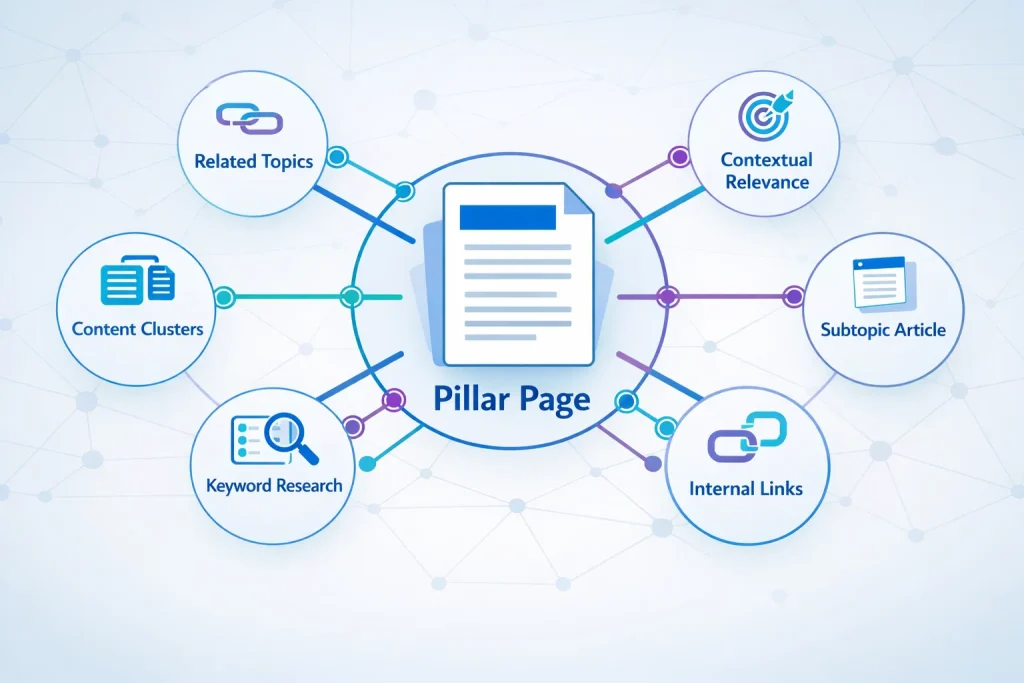
Keyword research in semantic SEO focuses on building topic coverage rather than targeting individual keywords. This approach ensures that your content addresses multiple aspects of a subject.
Keyword Clustering
Grouping related keywords allows you to create content that covers a topic comprehensively instead of focusing on isolated queries.
Search Intent Mapping
Understanding user intent ensures that your content aligns with what users expect when they search for specific queries.
Contextual Keyword Usage
Using related terms and variations helps search engines understand the full context of your content.
Content Optimization for Semantic SEO in WordPress
Content optimization for semantic SEO involves structuring your pages in a way that covers a topic deeply and logically. It is not about adding more keywords but about creating meaningful and connected content.
Well-optimized content answers multiple related questions, uses clear headings, and provides value at every level. This improves both rankings and user engagement.
- Use related terms and synonyms
- Answer multiple user queries
- Optimize headings structure
- Add FAQs
- Improve readability
Using Schema Markup in WordPress
Schema markup is a key component of semantic SEO. It helps search engines understand the structure and meaning of your content more clearly.
What Is Schema Markup
Schema markup is structured data that provides additional information about your content, such as articles, products, or FAQs.
Types of Schema for SEO
Common types include article schema, FAQ schema, and product schema. Each type helps search engines interpret content more accurately.
How to Add Schema in WordPress
Schema can be added using plugins or manually through code. Most WordPress SEO plugins simplify this process by providing built-in schema features.
Best WordPress Plugins for Semantic SEO
WordPress plugins play an important role in implementing semantic SEO efficiently. They help automate tasks like schema markup, metadata optimization, and technical improvements.
While plugins are helpful, they should support your strategy rather than replace it. Proper configuration and usage are essential for achieving results.
- Rank Math
- Yoast SEO
- Schema Pro
- SEOPress
- WP Rocket (performance support)
Internal Linking and Topic Clusters in WordPress
Internal linking is one of the strongest signals for semantic SEO. It connects your content and helps search engines understand relationships between pages.
A well-structured linking strategy ensures that your content works as a unified system, improving both crawlability and user navigation.
- Create pillar pages
- Link related content
- Use descriptive anchor text
- Avoid orphan pages
- Maintain hierarchy
Common Mistakes in Semantic SEO for WordPress
Many WordPress websites attempt semantic SEO but fail due to incorrect implementation. These mistakes often reduce the effectiveness of their strategy.
Understanding these issues helps you avoid common pitfalls and build a stronger SEO foundation.
- Keyword stuffing
- Ignoring search intent
- Poor content structure
- Weak internal linking
- Over-reliance on plugins
Does Blog Content Help Semantic SEO
Blog content is essential for expanding your topical coverage and strengthening semantic relationships. It allows you to explore subtopics and connect them back to your main content.
A well-structured blog strategy supports your overall SEO efforts and helps build authority over time.
- Expands topic coverage
- Supports clusters
- Improves authority
- Drives traffic
- Enhances linking
Step-by-Step Semantic SEO Strategy for WordPress
Implementing semantic SEO requires a clear and structured approach. Without a strategy, it is easy to create disconnected content that fails to deliver results.
A step-by-step process ensures that each piece of content contributes to your overall SEO goals.
- Choose a core topic
- Build pillar content
- Create supporting articles
- Implement schema
- Optimize internal linking
Final Thoughts on Semantic SEO for WordPress
Semantic SEO is essential for modern search optimization. It shifts the focus from keywords to meaning, allowing search engines to better understand and rank your content.
For WordPress websites, combining semantic strategies with proper structure, content planning, and internal linking creates a strong foundation for long-term SEO success. Instead of relying only on plugins, focus on building a connected and meaningful content system.
FAQs about Semantic SEo for wordpress sites
What is semantic SEO in WordPress?
It is the process of optimizing content based on meaning, context, and relationships between topics.
How is semantic SEO different from traditional SEO?
Semantic SEO focuses on context and topic coverage, while traditional SEO focuses mainly on keywords.
Do WordPress plugins help with semantic SEO?
Yes, plugins assist with technical implementation like schema and metadata.
What is schema markup in WordPress?
It is structured data that helps search engines understand your content better.
How do you optimize content for semantic search?
By covering related topics, using contextual terms, and aligning with search intent.
Does internal linking improve semantic SEO?
Yes, it connects content and strengthens topic relationships.
How long does semantic SEO take to show results?
It usually takes a few months depending on content quality and competition.