An SEO audit Step-by-Step Checklist
Most websites try to improve rankings by adding more content or building backlinks, but overlook a critical step—understanding what is already broken. Without a clear audit process, SEO becomes reactive instead of strategic. Changes are made randomly, and results become inconsistent.
An effective SEO strategy starts with clarity. You need to know which pages are underperforming, what issues exist, and where opportunities lie. This is where an on page SEO audit framework becomes essential.
A structured audit allows you to evaluate your website systematically, uncover hidden issues, and build a clear action plan that improves performance over time.
What Is an On Page SEO Audit
An on page SEO audit is the process of analyzing individual pages on your website to evaluate how well they are optimized for search engines and users. It focuses on elements within your control, such as content, structure, and user experience.
Difference Between On Page and Technical SEO Audit
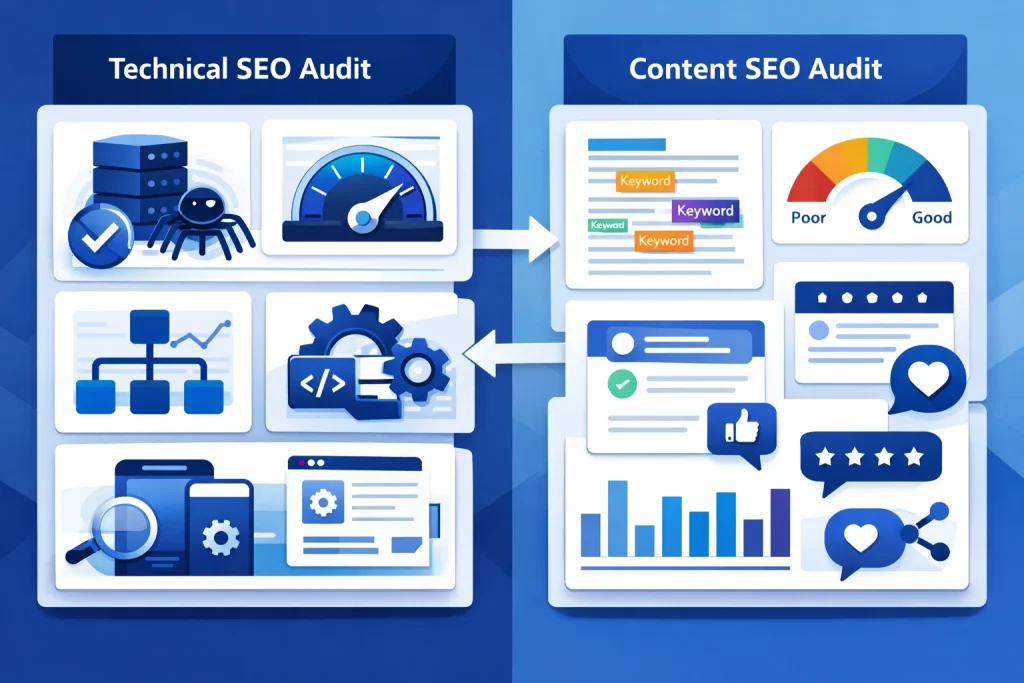
On page SEO audits focus on content quality, keyword optimization, and page-level elements. Technical SEO audits, on the other hand, deal with backend factors like site architecture, crawlability, and indexing.
Goals of an SEO Audit
The main goal of an audit is to identify issues that prevent your pages from ranking and to create a roadmap for improvement. It also helps you align your content with search intent and improve overall user experience.
Why an SEO Audit Framework Is Important
Conducting an SEO audit without a framework often leads to incomplete analysis and missed opportunities. A structured approach ensures that every critical element is reviewed systematically.
An audit framework acts as a checklist and a strategy combined. It helps you stay organized, prioritize fixes, and maintain consistency across your website. This is especially important for growing websites with multiple pages and content types.
- Identifies hidden issues
- Improves SEO performance
- Provides clear action plan
- Prevents missed opportunities
- Supports long-term growth
Core Components of an On Page SEO Audit
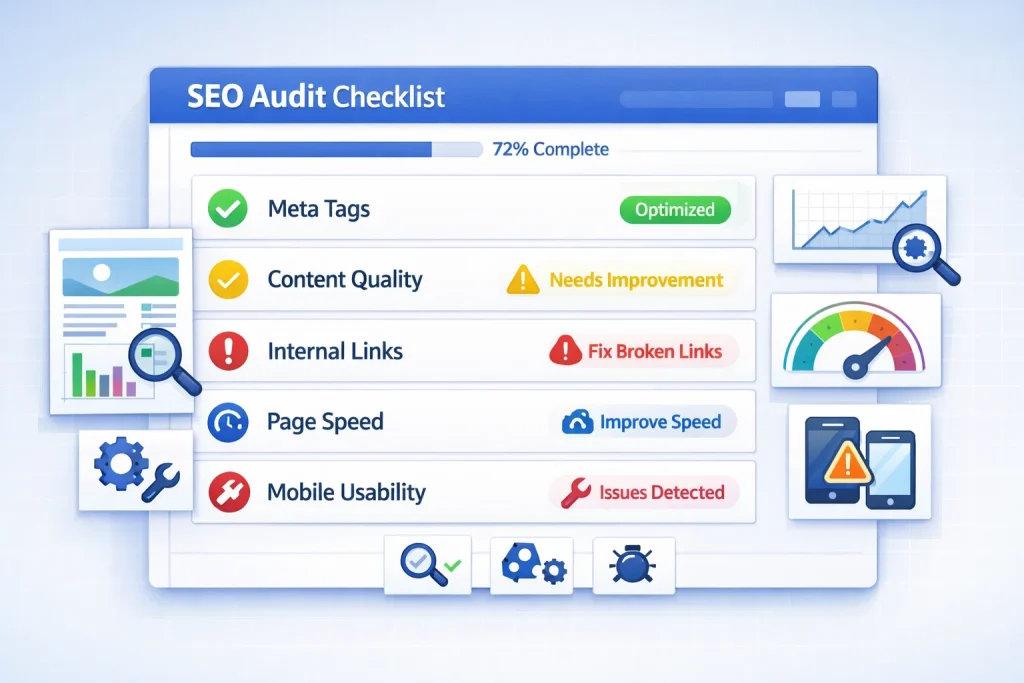
An effective audit covers multiple elements that work together to influence rankings and user experience. Focusing on only one area, such as content or technical SEO, can leave gaps in your strategy.
A comprehensive audit evaluates both the quality of your content and how well your pages are structured and optimized. This ensures a balanced approach to SEO improvement.
- Content quality
- Keyword optimization
- Meta tags
- Internal linking
- Page speed
- Mobile usability
Step-by-Step On Page SEO Audit Framework
Following a structured process ensures that your audit is thorough and actionable. Each step builds on the previous one, creating a complete picture of your website’s performance.
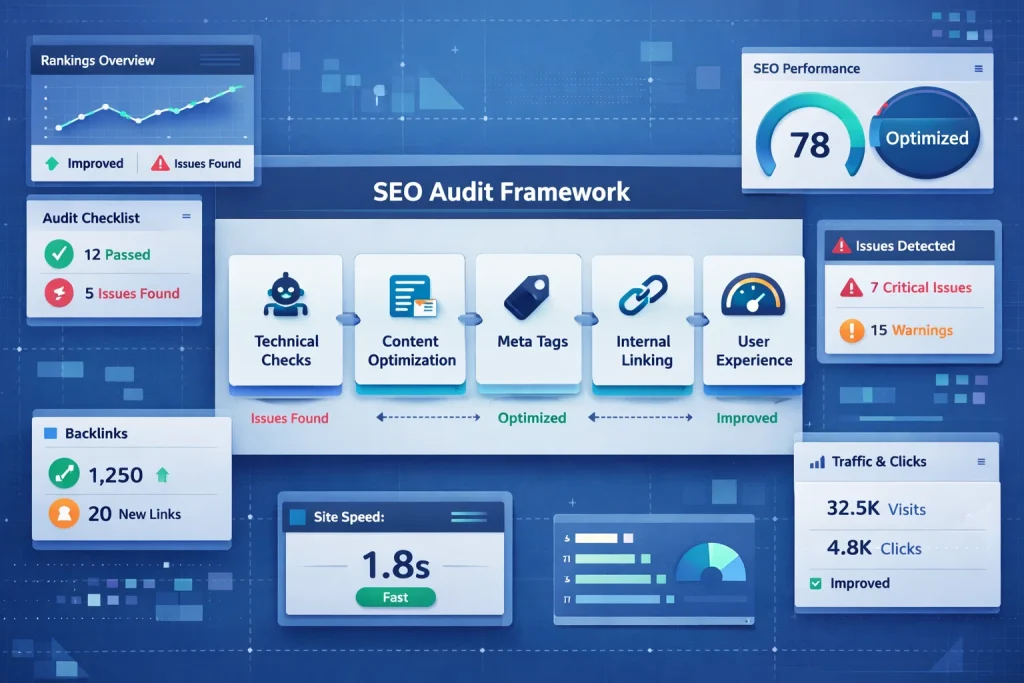
Step 1: Technical Checks (Indexing, Crawlability)
Start by ensuring that your pages are accessible to search engines. Check for indexing issues, crawl errors, and broken pages that may prevent proper visibility.
Step 2: Content Optimization Review
Evaluate the quality and relevance of your content. Ensure it matches search intent, includes relevant keywords, and provides value to users.
Step 3: Title Tags and Meta Descriptions
Review your title tags and meta descriptions to ensure they are optimized for both search engines and click-through rates.
Step 4: Internal Linking Audit
Analyze how your pages are connected. Proper internal linking helps distribute authority and improves navigation.
Step 5: User Experience and Page Speed
Assess how users interact with your pages. Factors like loading speed, readability, and mobile responsiveness play a significant role in SEO performance.
Tools for Conducting an SEO Audit
SEO audits can be complex, especially for larger websites. Using the right tools simplifies the process and provides accurate data for analysis.
These tools help you identify issues, track performance, and make informed decisions based on real insights rather than assumptions.
- Google Analytics
- Google Search Console
- Screaming Frog
- Ahrefs / SEMrush
- PageSpeed Insights
Common SEO Issues Found in Audits
SEO audits often reveal recurring problems that affect website performance. Identifying these issues is the first step toward improving rankings and user experience.
Many of these problems go unnoticed without a structured audit, making regular analysis essential for maintaining SEO health.
- Missing meta tags
- Duplicate content
- Broken links
- Slow loading pages
- Poor internal linking
Does Blog Content Need an SEO Audit
Blog content is a major contributor to organic traffic, but it also requires regular auditing. Over time, blog posts can become outdated, lose relevance, or fail to meet current SEO standards.
Auditing blog content helps maintain its performance and ensures it continues to support your overall SEO strategy.
- Updating outdated content
- Improving keyword targeting
- Fixing internal links
- Enhancing readability
- Boosting rankings
How Often Should You Perform an SEO Audit
The frequency of SEO audits depends on the size of your website and how often it is updated. For most websites, conducting an audit every 3 to 6 months is a good practice.
Websites with frequent content updates or high competition may require more regular audits to maintain performance and stay ahead.
Final Thoughts on On Page SEO Audit Framework
An on page SEO audit framework provides the structure needed to improve your website effectively. Instead of making random changes, it allows you to identify issues, prioritize actions, and track progress.
By following a systematic approach, businesses can optimize their pages more efficiently, improve rankings, and deliver a better user experience. SEO success is not just about effort—it is about direction.
FAQs about On Page Audit frame work
What is an on page SEO audit?
It is the process of analyzing website pages to improve their optimization for search engines and users.
How do you perform an SEO audit?
By following a structured framework that includes technical checks, content review, and performance analysis.
What tools are used for SEO audits?
Tools like Google Analytics, Search Console, and SEO platforms such as Ahrefs or SEMrush are commonly used.
How often should you audit your website?
Typically every 3 to 6 months, depending on website activity and competition.
What are common SEO audit issues?
Common issues include missing meta tags, duplicate content, broken links, and slow page speed.
Is an SEO audit necessary for small websites?
Yes, even small websites benefit from audits to identify and fix optimization issues.
How long does an SEO audit take?
It can take a few hours to several days depending on the size and complexity of the website.