
Online Education vs Traditional Education Which Is Better?
Education is changing rapidly in the modern world. Students now have two main options: online education and traditional education. Both systems aim to provide knowledge, skills, and career growth, but they work in different ways.
Online education uses digital platforms and the internet, allowing flexible and remote learning. Traditional education takes place in physical classrooms with face-to-face teaching and structured schedules. Each method has unique strengths and limitations.
This comparison helps students, parents, and educators understand which system fits better for different needs. In this article, we will explore both education systems and find which one is more effective today.
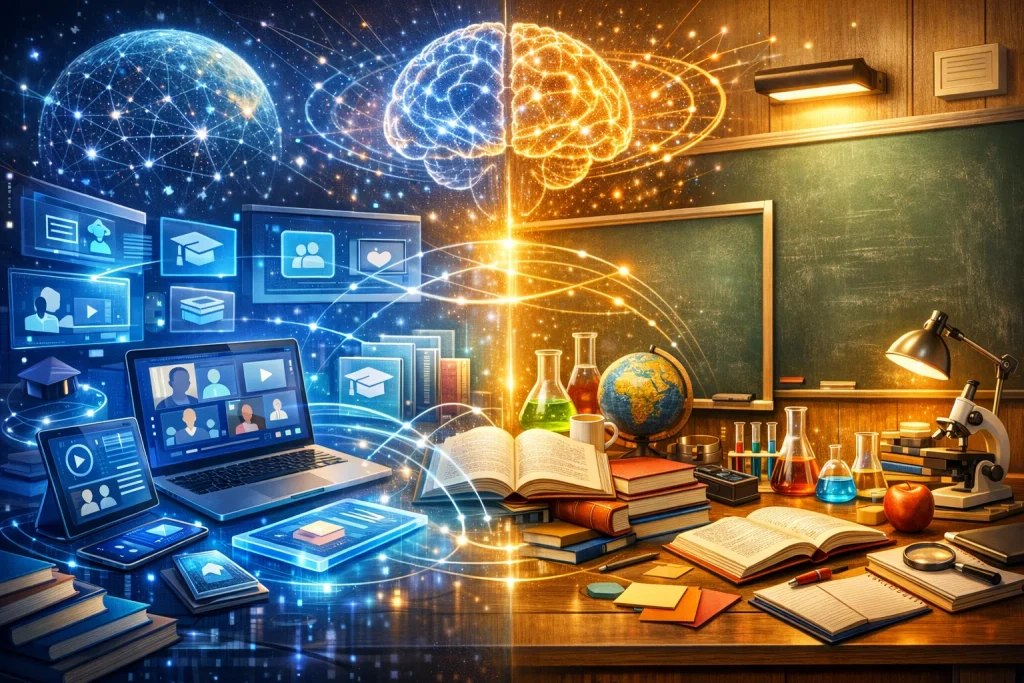
Understanding Online Education
Online education is a modern learning system where students study through the internet. It allows learners to attend classes using laptops, tablets, or smartphones. Education happens through video lectures, digital notes, live classes, and interactive tools.
This system has grown rapidly in the last decade. It became even more popular after global events increased the need for remote learning. Today, many universities and institutions offer full online degrees and certifications.
How Online Education Works in Real Practice
Online education runs through structured digital platforms. Teachers upload lessons, and students access them anytime. Communication happens through messaging, emails, or live video sessions.
In most systems, students follow a flexible schedule. They can pause, repeat, or review lessons. This helps different types of learners, especially those who need extra time to understand topics.
Common platforms used in online education:
- Learning Management Systems (LMS)
- Video conferencing tools
- Online assignment portals
- Digital libraries and e-books
Expert View on Online Education
From an educational perspective, online learning improves accessibility and global knowledge sharing. It allows students from remote areas to access high-quality education. It also supports lifelong learning, which is important in today’s skill-based job market.
However, experts also note that success in online education depends heavily on self-discipline and motivation.
Understanding Traditional Education
Traditional education is the conventional classroom-based system used for centuries. It involves students attending schools, colleges, or universities physically. Teachers deliver lessons in real-time, and students learn through direct interaction.
This system is still the most widely used form of education across the world. It is known for its structure, discipline, and strong teacher-student relationship.
How Traditional Education Works in Practice
Students follow a fixed schedule and attend classes in person. Teachers explain lessons using boards, presentations, and discussions. Students take notes, complete assignments, and participate in group work.
This system focuses on structured learning and academic discipline. It also encourages social interaction among students.
Key elements of traditional education:
- Classroom lectures and discussions
- Physical attendance requirement
- Regular exams and evaluations
- Group activities and lab work
Expert View on Traditional Education
Educational experts consider traditional learning essential for foundational development. It helps students build discipline, communication skills, and teamwork abilities. It also creates a structured environment that supports consistent learning.
Key Differences Between Online and Traditional Education
Both systems have clear differences in structure, experience, and learning outcomes. Understanding these differences helps students make informed decisions.
Learning Flexibility
Online education offers full flexibility. Students can study anytime and from anywhere. Traditional education follows a strict timetable that requires physical attendance.
Flexibility is one of the biggest advantages of online learning, especially for working individuals.
Cost and Accessibility
Online education is generally more affordable. It reduces travel, accommodation, and infrastructure costs. Traditional education often involves higher expenses due to campus-based requirements.
Accessibility is also different. Online education is available globally, while traditional education requires physical presence.
Interaction and Communication
Traditional education provides direct interaction between students and teachers. This allows immediate feedback and real-time discussion. Online education uses digital communication tools, which may feel less personal.
Advantages of Online Education
Online education offers several benefits that make it suitable for modern learners. It is especially useful in today’s fast-paced and technology-driven world.
Flexibility and Convenience
One of the strongest advantages of online learning is flexibility. Students can learn at their own pace without strict schedules. This helps work professionals and busy learners.
Global Access to Knowledge
Online education connects students with global instructors and institutions. This exposure improves learning quality and provides international perspectives.
Cost-Effective Learning
Online courses are often more affordable than traditional programs. Students also save money on transport, accommodation, and materials.
Self-Paced Learning Environment
Students can control their learning speed. They can revisit lessons, pause videos, and study difficult topics multiple times.
Wide Course Availability
Online platforms offer thousands of courses across multiple fields, such as:
- Technology and IT
- Business and marketing
- Language learning
- Personal development
- Creative skills
Disadvantages of Online Education
Despite its advantages, online education has limitations that must be considered.
Requires Strong Self-Discipline
Students must manage their own time and learning. Without discipline, it becomes easy to lose focus or delay studies.
Limited Social Interaction
Online learning reduces face-to-face communication. This may affect teamwork and social skill development.
Technical Challenges
Internet issues, device problems, or software errors can interrupt learning sessions.
Home Distractions
Learning from home can include distractions like family noise, social media, or entertainment.
Advantages of Traditional Education
Traditional education continues to play a vital role in academic development. It offers structured learning and real human interaction.
Strong Teacher-Student Relationship
Students can directly ask questions and receive immediate explanations. This improves understanding and clarity.
Social Skill Development
Students interact with peers daily. This helps build communication skills, teamwork, and confidence.
Structured Learning System
A fixed schedule helps students stay disciplined. It builds a strong study routine.
Practical Learning Opportunities
Traditional education includes labs, group projects, and hands-on activities that improve real-world understanding.
Disadvantages of Traditional Education
Traditional education also faces challenges in modern society.
Less Flexibility
Students must follow fixed schedules. This can be difficult for those with personal or work responsibilities.
Higher Financial Cost
Tuition fees, transport, and accommodation increase the overall cost of education.
Time-Consuming Travel
Daily commuting can be tiring and reduce productive study time.
Limited Course Variety
Some institutions may not offer specialized or updated global courses.
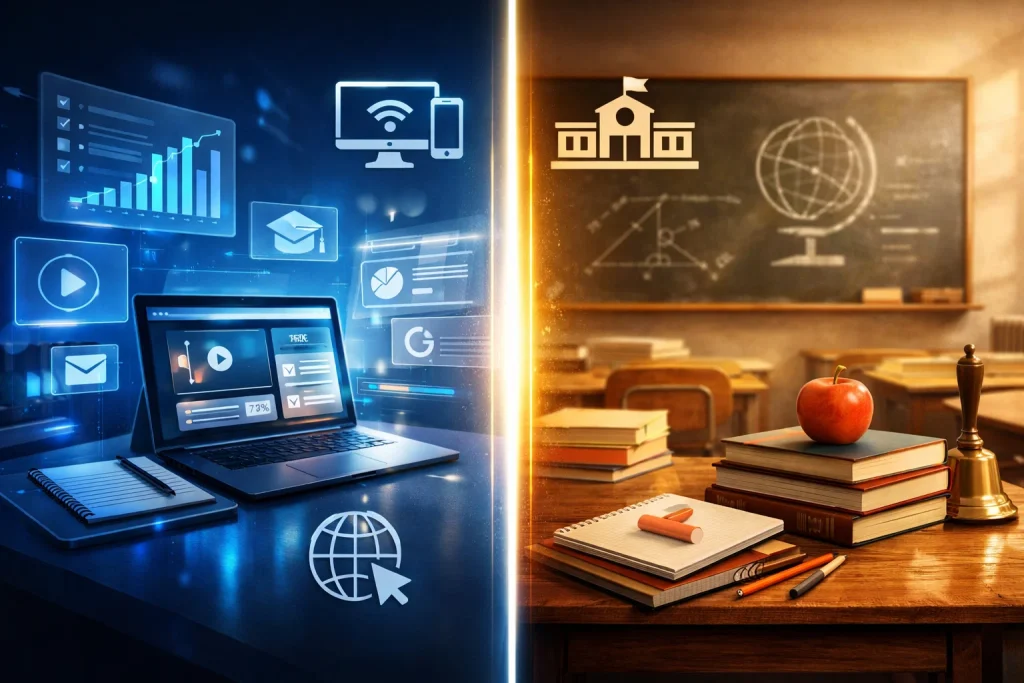
Which One Is Better for Students?
The answer depends on individual needs and goals. Both systems have strong value in different situations.
When Online Education Is More Effective
Online education is ideal for:
- Working professionals
- Self-motivated learners
- Students needing flexible schedules
- People looking for affordable learning
When Traditional Education Is More Effective
Traditional education is better for:
- Young students need discipline
- Learners who prefer structured environments
- Students who value social interaction
- Those needing hands-on, practical training
Hybrid Learning: The Modern Approach
Many experts now support hybrid learning. This model combines online flexibility with traditional structure. It provides balanced benefits from both systems and is becoming popular worldwide.
Future of Education
The future of education is strongly connected to technology. Artificial intelligence, virtual classrooms, and digital tools are changing how students learn.
Online education will continue to grow rapidly. However, traditional education will remain important for practical learning and social development.
In the future, education systems are likely to become more blended. Students will benefit from both digital and physical learning environments.
Final Thought
Online education and traditional education both have strong value. Online learning offers flexibility, affordability, and global access. Traditional learning provides structure, discipline, and direct interaction.
There is no single best system for everyone. The right choice depends on personal goals, learning style, and available resources. A balanced decision can help students achieve long-term success.
FAQs for Online Education vs Traditional Education Which Is Better
What is the main difference between online and traditional education?
Online education uses the internet, while traditional education uses physical classrooms.
Is online education good for career growth?
Yes, if students choose quality courses and stay disciplined.
Which system is more affordable?
Online education is generally more affordable than traditional education.
Can both systems be used together?
Yes, hybrid learning combines both methods effectively.
