Complete Guide to Rank and Convert
Most online course websites invest heavily in course creation, platform design, and marketing campaigns, yet struggle to get consistent organic traffic. The problem is not always the quality of the course, but how well the website is optimized for search engines.
When potential students search for skills, certifications, or learning paths, they rely on search engines to guide them. If your course pages are not properly optimized, they remain buried under competitors who have stronger on page SEO foundations.
On page SEO for online course websites is what connects your content with the right audience. It ensures your pages are structured, relevant, and aligned with what users are actively searching for, ultimately driving both traffic and enrollments.
What Is On Page SEO for Course Websites
On page SEO for course websites refers to optimizing individual pages so they rank higher in search results and attract relevant users. It focuses on content, structure, and user experience rather than external factors like backlinks.
Difference Between General SEO and Course SEO
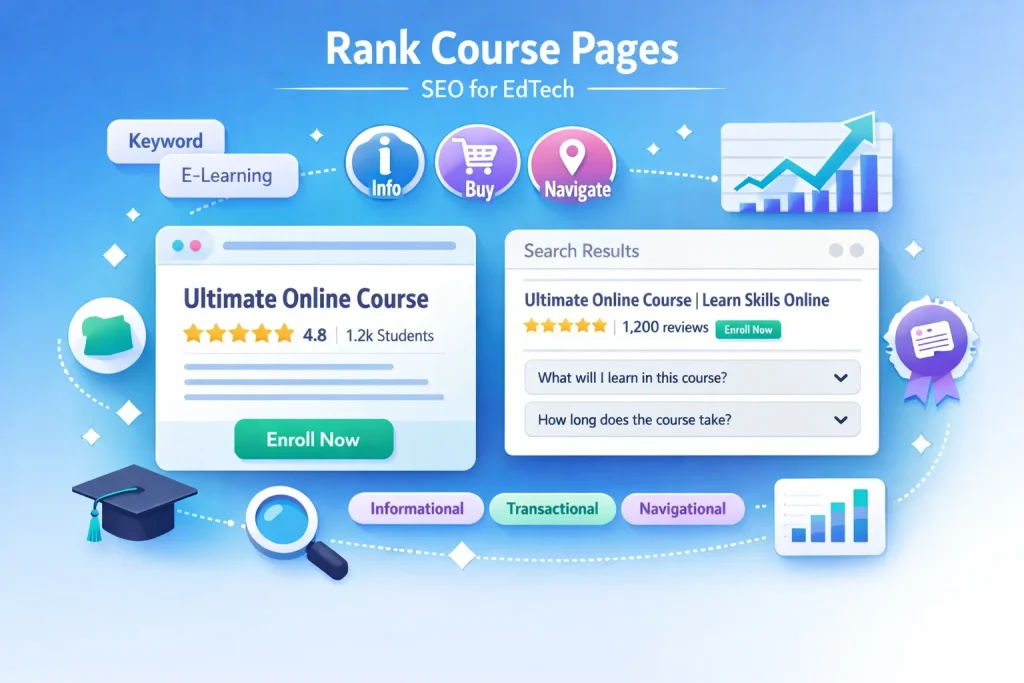
While general SEO applies to all types of websites, course SEO is more intent-driven. It must balance informational content with conversion-focused elements like enrollments and course details.
Goals of On Page SEO for Courses
The main goal is to make course pages discoverable, relevant, and persuasive. This includes ranking for the right keywords while encouraging users to take action.
Why On Page SEO Is Important for Online Course Websites
Search engines prioritize pages that provide value and clarity to users. Without proper on page SEO, even well-designed course websites fail to communicate their relevance effectively.
On page optimization ensures that your content matches user intent, improves visibility, and enhances the overall experience. This leads to better engagement and higher chances of conversion.
- Improves visibility
- Drives targeted traffic
- Increases enrollments
- Enhances user experience
- Supports long-term SEO
Keyword Optimization for Course Websites
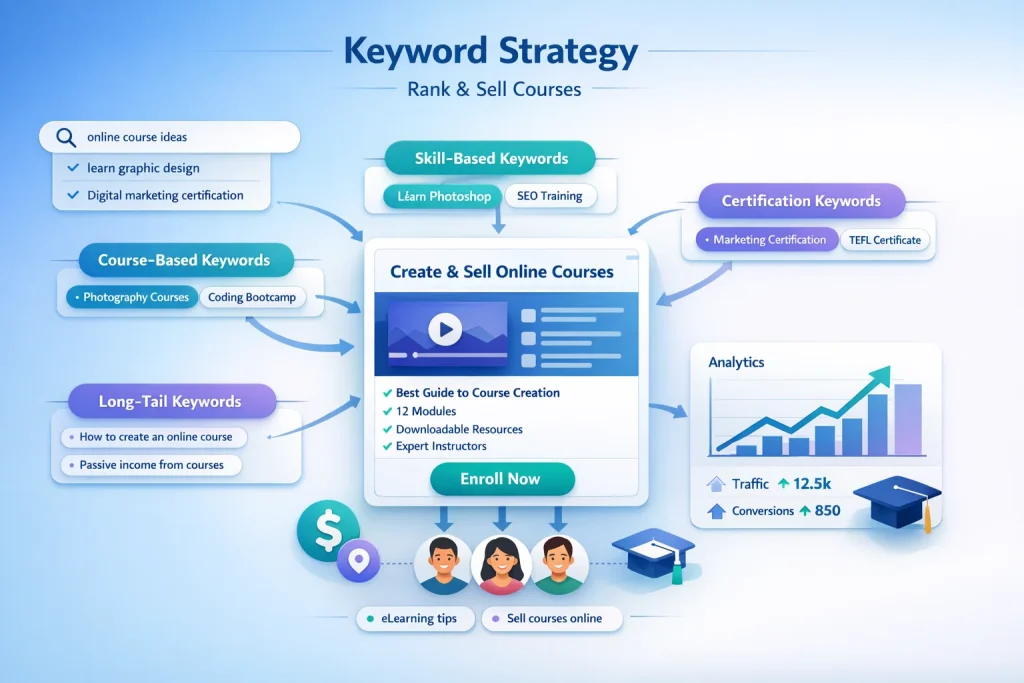
Keyword optimization is the foundation of any SEO strategy. For online course websites, it helps you target users who are actively searching for learning opportunities.
Course Keywords
These include direct queries like “digital marketing course” or “web development course.”
Skill Keywords
Users often search for skills such as “learn Python” or “graphic design basics.”
Long-Tail Keywords
Long-tail keywords capture more specific intent, such as “best SEO course for beginners online.”
Optimizing Course Page Content
Course page content must strike a balance between providing information and encouraging action. It should clearly explain what the course offers while addressing user questions and expectations.
A well-structured page improves both SEO performance and user engagement, making it easier for visitors to understand the value of the course.
- Clear course titles
- Detailed descriptions
- Learning outcomes
- FAQs
- Instructor details
Title Tags and Meta Descriptions
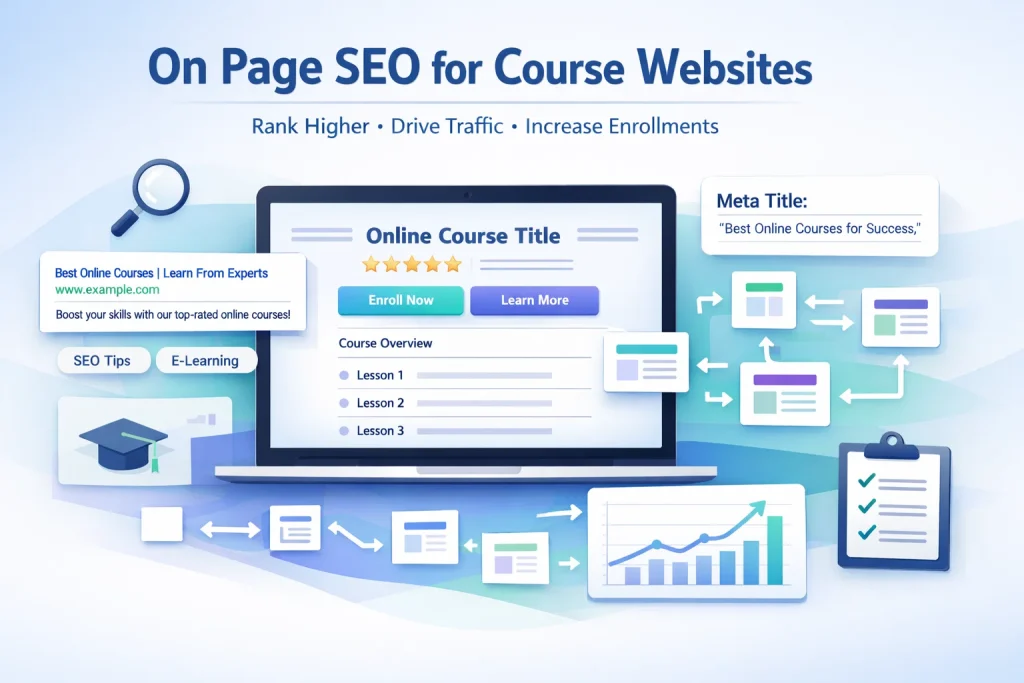
Title tags and meta descriptions play a crucial role in how your course pages appear in search results. They are often the first impression users have of your content.
An optimized title should include relevant keywords while clearly communicating the benefit of the course. Meta descriptions should highlight key features, such as course outcomes, duration, or certification, to encourage clicks.
Image Optimization for Course Websites
Images are an important part of course websites, helping to visually communicate content and improve user engagement. However, unoptimized images can slow down your site and negatively impact SEO.
Proper image optimization ensures that visuals enhance the user experience without affecting performance.
- Use descriptive alt text
- Compress images
- Use relevant visuals
- Optimize file names
- Improve load speed
Internal Linking Strategy for Course Websites
Internal linking helps search engines understand the structure of your website and the relationship between different pages. For course websites, it also guides users through the learning journey.
A strong internal linking strategy ensures that your content works together, improving both SEO and user navigation.
- Link blogs to courses
- Use topic clusters
- Improve navigation
- Avoid orphan pages
- Strengthen authority
Does Blog Content Help Course Website SEO
Blog content plays a critical role in supporting course website SEO. It allows you to target a wider range of keywords and attract users at different stages of their learning journey.
By connecting blog content with course pages, you create a system that drives traffic and builds authority over time.
- Drives traffic
- Supports keywords
- Builds authority
- Improves linking
- Enhances relevance
Common On Page SEO Mistakes for Course Websites
Many online course websites fail to achieve their full potential due to common SEO mistakes. These issues often limit visibility and reduce the effectiveness of their content.
Avoiding these mistakes is essential for building a strong SEO foundation.
- Thin content
- Keyword stuffing
- Poor UX
- No internal linking
- Weak CTAs
Step-by-Step On Page SEO Strategy for Course Websites
A structured approach to on page SEO ensures that all elements of your website are optimized effectively. Without a clear process, it becomes difficult to maintain consistency and achieve long-term results.
Following a step-by-step strategy helps you focus on the most impactful actions and improve performance over time.
- Keyword research
- Optimize pages
- Improve content
- Add internal links
- Monitor results
Final Thoughts on On Page SEO for Course Websites
On page SEO is essential for online course websites that want to grow through organic traffic. It connects your content with users who are actively searching for learning opportunities.
By focusing on keyword optimization, content quality, and user experience, you can improve visibility, attract the right audience, and increase enrollments over time.
FAQs
1. What is on page SEO for course websites?
It is the process of optimizing individual course pages to improve rankings and attract relevant users.
2. How do you optimize course pages for SEO?
By using proper keywords, improving content structure, and enhancing user experience.
3. What keywords should course websites use?
Course-based, skill-based, and long-tail keywords are most effective.
4. Do blogs help course SEO?
Yes, blogs support course pages by driving traffic and building authority.
5. How important is internal linking?
It helps connect pages, improve navigation, and strengthen SEO performance.
6. How long does SEO take for course websites?
It typically takes a few months depending on competition and optimization.
7. What are common SEO mistakes in eLearning?
Thin content, keyword stuffing, poor UX, and lack of internal linking.