Complete Performance Guide
Scroll through any classroom, and you will notice one thing instantly—students are learning on their phones. Whether it is searching for courses, reading blog content, or accessing learning platforms, mobile devices have become the primary gateway to educational content.
For educational websites, this shift is not just about design—it directly impacts visibility on search engines. A site that works perfectly on desktop but struggles on mobile will lose both rankings and users. This is because search engines now prioritize mobile versions of websites when determining rankings.
Optimizing educational websites for mobile SEO ensures that your content loads fast, displays correctly, and delivers a smooth user experience. It helps you reach learners where they are most active while improving engagement, rankings, and conversions.
What Is Mobile SEO and Why It Matters
Mobile SEO refers to the process of optimizing a website so that it performs well on mobile devices in terms of speed, usability, and search visibility. It ensures that users can easily navigate, read, and interact with your site on smaller screens.
Mobile-First Indexing
Search engines use mobile-first indexing, meaning they primarily evaluate the mobile version of your website when determining rankings. If your mobile experience is poor, your SEO performance will suffer regardless of how well your desktop version is optimized.
User Behavior on Mobile
Mobile users behave differently from desktop users. They expect faster loading times, simpler navigation, and easily readable content. Educational websites must adapt to these expectations to retain users and improve engagement.
Why Mobile SEO Is Important for Educational Websites
Educational websites attract users who are often searching for quick answers, courses, or learning resources on the go. Mobile optimization ensures that these users can access content easily without frustration.
A mobile-friendly website not only improves rankings but also enhances user experience, leading to longer session durations and better interaction with your content.
- Improves rankings
- Enhances user experience
- Increases engagement
- Reduces bounce rate
- Supports conversions
Responsive Design for Mobile Optimization
Responsive design ensures that your website adapts to different screen sizes and devices. Instead of creating separate versions for desktop and mobile, responsive design allows a single layout to adjust dynamically.
For educational websites, this means that course pages, blogs, and learning materials remain accessible and visually appealing across all devices. A responsive design is a foundational element of mobile optimization SEO and directly supports better rankings.
Page Speed Optimization for Mobile SEO
Page speed is one of the most critical factors in mobile SEO. Users expect websites to load almost instantly, and even a slight delay can lead to higher bounce rates. For educational websites, slow loading pages can disrupt the learning experience and reduce engagement.
Improving mobile page speed requires a combination of technical optimization and performance improvements. Faster websites not only rank better but also provide a smoother user experience.
- Optimize images
- Minimize CSS and JavaScript
- Use caching
- Reduce server response time
- Use a CDN
Core Web Vitals and Mobile Performance
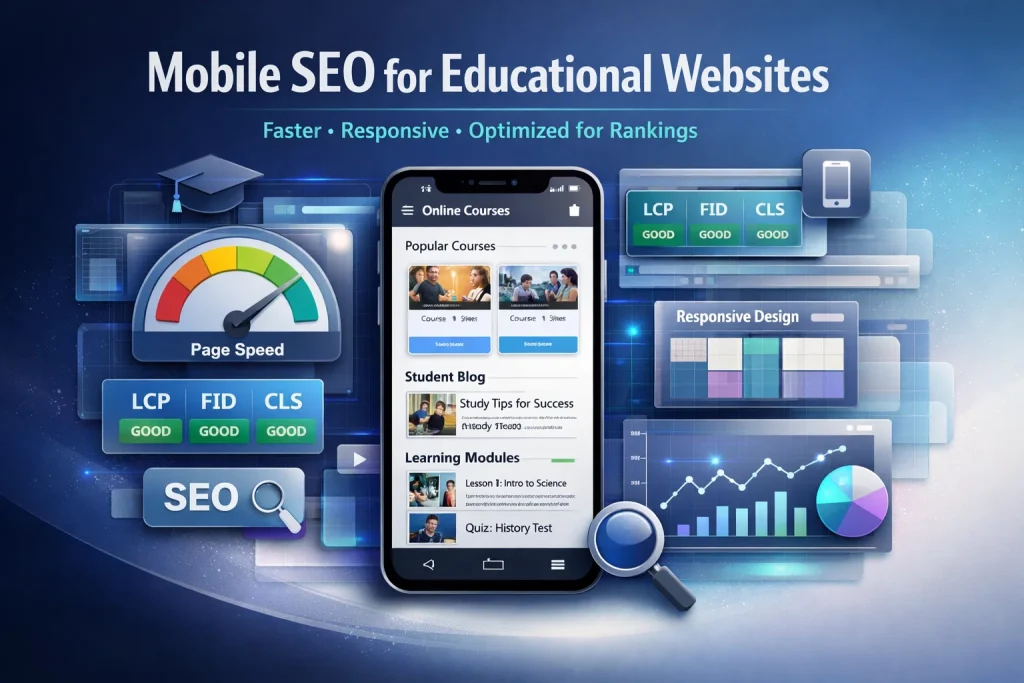
Core Web Vitals are a set of metrics used to measure user experience on a website. They focus on loading speed, interactivity, and visual stability.
Largest Contentful Paint (LCP)
LCP measures how quickly the main content of a page loads. Faster loading times improve both user satisfaction and SEO performance.
First Input Delay (FID)
FID measures how quickly a page responds when a user interacts with it. A responsive website keeps users engaged.
Cumulative Layout Shift (CLS)
CLS measures visual stability. Pages that shift unexpectedly can frustrate users and negatively impact experience.
Mobile-Friendly Content Optimization
Content that works on desktop does not always translate well to mobile devices. Educational websites must ensure that their content is easy to read and navigate on smaller screens.
Optimizing content for mobile improves readability and helps users consume information more efficiently, which is essential for learning platforms.
- Use short paragraphs
- Optimize font size
- Use clear headings
- Improve readability
- Avoid clutter
Image Optimization for Mobile SEO
Images are essential for educational websites, especially for visual learning. However, large or unoptimized images can slow down your website and affect mobile performance.
Proper image optimization ensures that visuals enhance the user experience without compromising speed or usability.
- Compress images
- Use modern formats
- Add alt text
- Optimize file sizes
- Implement lazy loading
Technical SEO for Mobile Websites
Technical SEO plays a crucial role in ensuring that your website is fully optimized for mobile devices. It focuses on backend elements that impact performance, usability, and search engine visibility.
For educational websites, technical optimization ensures that content is easily accessible and properly indexed by search engines.
- Mobile-friendly URLs
- Avoid intrusive popups
- Optimize navigation
- Fix crawl issues
- Use structured data
Common Mobile SEO Mistakes
Many educational websites struggle with mobile SEO because they overlook key usability and performance factors. These mistakes can significantly impact both rankings and user experience.
Identifying and fixing these issues is essential for improving mobile performance and maintaining strong SEO results.
- Slow loading speed
- Poor design
- Unreadable text
- Broken elements
- Ignoring mobile UX
Step-by-Step Mobile SEO Strategy
Optimizing for mobile SEO requires a structured approach. Without a clear strategy, it becomes difficult to identify issues and implement improvements effectively.
A step-by-step workflow helps you focus on the most important aspects of mobile optimization and ensures consistent progress.
- Audit mobile performance
- Fix usability issues
- Improve speed
- Optimize content
- Monitor results
Final Thoughts on Mobile SEO for Educational Websites
Mobile SEO is no longer optional for educational websites. With most users accessing content through mobile devices, optimizing for mobile performance is essential for visibility and growth.
By focusing on responsive design, page speed optimization, and user-friendly content, you can create a seamless experience that benefits both users and search engines. This not only improves rankings but also helps you connect with learners more effectively.
FAQs
1. What is mobile SEO?
Mobile SEO is the process of optimizing a website to perform well on mobile devices in search results.
2. Why is mobile SEO important for educational websites?
Because most users access educational content on mobile devices, making optimization essential for visibility and engagement.
3. How do you make a website mobile-friendly?
By using responsive design, improving page speed, and optimizing content for smaller screens.
4. What are Core Web Vitals?
They are performance metrics that measure loading speed, interactivity, and visual stability.
5. How does page speed affect mobile SEO?
Faster loading pages improve user experience and increase the chances of higher rankings.
6. What tools help test mobile SEO?
Tools like Google PageSpeed Insights and Search Console help analyze mobile performance.
7. How long does mobile SEO improvement take?
It can take a few weeks to a few months depending on the changes implemented.