SEO Guide for Course Growth
A high-quality course does not guarantee visibility. Many EdTech platforms invest heavily in building valuable learning programs but struggle to attract organic traffic. The issue is not the course itself, but how it is presented and optimized for search engines.
Most users begin their learning journey with a search query. They look for specific skills, certifications, or solutions to problems. If your course pages are not aligned with these searches, they remain invisible regardless of their quality.
Ranking course pages on Google requires a combination of SEO strategy, content optimization, and user experience improvements. When done correctly, it not only drives traffic but also increases enrollments and long-term growth.
Understanding Search Intent for Course Pages
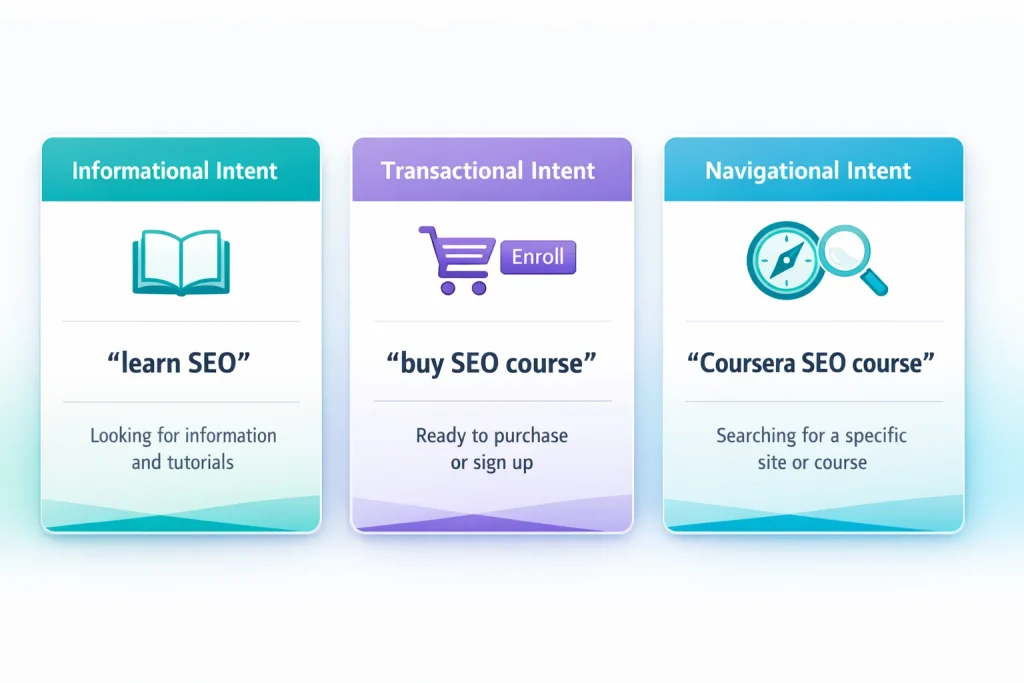
Search intent plays a critical role in determining whether your course pages rank and convert. Users search for courses with different goals, and understanding these goals helps you structure your pages accordingly.
Informational Intent (learning about topics)
Users at this stage are exploring topics and looking for information. They are not ready to enroll but are gathering knowledge.
Transactional Intent (enrolling in courses)
These users are ready to take action. They search for specific courses with the intention to enroll.
Navigational Intent (specific platforms)
Users already know the platform or course they want and are searching for it directly.
Why SEO Is Important for Course Pages
SEO allows EdTech websites to attract highly targeted users who are actively searching for learning opportunities. Unlike paid ads, organic traffic continues to grow over time and provides long-term value.
When course pages are properly optimized, they become discoverable for relevant searches, leading to higher engagement and conversions. This reduces reliance on paid marketing and builds a sustainable growth channel.
- Drives targeted traffic
- Reduces dependency on ads
- Increases enrollments
- Builds authority
- Supports long-term growth
Keyword Research for Course Page SEO
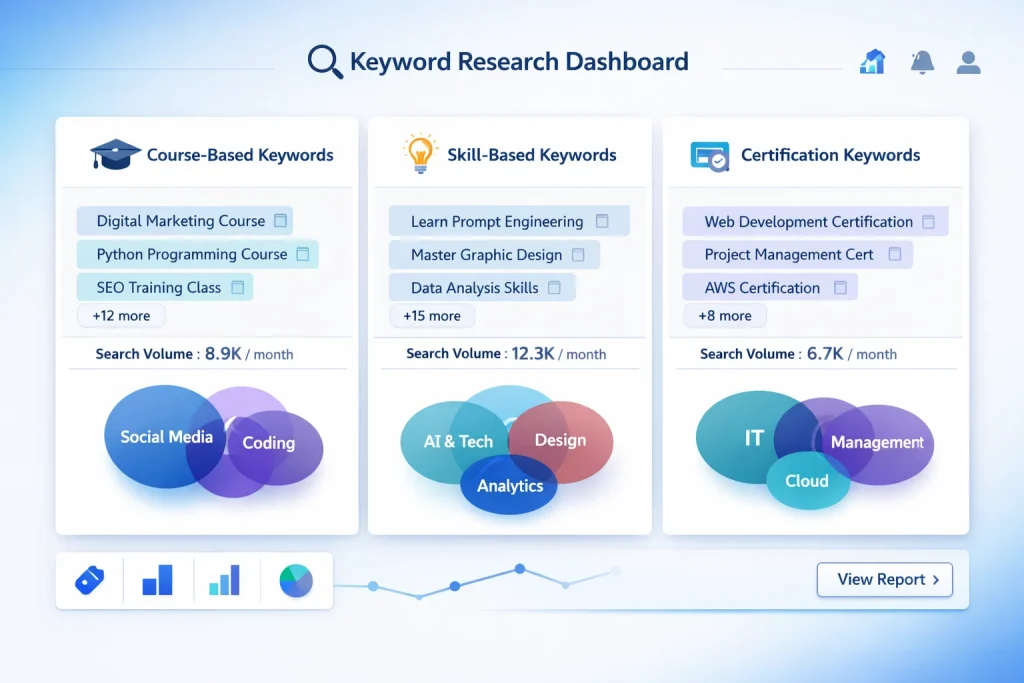
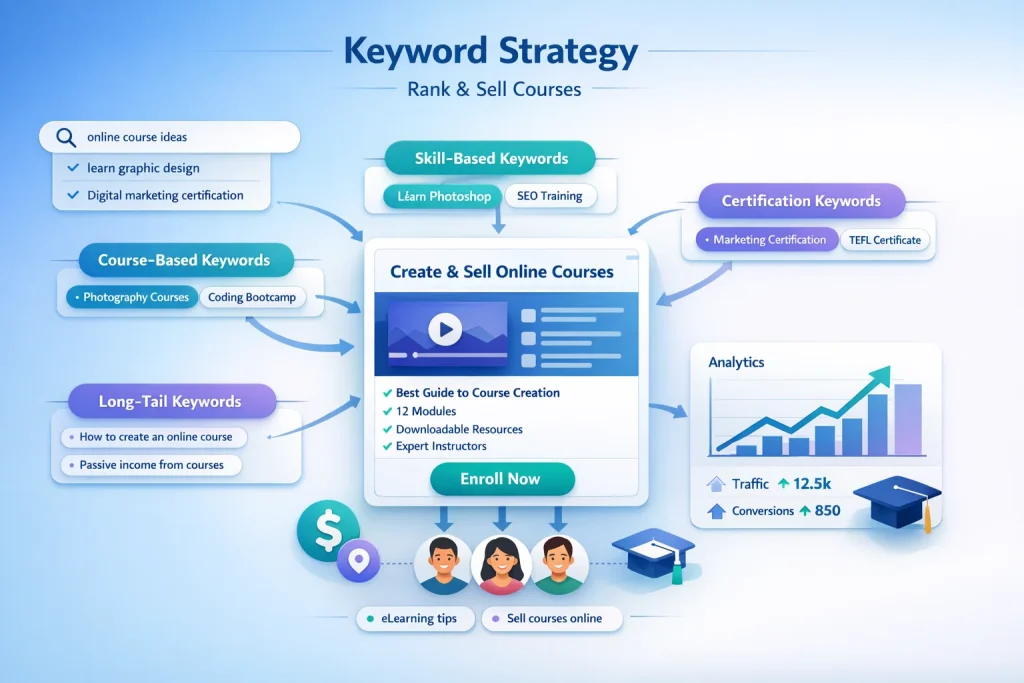
Keyword research is the foundation of ranking course pages. It helps you understand how users search for learning opportunities and what terms they use.
Course-Based Keywords
These include phrases like “digital marketing course” or “Python programming course,” which directly target course searches.
Skill-Based Keywords
Users often search for skills they want to learn, such as “learn graphic design” or “Excel skills for beginners.”
Certification Keywords
Many users look for certifications, making keywords like “certified SEO course” highly valuable.
Optimizing Course Page Content
Course pages need to provide both information and persuasion. They must clearly explain what the course offers while also encouraging users to enroll.
A well-optimized page answers user questions, builds trust, and aligns with search intent. This improves both rankings and conversions.
- Clear course title
- Detailed description
- Learning outcomes
- FAQs section
- Instructor information
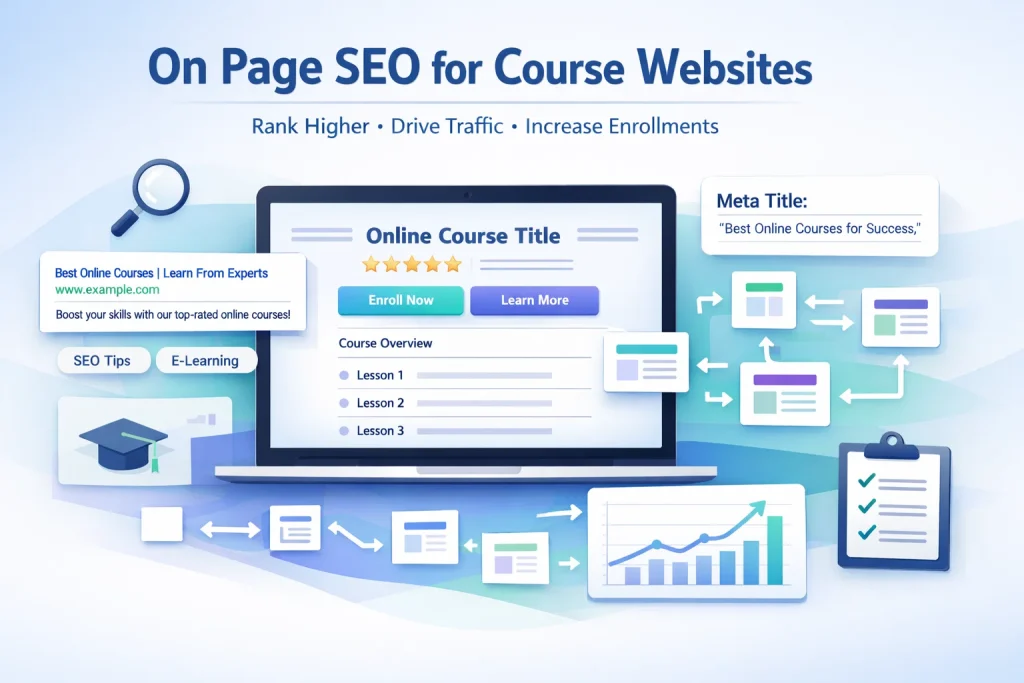
Title Tags and Meta Descriptions for Course Pages
Title tags and meta descriptions are often the first interaction users have with your course page. A well-crafted title should include the main keyword while clearly communicating the value of the course.
Meta descriptions should highlight key benefits, such as what users will learn, course duration, or certification details. This helps improve click-through rates and attract the right audience.
Using Schema Markup for Course Pages
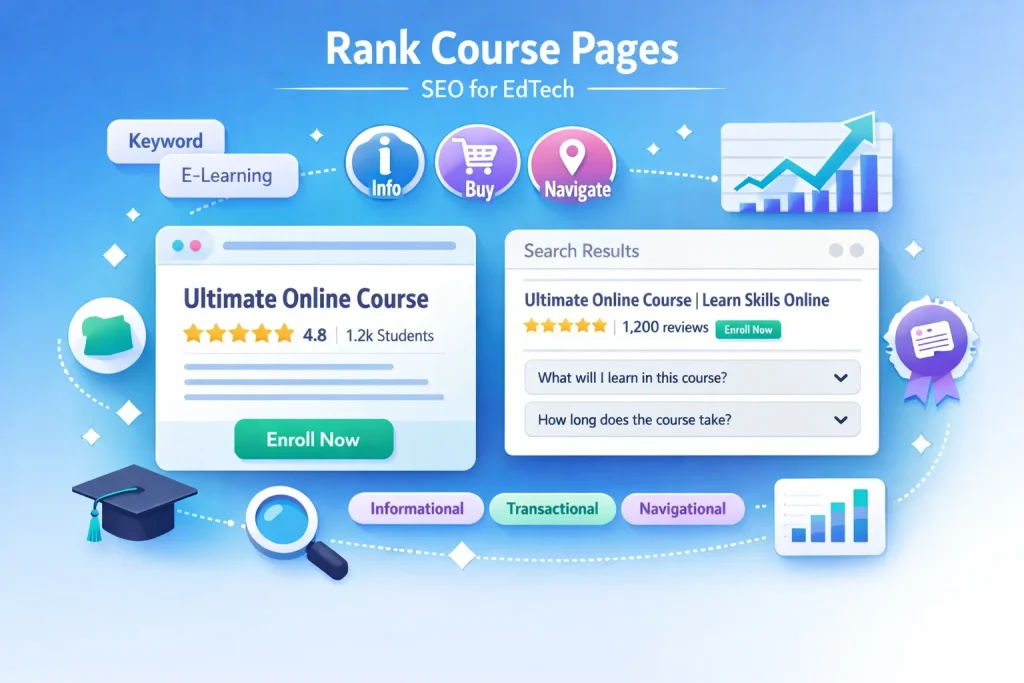
Schema markup helps search engines understand your course content more effectively. It can also enhance how your pages appear in search results.
Course Schema
This provides structured information about the course, including its name, description, and provider.
Review Schema
Adding reviews and ratings increases credibility and can improve click-through rates.
FAQ Schema
FAQ schema allows common questions to appear directly in search results, improving visibility.
Internal Linking and Blog Support
Course pages rarely perform well in isolation. They need support from other content on your website, especially blogs and informational pages.
A strong internal linking strategy creates a connected content ecosystem that improves both SEO and user experience.
- Link blogs to courses
- Use topic clusters
- Create supporting content
- Improve navigation
- Boost authority
Conversion Optimization for Course Pages
Ranking your course page is only part of the goal. The real objective is to convert visitors into students. This requires building trust and making the enrollment process easy and appealing.
A well-optimized course page should guide users toward action while addressing their concerns and expectations.
- Strong CTAs
- Social proof
- Reviews and ratings
- Clear pricing
- Trust signals
Common SEO Mistakes in EdTech Course Pages
Many EdTech websites fail to rank because they overlook key SEO principles. These mistakes often limit visibility and reduce the effectiveness of their pages.
Avoiding these issues can significantly improve both rankings and conversions.
- Thin content
- Poor keyword targeting
- No internal linking
- Ignoring mobile UX
- Weak CTAs
Step-by-Step Strategy to Rank Course Pages
A structured approach ensures that your SEO efforts are consistent and effective. Without a clear process, it becomes difficult to achieve sustainable results.
Following a step-by-step strategy helps you focus on the right elements and improve performance over time.
- Identify target keywords
- Optimize page content
- Add schema markup
- Build internal links
- Monitor performance
Final Thoughts
Ranking course pages on Google requires more than just basic optimization. It involves understanding user intent, creating valuable content, and building a strong content ecosystem.
By focusing on SEO fundamentals and continuously improving your pages, EdTech websites can increase visibility, attract the right audience, and drive more enrollments over time.
FAQs on Ranking Course Pages
1. How do you rank course pages on Google?
By optimizing content, targeting relevant keywords, improving user experience, and building internal links.
2. What keywords should course pages target?
Course-based, skill-based, and certification-related keywords are most effective.
3. Do course pages need blog support?
Yes, blogs help build authority and drive traffic to course pages.
4. How important is schema for courses?
Schema improves search visibility and helps search engines understand your content.
5. Can SEO increase course enrollments?
Yes, by attracting targeted users who are ready to learn or enroll.
6. How long does it take to rank course pages?
It can take several months depending on competition and optimization quality.
7. What are common SEO mistakes in EdTech?
Thin content, poor keyword targeting, lack of internal linking, and weak user experience.