
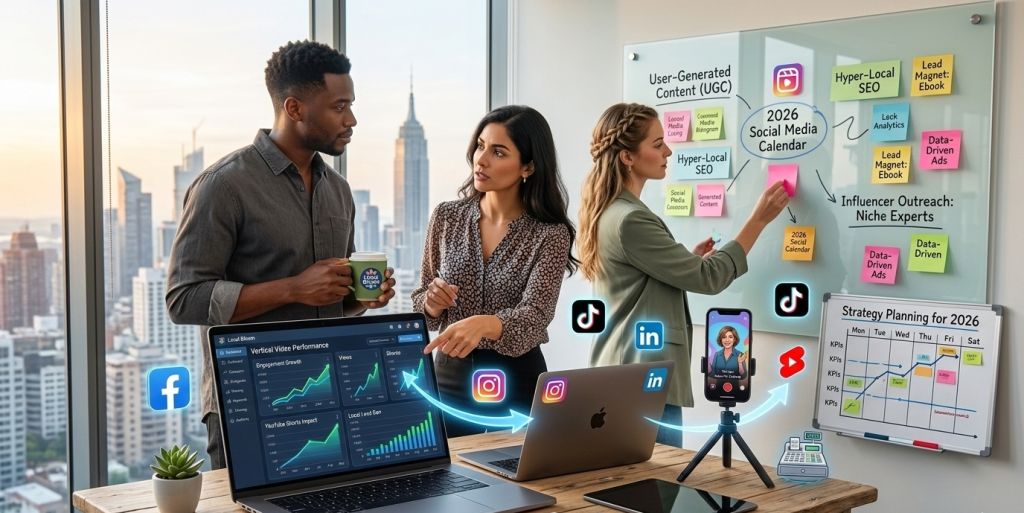
The marketing landscape is more competitive than ever. Large brands dominate with massive budgets. AI floods the internet with content. Small businesses cannot rely on random promotions anymore. Strategy, consistency, and digital visibility drive growth.
You don’t need a million-dollar budget. You need smarter tactics. In this guide, we cover 10 actionable marketing ideas any business can implement today. These strategies are low-cost but high-impact. Let’s grow your business.

Understand Your Audience Before Marketing
Know your buyers first. Create personas. Note age, job, pains. Ask what keeps them up. Use surveys or chats. CheckF Google Analytics for data. Why start here? Competitors skip it. They waste advertising money. We built personas for a cafe. Traffic targeted 50% better.
Short-Form Video Marketing (TikTok, Reels, Shorts)
Video rules 2026. Short clips get 80% views. Post behind-the-scenes fun. Share quick demos. Feature happy customers. Consistency counts. Film 3x weekly. Use phone apps. A barber client gained 2k followers in weeks. No budget needed. Reach explodes.
Video is no longer optional. It is the dominant language of the internet. Short videos can reach thousands of users without large budgets.
Behind-the-Scenes Show the human side of your business.
- Idea: A “day in the life” of your team.
- Idea: Packing an order for a customer.
Tutorials and Demos: Teach something valuable in 60 seconds.
- Idea: “3 Ways to Use [Your Product].”
- Idea: A quick fix for a common industry problem.
Customer Testimonials: Social proof builds trust instantly.
- Idea: A video interview with a happy client.
Start filming today. Your smartphone is enough.

Content Marketing and Blogging
Write helpful posts. Target SEO keywords like “small business tips.” Make guides or lists. Repurpose to social. Blogs build trust long-term. HubSpot data: Top blogs get 55% more visitors.
We ranked a plumber’s “Leak Fixes” post #1. Organic leads tripled. Post bi-weekly. Reuse everywhere. Ads stop working when you stop paying. Content works forever. Content marketing builds long-term organic traffic and authority.
Publish Educational Blog Posts. Answer the questions your customers are searching for.
- Action: Write a “Ultimate Guide to [Your Industry].”
- Action: Create a list of “Top 10 Tips for [Customer Goal].”
Target SEO Keywords: Use tools like Ahrefs or Ubersuggest. Find keywords with low competition.
- Action: Optimize your blog titles and headers for these keywords.
Repurpose Content: Don’t write once and forget.
- Action: Turn a blog post into a LinkedIn carousel.
- Action: Turn a blog quote into an Instagram graphic.

Email Marketing for High ROI
Email marketing remains one of the most profitable marketing channels for small businesses. Even in 2026, it delivers exceptional returns by allowing you to communicate directly with people already interested in your brand.
Studies show that email marketing can generate around $36 in revenue for every $1 spent. This makes it one of the highest-ROI strategies available to businesses with limited budgets.
Start by building a quality email list. Offer something valuable in exchange for an email address, such as a discount, free guide, or exclusive content. Once people subscribe, nurture the relationship instead of immediately pushing sales.
Use segmentation to group subscribers by interests, behavior, or purchase history. Personalized emails perform better because they speak directly to the reader’s needs.
Automation tools like Mailchimp or HubSpot make it easier to send welcome emails, product recommendations, and follow-up messages. With the right strategy, email marketing turns subscribers into loyal customers and repeat buyers.
Local SEO and Google Business Optimization
Local SEO helps small businesses appear in search results when nearby customers look for services. In 2026, many buyers search phrases like “near me” or include a city name when they need a product or service quickly. If your business is not optimized for local search, you miss valuable leads.
Start by claiming and optimizing your Google Business Profile. Add accurate business details such as your name, address, phone number, website, and operating hours. Choose the correct business categories and write a clear description using relevant keywords.
Upload high-quality photos of your location, products, or services. Businesses with active profiles often attract more clicks and calls. Post regular updates, offers, or announcements to keep your listing fresh.
Customer reviews also play a major role in local rankings. Encourage satisfied clients to leave positive reviews and always respond professionally.
Finally, create location-focused pages on your website and ensure your business information is consistent across directories. Strong local SEO improves visibility, builds trust, and drives more calls, visits, and sales.
Community Marketing and Local Partnerships
Community marketing is one of the most effective ways for small businesses to build trust and long-term customer relationships. Instead of focusing only on online promotion, this strategy connects your business directly with the people and organizations in your local area.
Start by partnering with non-competing businesses that share a similar audience. For example, a gym can collaborate with a nutritionist, a coffee shop can partner with a local bakery, or a salon can work with a fashion boutique. These partnerships allow both businesses to promote each other’s services and reach new customers.
You can also host joint events, workshops, or webinars to engage the community. Cross-promotions on social media, bundled offers, and referral programs can further expand your reach.
Supporting local charities, sponsoring community events, or participating in local markets also strengthens your brand reputation.
When businesses collaborate locally, they create stronger connections, increase brand visibility, and attract loyal customers who prefer supporting community-focused brands.
Paid Advertising for Fast Results
Paid advertising is one of the fastest ways for small businesses to generate traffic and leads. While organic strategies like SEO and content marketing take time to build momentum, paid ads can deliver immediate visibility and measurable results.
Platforms such as Google Ads, Facebook Ads, and Instagram Ads allow businesses to target specific audiences based on location, interests, behavior, and search intent. This means your ads appear directly in front of people who are already looking for your products or services.
Start with a small budget and test different ad creatives, headlines, and offers. Even a daily budget of $20–$50 can produce valuable insights about what resonates with your audience. Focus on clear calls-to-action, such as booking a service, claiming a discount, or visiting your website.
Tracking performance is essential. Monitor clicks, conversions, and return on ad spend to identify the campaigns that perform best.
When optimized correctly, paid advertising can quickly boost brand awareness, attract qualified leads, and drive consistent sales growth.
Customer Retention and Loyalty Programs
Winning a new customer is valuable, but keeping an existing one is even more powerful. Studies consistently show that retaining customers costs far less than acquiring new ones. For small businesses in 2026, focusing on customer retention and loyalty programs can create stable, long-term revenue.
Start by rewarding repeat customers. Loyalty programs encourage people to come back by offering points, discounts, exclusive deals, or early access to new products. Even simple rewards like “Buy 5, Get 1 Free” can motivate customers to stay loyal.
Personalization also improves retention. Send follow-up emails after purchases, provide special offers on birthdays, or recommend products based on past behavior. These small touches make customers feel appreciated.
Another effective strategy is a referral program. When satisfied customers recommend your business to friends and family, you gain new clients at a lower cost.
By focusing on retention, small businesses increase customer lifetime value, strengthen trust, and build a loyal community around their brand.
Use AI Tools to Improve Marketing Efficiency
Artificial Intelligence is transforming how small businesses handle marketing. In 2026, AI tools help businesses save time, reduce costs, and improve results by automating repetitive tasks and analyzing data quickly.
AI can assist with content creation, social media scheduling, email marketing, and customer support. Tools like ChatGPT, Jasper, and Copy.ai help generate blog ideas, social media captions, and marketing copy in minutes. This allows small teams to produce consistent content without spending hours brainstorming.
Marketing automation platforms also use AI to personalize campaigns. For example, email tools can recommend the best send times, segment audiences, and suggest subject lines that increase open rates.
AI-powered analytics tools analyze customer behavior and predict trends, helping businesses make smarter marketing decisions.
When used correctly, AI does not replace creativity—it enhances it. Small businesses that integrate AI into their marketing strategy can work more efficiently, reach the right audience faster, and scale their marketing efforts with fewer resources.
Track Metrics and Optimize Your Marketing
You can’t improve what you don’t measure. Tracking metrics is essential to understand which marketing strategies work and which need adjustment. Small businesses in 2026 must focus on data-driven decisions to grow effectively.
Track conversion metrics as well. Measure leads, sales, email sign-ups, or downloads to see how your marketing turns visitors into customers. This shows where your funnel is strong and where it leaks.
Monitor social media engagement. Track likes, shares, comments, and follower growth to understand what content resonates with your audience.
Use these insights to optimize campaigns. Update underperforming content, test headlines, adjust posting times, and refine targeting. Regular optimization ensures your marketing budget is spent efficiently and drives better results over time.
wind-up meaning
Marketing success in 2026 comes from execution, not just ideas. Small budgets can achieve big wins when used strategically. Short-form videos spark engagement. Emails nurture relationships. SEO builds long-term visibility. Partnerships expand reach. Retention programs save revenue.
Start simple. Pick two actionable ideas from this guide. Implement them this week. Measure results next week. Adjust based on data. Consistency and small improvements compound over time.
Feeling overwhelmed? Expert Marketing Blog Writing Services can plan, create, and optimize your campaigns for you.
