The Complete Guide to Ranking Your Fashion Brand on Google
If you run an online fashion brand or fashion eCommerce store, you already know how crowded the digital marketplace has become. When shoppers are looking for clothing, accessories, or style inspiration, they almost always turn to Google first. If your website isn’t visible on search engines, you’re essentially invisible to buyers who are actively searching for the products you sell.
That’s why on page SEO for fashion brands is one of the most powerful strategies for generating consistent organic traffic and higher conversion rates. Unlike paid ads that stop delivering traffic once your monthly budget runs out, SEO continues to work long after it’s implemented, bringing qualified fashion shoppers to your site over time.
In this guide, we’ll walk through the most important fashion on-page SEO strategies that help your brand rank higher, attract relevant search traffic, and convert visitors into buyers.
Why On Page SEO Is Critical for Fashion Brands
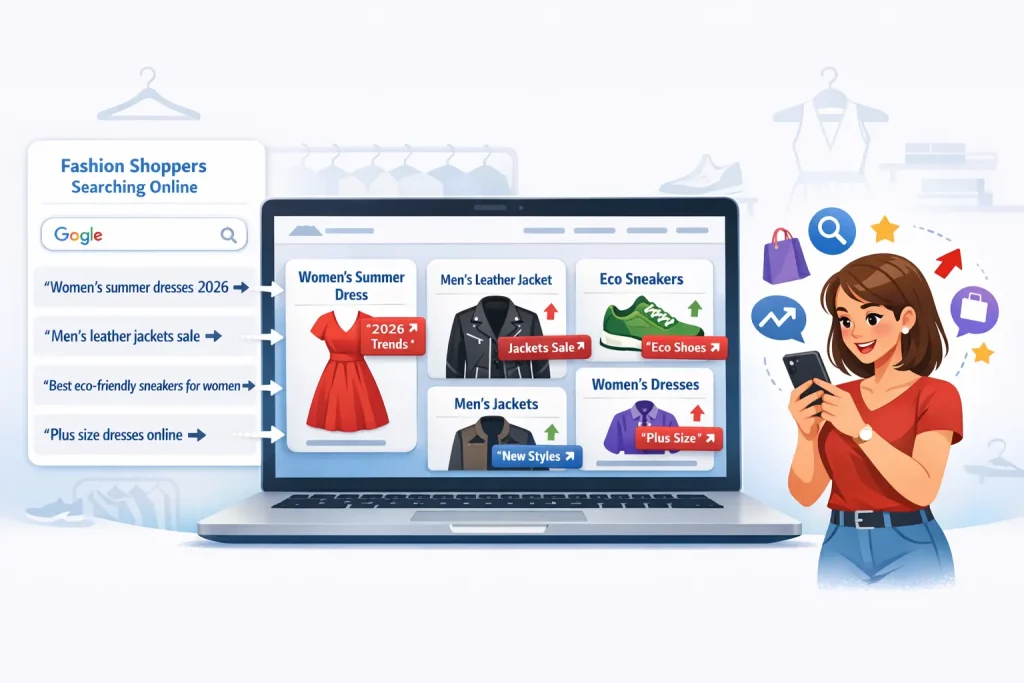
Fashion and apparel searches are often high-intent queries — for example, “summer dresses for women,” “men’s leather jackets,” or “sustainable sneakers online.” Shoppers using these search terms are often ready to browse or buy, meaning ranking well for these keywords can directly translate into revenue.
However, many fashion brands struggle with visibility issues because their product descriptions are thin, category pages lack keyword context, and title tags/meta descriptions don’t reflect what users are searching for. This makes it difficult for search engines to understand what your brand sells. On page SEO solves these problems by structuring your website in a way that clearly communicates your products, categories, and brand expertise to both users and search engines.
Key benefits of on page SEO for fashion brands include:
- Higher rankings for product and category searches (e.g., “women’s summer dress”)
- More qualified organic traffic from fashion shoppers
- Reduced dependency on paid advertising
- Improved trust and brand credibility online
- Enhanced user experience that boosts conversions
When your fashion website is optimized correctly, it becomes a round‑the‑clock lead and sales generation machine rather than a static digital catalog.
Keyword Research for Fashion Website SEO
Many fashion retailers make the mistake of targeting broad terms like “fashion” or “clothing,” which are extremely competitive and non‑specific. While these keywords may have high search volume, they rarely convert because they don’t match specific shopper intent. Instead, fashion brands need to focus on product‑specific, trend‑driven, and long‑tail keywords that speak directly to what potential customers are searching for.
Important types of keywords for fashion SEO include:
- Product keywords: “women’s summer dress,” “men’s leather boots”
- Category keywords: “plus size dresses,” “streetwear hoodies”
- Long‑tail searches: “best eco‑friendly sneakers for women”
- Seasonal/trend searches: “2026 spring fashion trends”
Using tools like Ahrefs, SEMrush, and Google Keyword Planner helps you uncover these relevant search terms, understand their search intent, and map them to your product, category, and content pages.
Optimizing Product Pages for SEO
Product pages are the cornerstone of any fashion eCommerce site, yet many brands still use duplicate manufacturer descriptions or minimal text. This leads to thin content that search engines don’t understand well, resulting in poor visibility. Fashion SEO requires product pages that speak to both search engines and shoppers with context, value, and relevance.
Elements of SEO‑optimized fashion product pages:
- Keyword‑rich product titles and headings (e.g., “Women’s Red Linen Summer Dress”)
- Unique and engaging product descriptions that highlight materials, fit, and style
- Bulleted lists for size charts, colors, and special details
- User‑friendly formatting for readability
- Internal links to related products and collections
- Calls‑to‑action like “Add to Cart” or “Shop Styles Now”
Example product pages to optimize include:
- Women’s summer dresses
- Men’s leather jackets
- Sustainable sneakers
- Accessories (bags, watches, jewelry)
Well‑optimized product pages not only help you rank for “product + brand” queries but also enhance the search experience for potential buyers.
Optimizing Category & Collection Pages
Category and collection pages help shoppers discover groups of related items, such as “women’s dresses” or “summer outfits.” Yet many fashion brands leave these pages under‑optimized with generic names and little content. This makes it hard for Google to understand what products are on the page, limiting rankings for broader yet relevant terms.
Best practices for category page SEO:
- Use descriptive URLs (e.g., /womens-summer-dresses/)
- Add unique introductory content describing the category and trends
- Use keywords naturally within headings and paragraphs
- Include internal links to featured products and filters
- Implement breadcrumbs for better navigation
Optimized category pages allow you to target broader keywords such as “women’s dresses,” “men’s jackets,” and “plus size tops,” which are essential for higher visibility in search results.
Title Tags & Meta Descriptions for Fashion Websites
Title tags and meta descriptions are often the first thing a shopper sees on search engine results pages (SERPs). While they don’t directly impact rankings, they significantly influence click‑through rates (CTR). If your titles and descriptions are generic or missing keywords, potential customers are less likely to click your page.
Tips for fashion title tags & meta descriptions:
- Include your primary keyword (e.g., “women’s sneakers”)
- Add brand or collection names where appropriate
- Keep meta descriptions under 160 characters
- Highlight benefits, unique selling points, or seasonal offers
For example:
Title tag: Women’s Summer Dresses – Trendy & Affordable | YourBrand
Meta description: Shop stylish women’s summer dresses with free shipping. Discover new arrivals & trending styles now.
Optimized tags help shoppers instantly understand your page and improve visibility for key search queries.
Image Optimization for Fashion Websites
Fashion brands depend heavily on visuals, but large, unoptimized images can drastically slow down site speed — one of the most critical aspects of modern on‑page SEO. Slow loading pages lead to higher bounce rates and lower search rankings.
Best practices for fashion image SEO:
- Use descriptive file names (e.g., blue-denim-jacket.jpg)
- Add alt text that includes relevant keywords (e.g., “blue denim jacket” or “women’s summer dress red”)
- Compress images with tools like TinyPNG
- Use next‑gen formats like WebP
- Ensure images are mobile‑responsive
Image optimization improves page speed, accessibility, and search indexing, while also helping your visuals rank in Google Image Search.
Internal Linking Strategy for Fashion Websites
Internal linking helps Google understand the structure of your website and the relationship between pages. Many fashion brands overlook this, leading to isolated pages that don’t benefit from the authority of the rest of the site. Strong internal linking keeps users engaged longer and helps important pages rank better.
Internal linking strategies for fashion SEO:
- Link product pages to related products and collections
- Link blog posts to category and product pages
- Use keyword‑rich anchor text when appropriate
- Maintain consistent hierarchy (e.g., homepage → categories → products)
For example, a blog post about “2026 spring fashion trends” can link directly to relevant category and product pages, boosting their relevance and visibility.
Schema Markup for Fashion Brands
Schema markup is structured data that helps search engines understand the content on your site more deeply. By implementing schema, fashion brands can enhance their search listings with rich results like ratings, prices, availability, and FAQs — leading to higher visibility and CTR.
Important schema types for fashion SEO:
- Product schema (price, brand, availability)
- Review schema (ratings, user feedback)
- Breadcrumb schema (site hierarchy)
- FAQ schema (common shopper questions)
These enhancements make your search listings more informative and attractive to users, often leading to higher organic traffic.
Common On Page SEO Mistakes Fashion Brands Make
Many fashion websites look great visually but fall short in search engines because they miss essential SEO fundamentals. Knowing what not to do is just as important as knowing what to do.
Common SEO mistakes include:
- Too‑short or thin product descriptions
- No unique content on category pages
- Missing target keywords in titles and meta descriptions
- Lack of internal linking
- Large, unoptimized images slowing down pages
- No schema markup implemented
Addressing these issues can quickly improve your fashion site’s organic rankings and user experience.
On Page SEO Checklist for Fashion Websites
With so many elements to optimize, it can be overwhelming to know where to start. Here’s a simple checklist to ensure your fashion website follows SEO best practices:
✔ Assign primary keywords to each product and category page
✔ Include long‑tail and trend‑based keywords where relevant
✔ Write detailed and useful product descriptions
✔ Optimize title tags and meta descriptions
✔ Add keyword‑rich alt text to images
✔ Implement schema markup for products and FAQs
✔ Create strong internal links
✔ Ensure fast page loading and mobile responsiveness
Using this checklist consistently will help your fashion brand achieve better rankings, more organic traffic, and higher conversions.
FAQs about On Page SEO for Fashion Brands
How do fashion brands rank higher on Google?
By optimizing product and category pages, targeting relevant keywords, and improving internal linking and user experience.
What keywords should fashion websites target?
Focus on product‑specific, category‑specific, and long‑tail keywords that reflect shopper intent, including seasonal and trend‑based searches.
Is SEO worth it for fashion brands?
Absolutely — SEO generates consistent organic traffic from shoppers actively searching for products, making it one of the most cost‑effective marketing strategies.
How long does fashion SEO take to show results?
Most fashion brands begin seeing noticeable improvements in rankings and traffic within 3–6 months of consistent optimization.
Should fashion websites create blog content?
Yes — blog content helps answer common shopper questions, build authority in your niche, and attract additional organic traffic.