In modern search optimization, ranking higher on Google depends heavily on how well a website is optimized at the page level. Businesses searching for terms like “SEO services near me,” “website optimization tools,” or “how to improve Google rankings” often struggle without the right tools.
This is where on-page SEO tools become essential. They help analyze, optimize, and improve website performance based on real search data and technical insights.
What Are On Page SEO Tools?
On-page SEO tools are software solutions designed to evaluate and improve individual web pages for better search visibility. They help identify gaps in content, keyword usage, metadata structure, and technical SEO signals that affect rankings.
These tools simplify optimization by turning complex SEO data into actionable recommendations that can be implemented quickly.
Why On Page SEO Tools Are Important
On-page optimization is no longer based on assumptions. Search engines evaluate hundreds of signals, and SEO tools help decode those signals into measurable actions.
These tools allow marketers to improve content relevance, fix technical issues, and align pages with search intent more effectively.
Key benefits include
- Better keyword targeting and content alignment
- Faster detection of technical SEO issues
- Improved CTR through meta optimization
- Enhanced user experience and page structure
Types of On Page SEO Tools
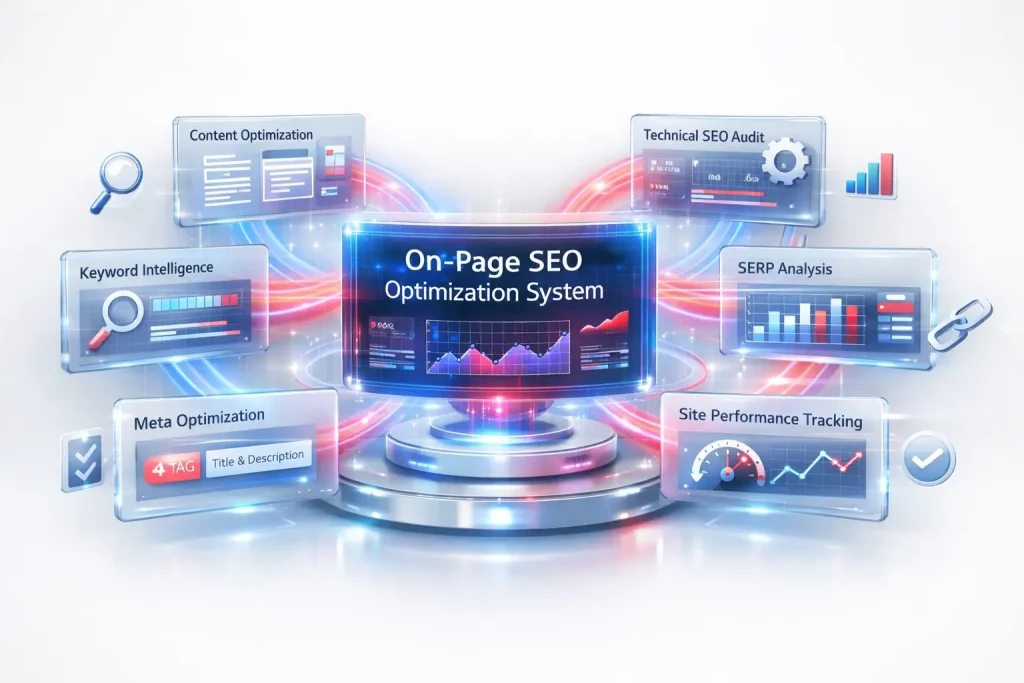
Before choosing specific tools, it is important to understand that on-page SEO consists of multiple optimization layers. Each layer requires a different type of tool for accurate analysis and improvement.
Together, these tools create a complete optimization system that improves both content and technical performance.
Content Optimization Tools
These tools focus on improving how well your content matches search intent. They analyze keyword usage, readability, and topical relevance.
They are especially useful for ensuring your content is semantically strong and aligned with ranking pages.
Technical SEO Tools
Technical tools identify issues that affect crawling, indexing, and site performance.
They help ensure your website structure is search engine friendly and free from errors that block rankings.
Keyword Research Tools
These tools help identify the right keywords to target based on search volume, competition, and intent.
They are essential for building content that attracts organic traffic.
SERP Analysis Tools
SERP tools analyze top-ranking pages to understand why they are performing well.
They help identify content structure, keyword usage patterns, and competitive gaps.
Best On Page SEO Tools and Their Core Functions
Before using SEO tools effectively, it is important to understand what each tool is best known for. Different tools specialize in different areas of on-page optimization, and combining them creates a stronger SEO workflow.
Below are some of the most widely used tools and their primary roles in on-page SEO:
Semrush
Semrush is widely used for complete on-page SEO audits and keyword optimization. It is especially strong in identifying content gaps, keyword opportunities, and technical SEO issues. It also provides detailed page-level SEO suggestions that help improve rankings and content structure.
Ahrefs
Ahrefs is best known for backlink analysis, but it also plays a strong role in on-page SEO through its site audit and keyword explorer features. It helps identify underperforming pages, keyword cannibalization issues, and content improvement opportunities based on real search data.
Google Search Console
Google Search Console is essential for understanding how Google views your website. It provides keyword performance data, indexing status, and CTR insights, making it critical for optimizing titles, meta descriptions, and page relevance.
Yoast SEO
Yoast SEO is primarily used for on-page content optimization, especially in WordPress websites. It helps improve readability, keyword placement, meta tags, and basic technical SEO structure directly within the content editor.
Screaming Frog SEO Spider
Screaming Frog is a technical SEO crawler that identifies on-page issues such as broken links, duplicate content, missing meta tags, and crawl errors. It is highly effective for large-scale website audits.
How SEO Tools Improve On Page Optimization
SEO tools make optimization more precise by turning raw data into actionable insights. Instead of manually analyzing pages, tools highlight exactly what needs improvement.
This leads to faster optimization cycles and better search performance.
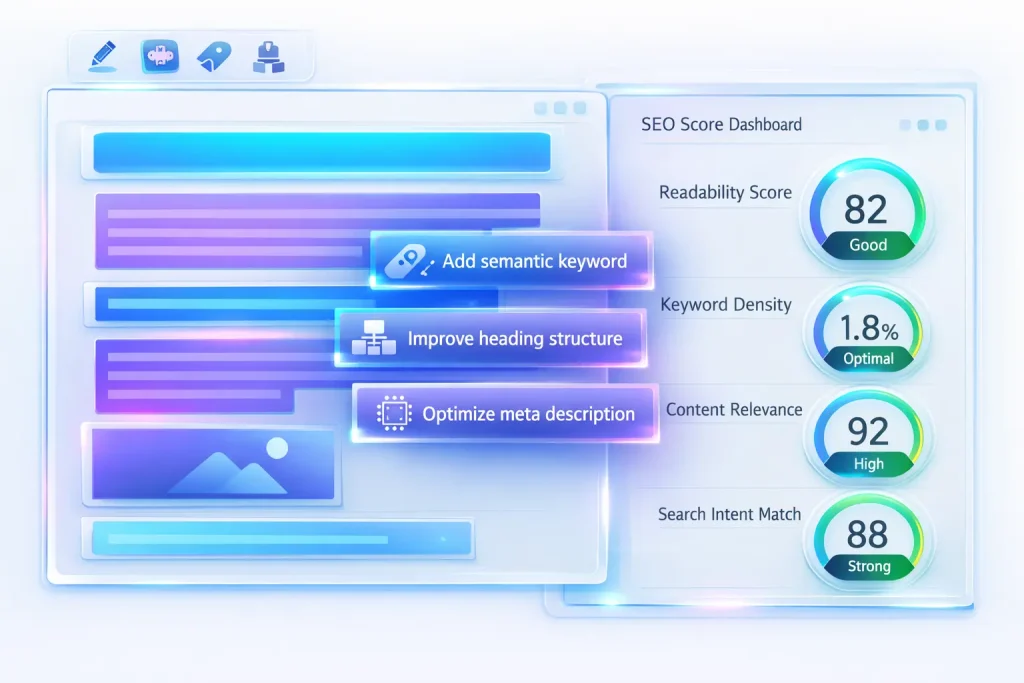
Improving Content Quality
Tools help identify missing keywords, readability issues, and content gaps that reduce ranking potential.
Fixing Technical Issues
They detect broken links, indexing problems, and metadata errors that affect search visibility.
Enhancing Keyword Targeting
SEO tools ensure that each page targets the right keywords based on search intent and competition level.
Free vs Paid On Page SEO Tools
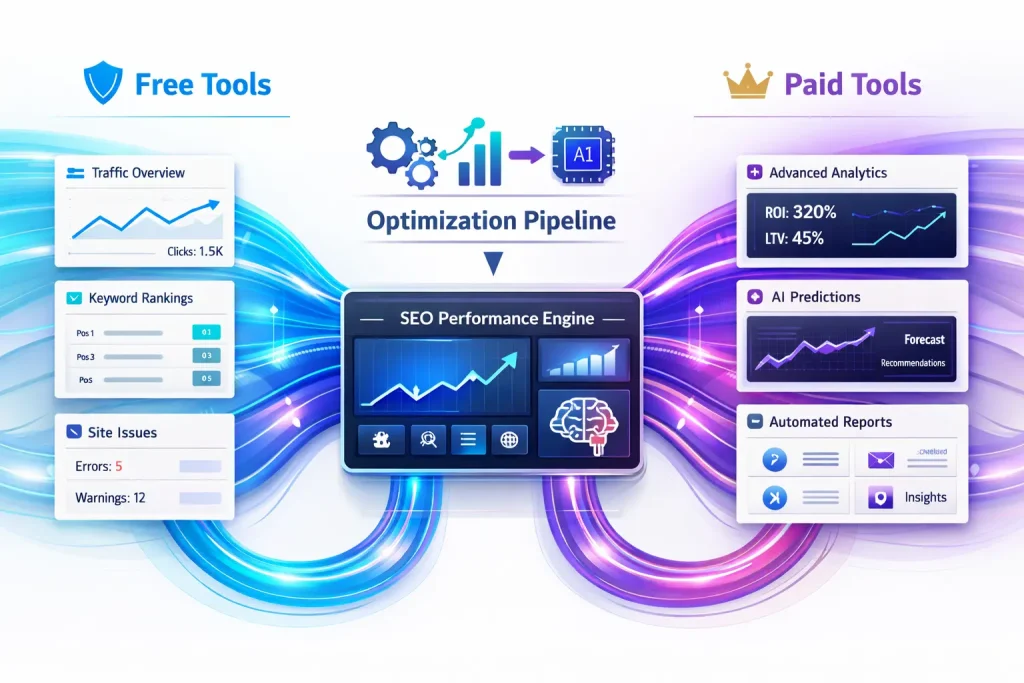
Different tools serve different purposes, and not all require investment. Free tools provide essential insights, while paid tools offer advanced analytics and automation features.
Choosing the right mix depends on business goals and SEO maturity.
Free SEO Tools
Free tools like Google Search Console and basic WordPress plugins are ideal for beginners and small websites.
Paid SEO Tools
Paid platforms like Semrush and Ahrefs provide advanced auditing, keyword tracking, and competitive analysis.
Hybrid Strategy
Most SEO professionals combine free and paid tools for a balanced and cost-effective workflow.
How to Choose the Right SEO Tool
Before selecting any SEO tool, it is important to understand your website’s needs. Different tools solve different problems, and choosing incorrectly can lead to wasted effort.
A structured selection process ensures better ROI and optimization results.
Business Size Consideration
Smaller websites may only need basic tools, while larger businesses require advanced platforms.
Feature Requirements
Focus on whether you need content optimization, technical auditing, or keyword research capabilities.
Budget and ROI
Always evaluate whether the tool improves rankings and traffic enough to justify its cost.
Common Mistakes When Using SEO Tools
Many users rely too heavily on tools without understanding SEO strategy. This leads to incomplete or incorrect optimization decisions.
Tools should guide strategy, not replace it.
Over-relying on automation
Ignoring manual SEO analysis
Misinterpreting data insights
Why Your Website Needs a Blog for SEO Tools Strategy
A blog helps expand keyword coverage and allows continuous application of SEO tool insights. It also strengthens internal linking and improves topical authority.
Without a blog, it becomes difficult to scale SEO performance effectively.
Final Thoughts
On-page SEO tools are essential for improving rankings and optimizing website performance. They provide the insights needed to make data-driven decisions that improve visibility and traffic.
When used strategically, th tools can significantly enhance both content quality and technical SEO performance.
FAQs about Tools for On Page SEO
What are on page SEO tools?
They are tools used to optimize content, structure, and technical elements of web pages
Which tools are best for on page SEO?
Semrush, Ahrefs, Google Search Console, Yoast SEO, and Screaming Frog are widely used
Are SEO tools necessary for ranking?
Yes, they help identify and fix issues that impact visibility and performance
What is the best free SEO tool?
Google Search Console is one of the most powerful free SEO tools
How do SEO tools improve rankings?
They provide data-driven insights to optimize content and fix technical issues
Can beginners use SEO tools?
Yes, many tools are beginner-friendly with guided recommendations
Do paid SEO tools perform better?
Paid tools offer deeper insights, automation, and competitive analysis features