
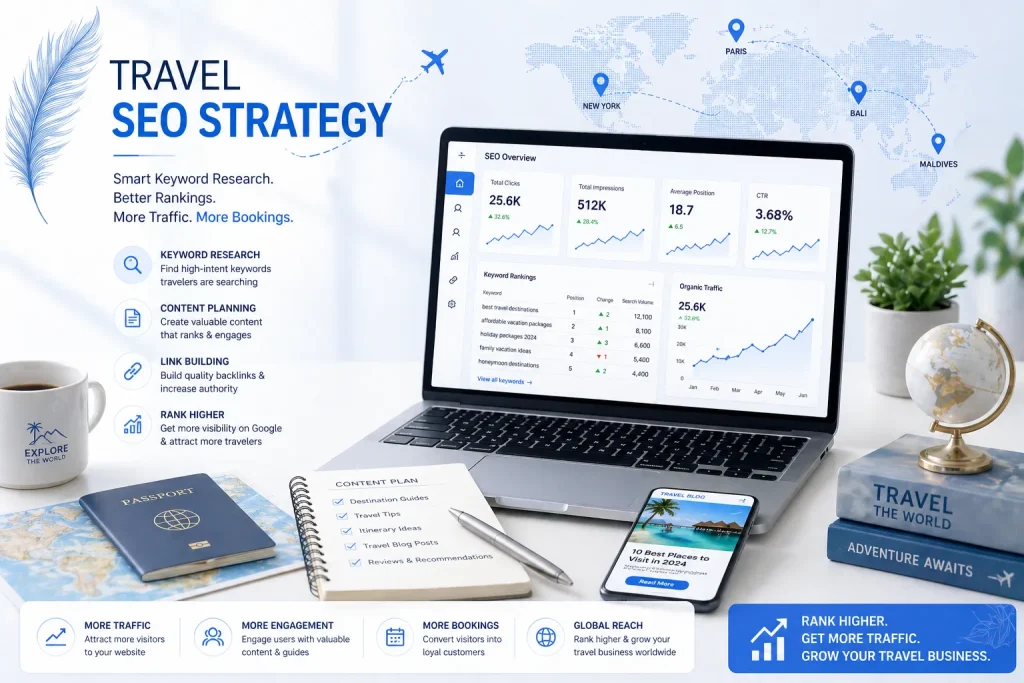
How Travel Websites Rank on Google (Complete SEO Guide)
Ranking a travel website on Google is not easy.
The travel niche is one of the most competitive online. Thousands of websites publish content about destinations, itineraries, and travel tips every day. If your site is not properly optimized, it will get buried under stronger competitors.
But here’s the truth:
👉 Travel websites don’t rank because of luck.
👉 They rank because of strategy, structure, and consistency.
This guide explains exactly how travel websites rank on Google—and how you can apply the same strategy to grow traffic and bookings.
Quick Answer: How Travel Websites Rank on Google
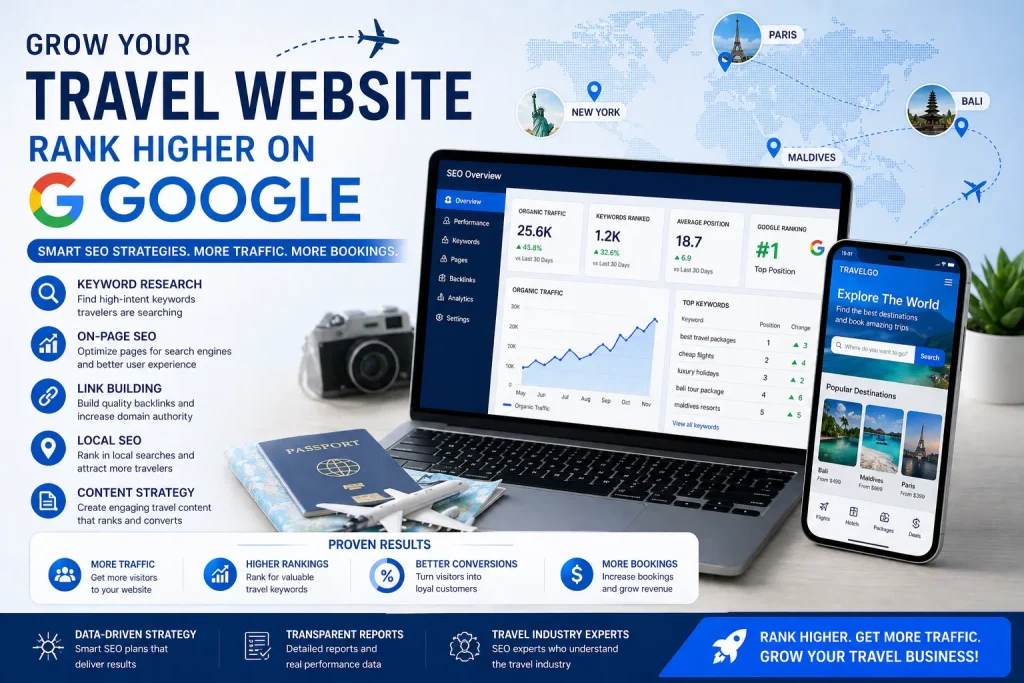
Travel websites rank on Google by:
- Target long-tail travel keywords
- Publish high-quality destination content
- Build internal links between pages
- Optimize on-page SEO elements
- Earn backlinks from relevant websites
What Determines Travel Website Rankings on Google?
Google uses hundreds of ranking factors, but for travel websites, the most important are:
- Content quality and depth
- Keyword relevance
- Backlinks and authority
- Internal linking structure
- User experience
Google’s goal is simple:
👉 Show the most helpful travel content for each search query
Example of a Ranking Travel Website Structure
Travel to Bali
→ Bali itinerary
→ Bali travel tips
→ Bali cost guide
Keyword Research for Travel SEO
Keyword research is the foundation of ranking.
Without it, your content won’t match what people are searching for.
Types of Keywords Travel Websites Should Target
1. Informational Keywords
These attract users early in the journey.
Examples:
- best places to visit in Bali
- things to do in Dubai
- travel tips for Europe
2. Commercial Keywords
These bring high-intent users.
Examples:
- Dubai tour packages
- Bali honeymoon packages
- travel agency near me
3. Long-Tail Keywords (Most Important)
These are easier to rank and convert better.
Examples:
- 5-day Bali itinerary for couples
- budget Thailand travel guide
- best time to visit Maldives for honeymoon
👉 Long-tail keywords = fastest way to get traffic
Competitor Content Gaps (Big Opportunity)
Most travel SEO articles:
- Focus only on basic tips
- Ignore content strategy
- Don’t explain how to generate bookings
- Lack internal linking guidance
How You Win
You combine:
✔ SEO strategy
✔ Content marketing
✔ Conversion optimization
Content Strategy for Travel Websites
Content is the biggest ranking factor.
Travel SEO is content-driven SEO.
Types of Content That Rank
1. Destination Guides
Detailed, in-depth travel content.
2. Travel Itineraries
Step-by-step travel plans.
3. Travel Tips
Helpful advice for travelers.
4. Comparison Articles
Example: Bali vs Phuket
Content Structure That Works
Each article should include:
- Clear headings
- Keyword placement
- Internal links
- Helpful information
On-Page SEO for Travel Websites
On-page SEO helps Google understand your content.
Key Elements:
- Keyword in title
- Keyword in H1
- Proper heading hierarchy
- Meta description
- Internal links
Internal Linking Strategy (CRITICAL)
This is where most travel websites fail.
Internal linking connects your content and improves rankings.
Example:
A blog about “Dubai travel tips” should link to:
- Dubai itinerary
- Dubai tour packages
- Related blog posts
Why It Matters:
- Improves SEO
- Keeps users engaged
- Increases conversions
👉 If you want structured SEO content, use
travel blog writing services
to build internal linking properly.
Backlinks: The Authority Factor
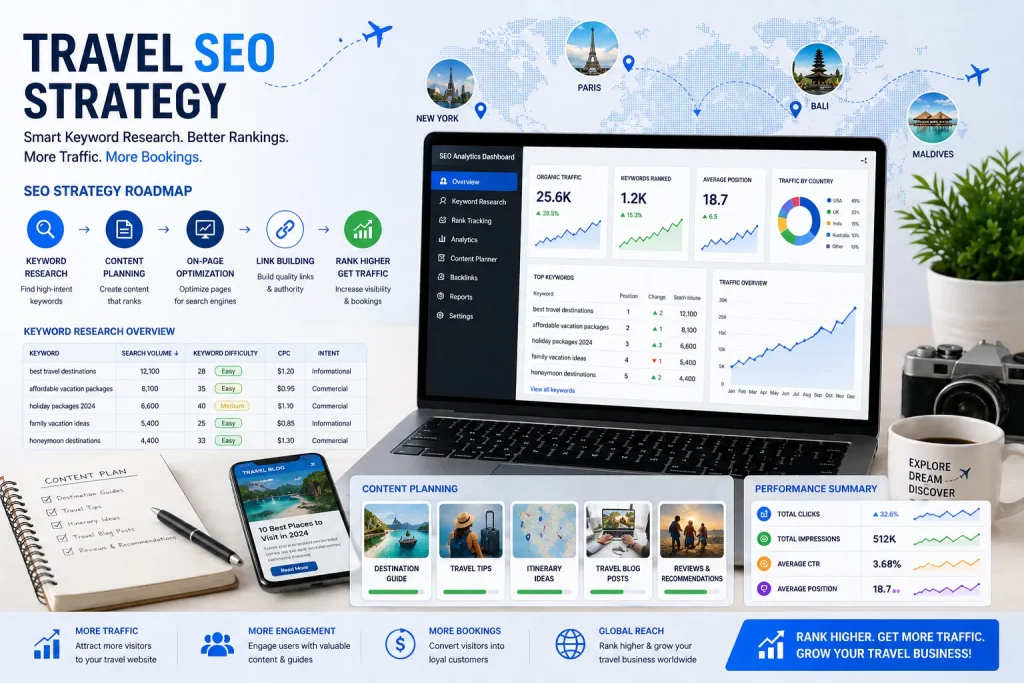
Backlinks are one of the strongest ranking signals.
Ways to Get Backlinks:
- Guest posting
- Travel blogs
- Partnerships
- Directories
👉 More quality backlinks = higher authority
Website Structure for Travel SEO
Your site should be organized clearly.
Ideal Structure:
Homepage
→ Destination Pages
→ Blog Content
Example:
Travel to Bali
→ Bali itinerary
→ Bali travel tips
→ Bali cost guide
👉 This builds topical authority
Local SEO for Travel Agencies
If you run a travel business, local SEO is essential.
Target Keywords:
- travel agency near me
- travel agency in [city]
Optimization Steps:
- Google Business Profile
- Reviews
- Location keywords
- NAP consistency
User Experience (UX) and SEO
Google tracks how users interact with your site.
Important Factors:
- Page speed
- Mobile optimization
- Navigation
- Readability
👉 Better UX = better rankings
How Travel Websites Build Authority
Authority comes from depth and consistency.
Example Topic Cluster:
Pillar: Travel to Thailand
Cluster:
- Thailand itinerary
- best time to visit Thailand
- Thailand travel cost
- Thailand travel tips
Travel websites that consistently publish SEO content tend to see steady organic traffic growth.
Travel SEO Checklist
- Keyword research completed
- Blog content published
- Internal links added
- Pages optimized
- Backlinks built
Step-by-Step SEO Plan for Travel Websites
Follow this system:
- Find long-tail keywords
- Publish SEO blog content
- Optimize service pages
- Build internal links
- Track performance
Content-driven SEO is one of the most effective ways to generate travel bookings.
Common Mistakes Travel Websites Make
Avoid these:
- No keyword strategy
- Thin content
- No internal linking
- Slow website
- Inconsistent publishing
How Travel Websites Generate Traffic & Bookings
SEO works like a funnel:
- User searches
- Finds your content
- Reads your blog
- Clicks internal links
- Visits service page
- Books
Want to grow your travel website traffic faster?
Do Travel Websites Need Professional SEO Content?
SEO is not just writing.
It requires:
- planning
- structure
- optimization
👉 If you want faster growth,
travel blog writing services
can help you create ranking-focused content.
Final Thoughts
Ranking a travel website on Google takes time, but it is achievable.
Focus on:
- keyword research
- content strategy
- internal linking
- SEO optimization
With consistency, your website can grow traffic, authority, and bookings.

Pingback: Cost of Travel Blog Writing Services: Pricing Guide (2026)