Complete SEO Strategy
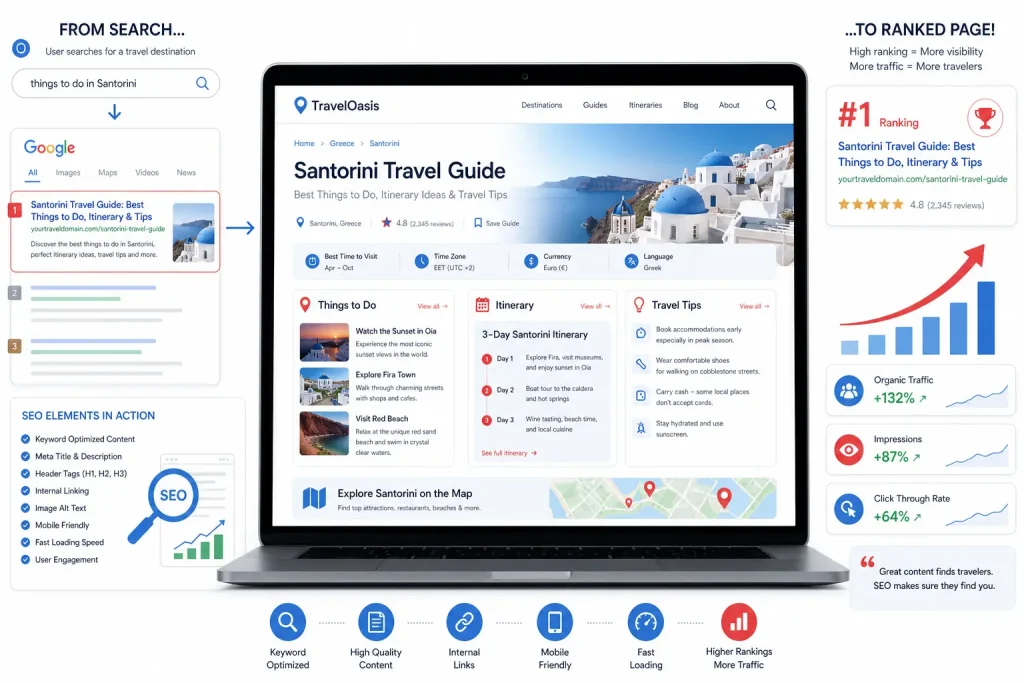
The travel niche looks exciting from the outside, but from an SEO perspective, it is one of the toughest spaces to compete in. Thousands of blogs publish destination guides, travel tips, and itineraries every day. Simply writing about a place or sharing personal experiences is no longer enough to rank.
When users search for queries like “things to do in Bali,” “best time to visit Paris,” or “budget travel tips,” search engines prefer websites that show deep expertise across the entire topic, not just one or two articles. This is where most travel blogs fall behind.
Building topical authority in the travel niche is the key to standing out. It allows you to create a structured content ecosystem that signals expertise, improves rankings, and drives consistent organic traffic over time.
What Is Topical Authority in the Travel Niche
Topical authority in the travel niche refers to how well your website covers a specific travel subject, such as a destination, type of travel, or audience segment. It is achieved by creating comprehensive and interconnected content.
Why Travel SEO Is Highly Competitive
Travel is a saturated niche where high-authority websites dominate search results. Without a clear strategy, new or smaller blogs struggle to gain visibility.
Topical Authority vs Traditional Travel Blogging
Traditional travel blogging often focuses on individual posts. Topical authority requires a structured approach where all content pieces are connected and cover a topic in depth.
Why Topical Authority Matters for Travel Blogs
Travel users rely heavily on search engines to plan their trips. They want detailed, reliable, and well-organized information before making decisions. If your website provides scattered or incomplete content, users and search engines will both lose trust.
Building topical authority helps position your blog as a reliable resource. It ensures that users find everything they need in one place, increasing engagement and improving rankings.
- Improves rankings
- Builds trust
- Increases traffic
- Strengthens niche authority
- Supports long-term growth
Keyword Research for Travel SEO Strategy
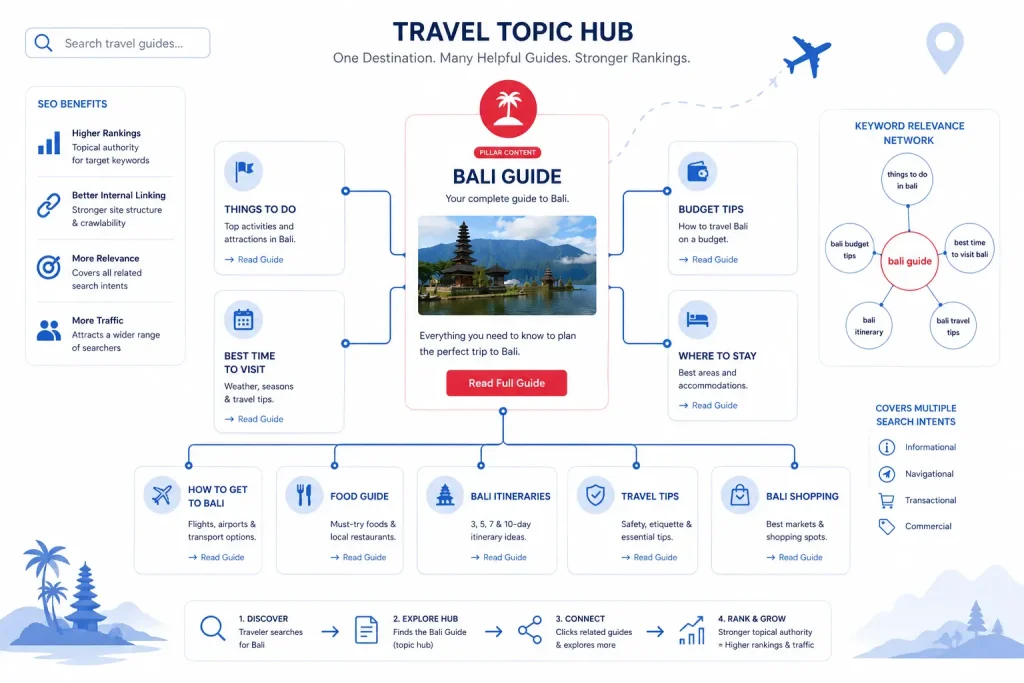
Keyword research is the foundation of building topical authority. It helps you identify what travelers are searching for and how you should structure your content.
Targeting the right mix of keywords ensures that your blog covers both broad and specific topics within the travel niche.
Destination Keywords
These are location-based keywords like “Thailand travel guide” or “places to visit in Italy.” They form the core of most travel content strategies.
Travel Intent Keywords
These reflect user intent, such as “best budget hotels,” “family-friendly destinations,” or “luxury travel experiences.”
Long-Tail Travel Keywords
Long-tail keywords capture specific queries like “3-day itinerary for Dubai” or “best time to visit Maldives for honeymoon.” These often have higher conversion potential.
Creating Topic Clusters for Travel Content
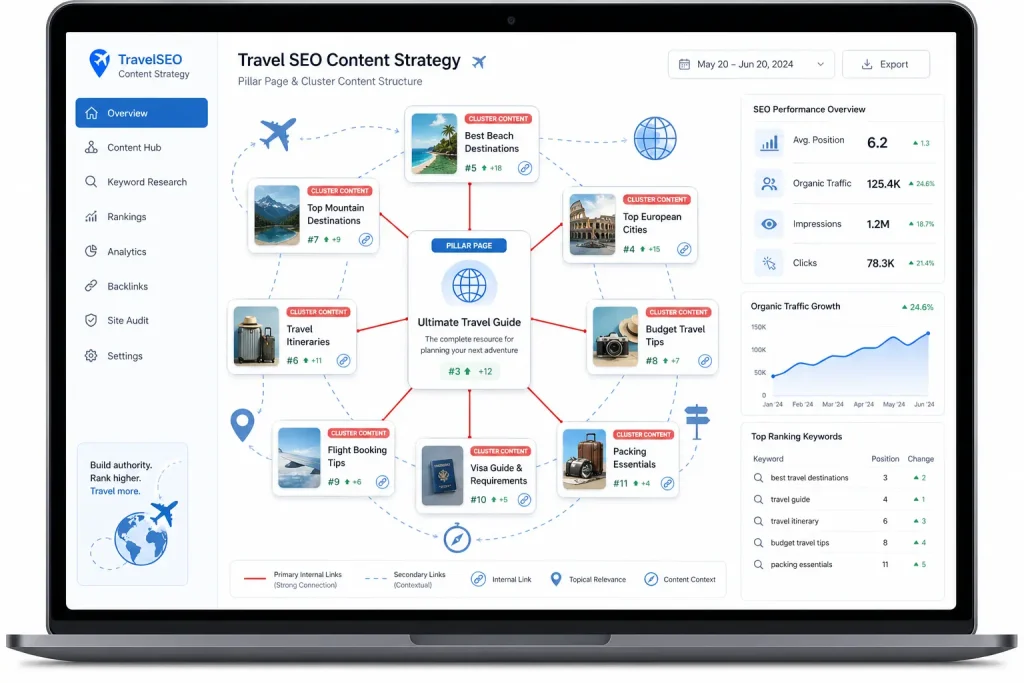
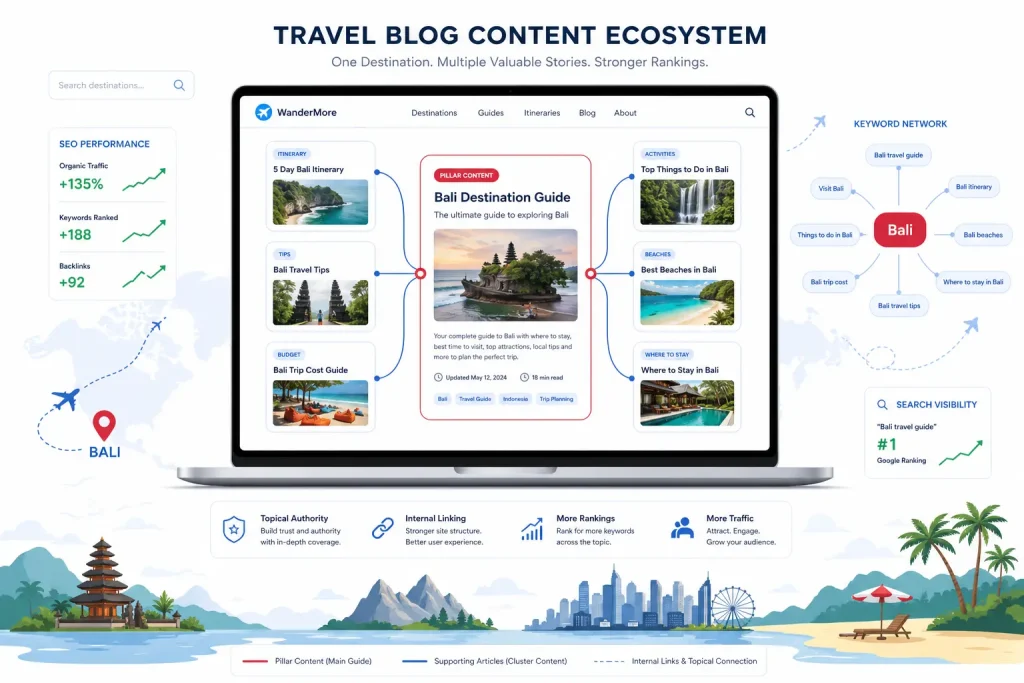
Topic clusters organize your content into structured groups centered around a main topic. This approach helps search engines understand your content and improves user navigation.
Instead of publishing random articles, you build a connected system of content that covers a topic completely.
- Destination clusters
- Travel guides
- Activity-based content
- Seasonal travel content
- Supporting blogs
Building Pillar Pages for Travel Websites
Pillar pages act as the main hub for a topic. They provide a comprehensive overview and link to more detailed supporting articles.
In the travel niche, pillar pages are often destination guides that cover everything a traveler needs to know.
- Comprehensive destination guides
- Travel hubs
- Broad keyword targeting
- Strong internal linking
- Regular updates
Creating Supporting Content for Travel Blogs
Supporting content expands your main topics by focusing on specific subtopics. These articles help you target long-tail keywords and provide deeper insights.
Consistent creation of supporting content strengthens your overall SEO strategy and improves topical relevance.
- Target long-tail keywords
- Answer specific queries
- Link to pillar pages
- Maintain consistency
- Expand topic coverage
Internal Linking Strategy for Travel SEO
Internal linking connects your content and creates a clear structure for both users and search engines. It plays a crucial role in building topical authority.
A strong internal linking strategy ensures that users can easily navigate your site while helping search engines understand relationships between topics.
- Connect destinations
- Link related blogs
- Use descriptive anchor text
- Improve crawlability
- Distribute authority
Content Depth and Coverage in Travel SEO
Content depth and coverage are essential for building authority. Travel blogs need to go beyond basic information and provide detailed, actionable insights.
Instead of writing short, surface-level posts, focus on creating comprehensive guides that answer all possible questions a traveler might have. At the same time, expand into related topics to cover the full scope of the niche.
Semantic SEO for Travel Content
Semantic SEO focuses on context and meaning rather than just keywords. It helps search engines understand your content better and improves your chances of ranking for multiple related queries.
Using a semantic approach ensures that your content feels natural while still being optimized.
- Use related keywords
- Cover subtopics
- Optimize context
- Improve relevance
- Build complete topic coverage
Common Mistakes in Travel Blog SEO
Many travel bloggers struggle because they lack a clear strategy. They often publish content without planning or consistency, which limits their growth.
Avoiding common mistakes is essential for building a strong foundation.
- Random content posting
- Weak internal linking
- Thin content
- No clear strategy
- Ignoring search intent
Step-by-Step Topical Authority Strategy for Travel Blogs
Building topical authority requires a structured and consistent approach. Without a clear plan, it becomes difficult to scale your content effectively.
A step-by-step strategy ensures that your efforts are aligned and produce long-term results.
- Choose a niche focus
- Build pillar pages
- Create supporting clusters
- Interlink content
- Update regularly
Final Thoughts
Building topical authority in the travel niche is not about publishing more content, it is about publishing smarter content. A well-structured strategy helps you stand out in a crowded market and build long-term visibility.
By focusing on keyword research, topic clusters, internal linking, and semantic SEO, you can create a travel website that ranks consistently and attracts the right audience. Over time, this approach turns your blog into a trusted resource for travelers and a strong competitor in search results.
FAQs on Building Travel SEO Authority
1. What is topical authority in travel SEO?
It is the ability of a website to cover a travel topic comprehensively and be recognized as an authority by search engines.
2. How to build topical authority for a travel blog?
By creating pillar content, supporting articles, and using strong internal linking.
3. What are travel topic clusters?
They are groups of related content centered around a destination or theme.
4. How does internal linking help travel SEO?
It connects content, improves navigation, and helps distribute authority across pages.
5. What is a pillar page in travel blogging?
A comprehensive guide that covers a broad topic and links to detailed subtopics.
6. How long does it take to build authority?
It can take several months depending on consistency and competition.
7. Does topical authority improve travel blog rankings?
Yes, it improves relevance, trust, and overall SEO performance.