Complete Travel SEO Guide
Many travel websites invest time creating destination pages but still struggle to rank on Google. Even well-written content often gets buried under high-authority competitors. The issue is not always the quality of content, but how well it is structured, optimized, and aligned with search intent.
When users search for terms like “things to do in Dubai,” “Paris travel guide,” or “best places to visit in Bali,” they expect complete, organized, and useful information. If your page fails to meet these expectations, users quickly move to other results.
Ranking destination pages requires more than basic SEO. It demands a strategic approach that combines keyword research, content depth, on page optimization, and user experience. When done correctly, destination pages can become powerful traffic drivers for travel websites.
What Is Destination Page SEO
Destination page SEO focuses on optimizing travel pages that target specific locations. These pages are designed to rank for location-based queries and provide comprehensive information to users.
Destination Pages vs Blog Posts
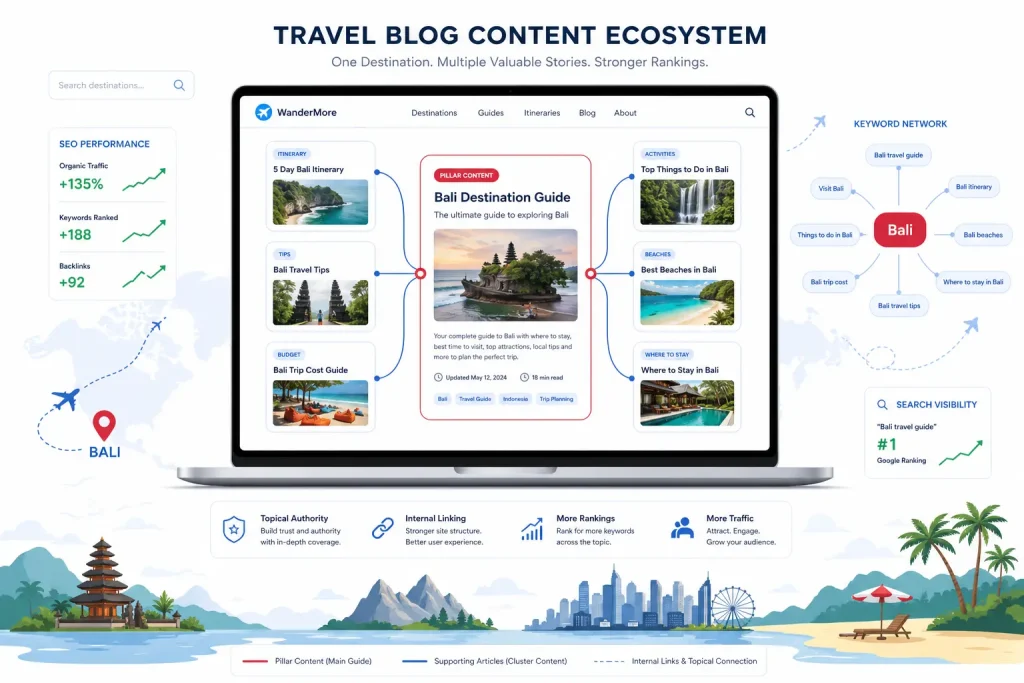
Destination pages are usually broader and more comprehensive than blog posts. While blog posts may target specific topics, destination pages act as complete guides covering multiple aspects of a location.
Role of SEO in Travel Pages
SEO ensures that your destination pages are visible in search results and aligned with user intent. It helps search engines understand your content and rank it appropriately.
Why Destination Pages Struggle to Rank
The travel niche is highly competitive, with many established websites dominating search results. New or poorly optimized pages often fail because they do not meet the standards required for ranking.
Without proper structure and optimization, even good content can go unnoticed. Understanding common issues is the first step toward improvement.
- Thin content
- Poor keyword targeting
- Weak structure
- No internal linking
- Lack of authority
Keyword Research for Destination Page SEO
Keyword research is the foundation of ranking destination pages. It helps you identify what users are searching for and how to structure your content accordingly.
Targeting the right mix of keywords ensures that your page captures both broad and specific search queries.
Primary Destination Keywords
These are main keywords like “London travel guide” or “visit Thailand” that define your page topic.
Supporting Travel Keywords
These include related terms such as “things to do,” “best time to visit,” and “top attractions.”
Long-Tail Destination Queries
Long-tail keywords target specific needs, such as “3-day itinerary for Rome” or “budget travel tips for Bali.”
Understanding Search Intent for Travel Destinations
Search intent plays a critical role in ranking. If your content does not match what users expect, it will struggle to perform.
Informational Intent
Users want general information about a destination.
Planning Intent
Users are preparing their trip and need detailed guidance.
Transactional Intent
Users are ready to book or take action.
Creating High-Quality Destination Content
Content is the core of any successful destination page. It needs to be comprehensive, useful, and structured in a way that answers user questions.
A well-optimized page should act as a complete guide, covering all essential aspects of a destination.
- Detailed destination overview
- Things to do
- Travel tips
- Itineraries
- FAQs
On Page SEO for Destination Pages
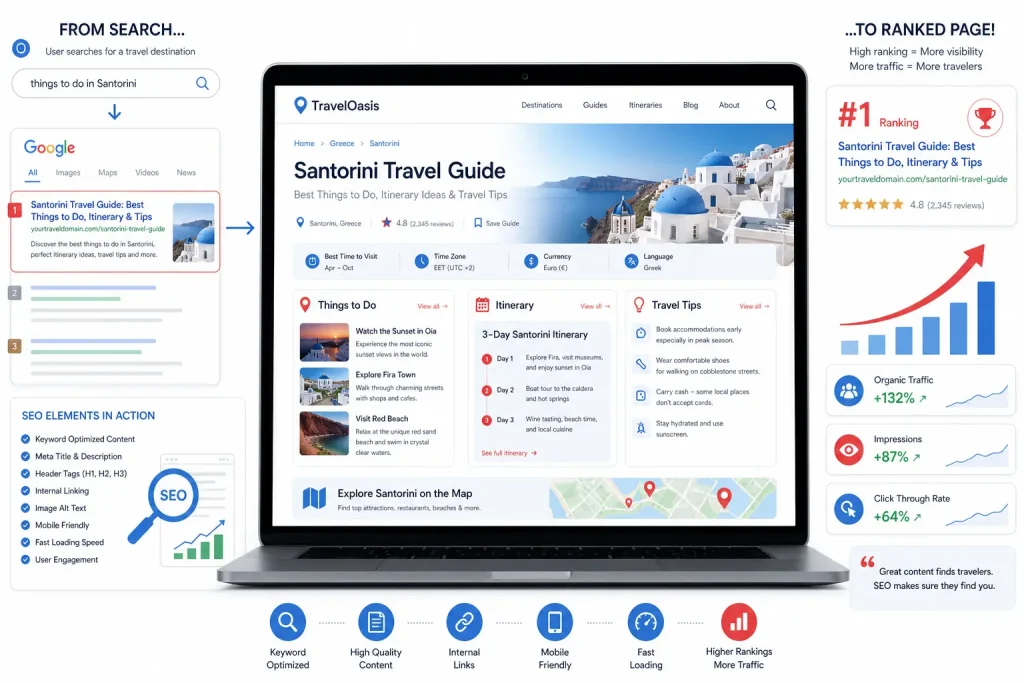
On page SEO ensures that your content is properly optimized for search engines. It helps improve visibility and makes your page more relevant to search queries.
Optimizing these elements correctly can significantly improve your chances of ranking.
- Title tags
- Meta descriptions
- Heading structure
- Keyword placement
- URL optimization
Internal Linking Strategy for Travel Pages
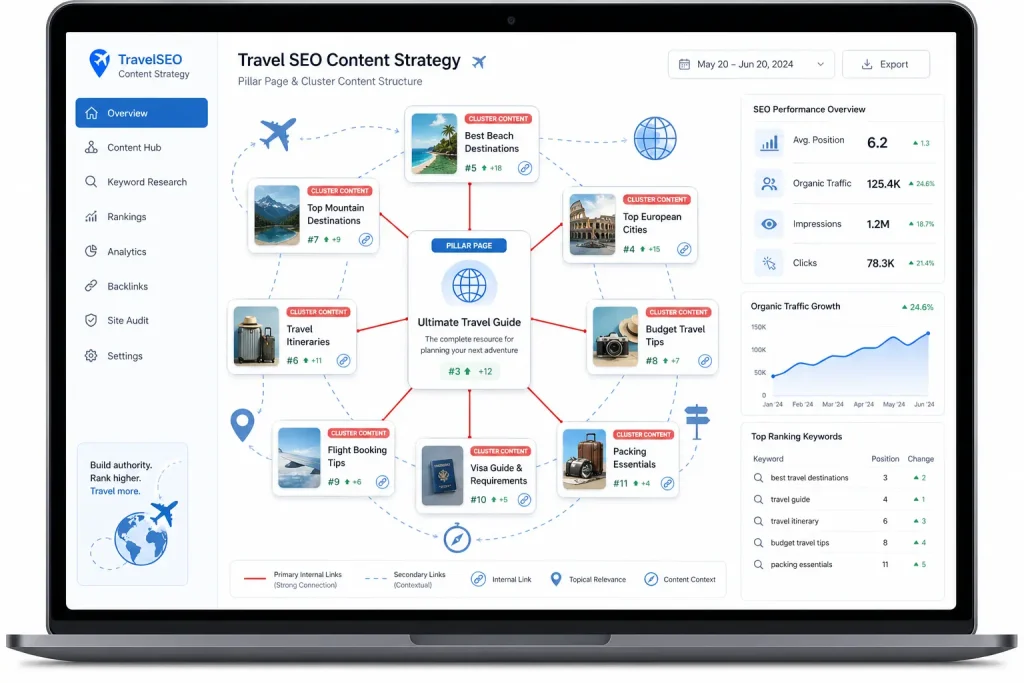
Internal linking connects your destination pages with other relevant content on your site. It helps distribute authority and improves navigation.
A strong internal linking structure makes it easier for both users and search engines to explore your website.
- Link related destinations
- Connect blog content
- Use descriptive anchor text
- Improve navigation
- Distribute authority
Improving User Experience for Better Rankings
User experience is a major ranking factor. If users find your page difficult to navigate or slow to load, they are likely to leave.
Improving user experience ensures that visitors stay longer and engage with your content.
- Fast loading speed
- Mobile optimization
- Clear layout
- Easy navigation
- Visual elements
Content Freshness and Updates
Travel information changes frequently. Keeping your content updated ensures that it remains relevant and accurate.
Regular updates also signal to search engines that your page is active and reliable. This can positively impact rankings over time.
Common Mistakes in Destination Page SEO
Many travel websites fail to rank because they overlook important optimization factors. These mistakes can limit visibility and reduce performance.
Avoiding these issues is essential for long-term success.
- Duplicate content
- Poor structure
- No keyword strategy
- Weak content
- Ignoring search intent
Step-by-Step Strategy to Rank Destination Pages
Ranking destination pages requires a structured and consistent approach. Without a clear strategy, it becomes difficult to compete in the travel niche.
Following a step-by-step process helps ensure that all important elements are optimized.
- Research keywords
- Optimize content
- Improve on page SEO
- Add internal links
- Update regularly
Final Thoughts
Ranking destination pages in Google search is not about publishing more content, but about creating better and more structured content. A strong SEO strategy ensures that your pages meet user expectations and stand out in a competitive market.
By focusing on keyword research, search intent, content depth, and user experience, you can significantly improve your rankings. Over time, this approach helps build authority and drive consistent organic traffic to your travel website.
FAQs on Ranking Travel Destination Pages
1. How to rank destination pages on Google?
By optimizing content, targeting the right keywords, and improving user experience.
2. What is destination page SEO?
It is the process of optimizing location-based travel pages to rank in search results.
3. What keywords should destination pages target?
Primary destination keywords, supporting keywords, and long-tail queries.
4. How important is content depth for travel SEO?
Very important, as comprehensive content improves rankings and user engagement.
5. Does internal linking help destination pages rank?
Yes, it improves site structure and distributes authority.
6. How often should destination pages be updated?
Regular updates are recommended to keep content fresh and relevant.
7. What are common mistakes in travel SEO?
Thin content, poor structure, and ignoring search intent.