Travel Content Marketing Strategy: How to Drive Traffic, Build Authority & Increase Bookings
Travel is one of the most competitive industries on the internet.
Thousands of websites publish travel content every day—destination guides, itineraries, tips, and reviews. Yet only a small percentage of those websites actually rank on Google and generate consistent traffic.
The difference is not content volume.
It’s strategy.
If you want your travel website to grow, you need a structured travel content marketing strategy that combines SEO, content creation, and conversion optimization.
This guide explains exactly how to build a system that attracts visitors, builds authority, and turns traffic into bookings.
Quick Answer: What Is a Travel Content Marketing Strategy?
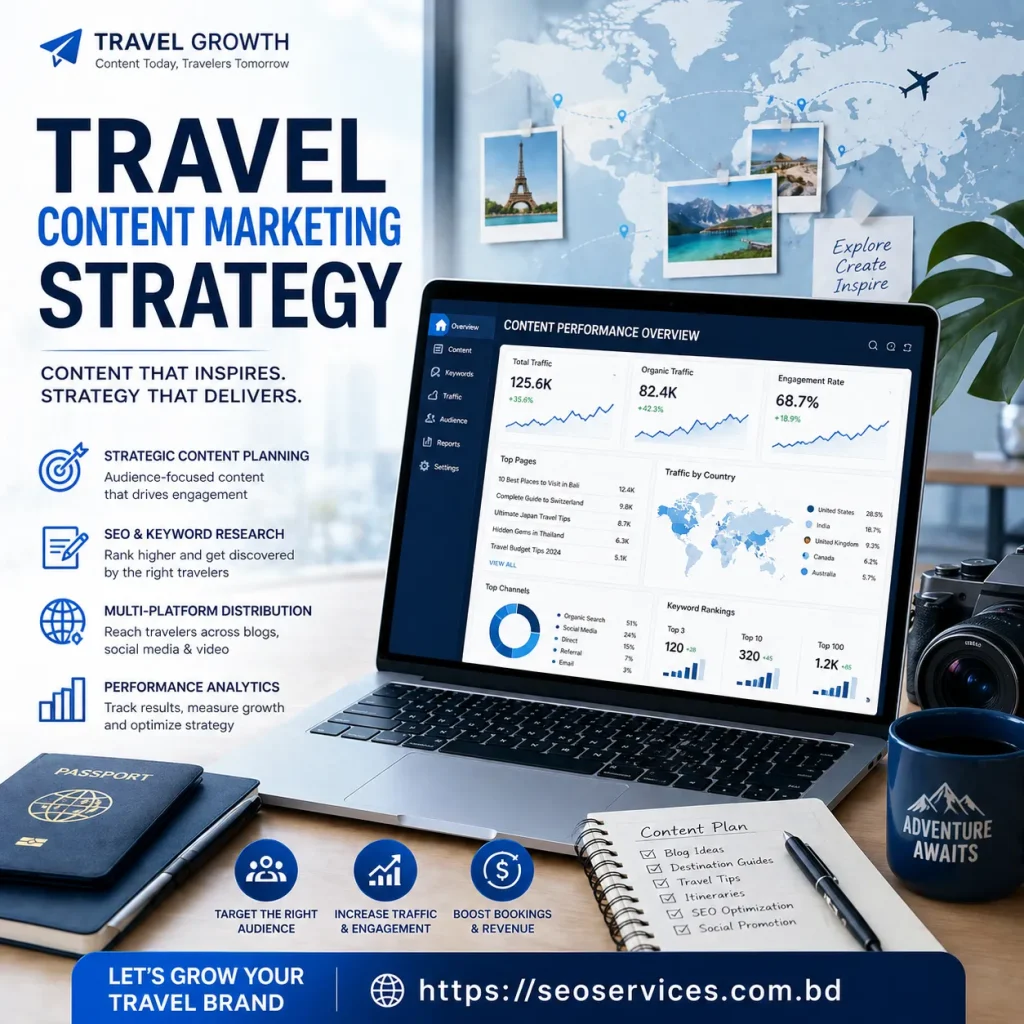
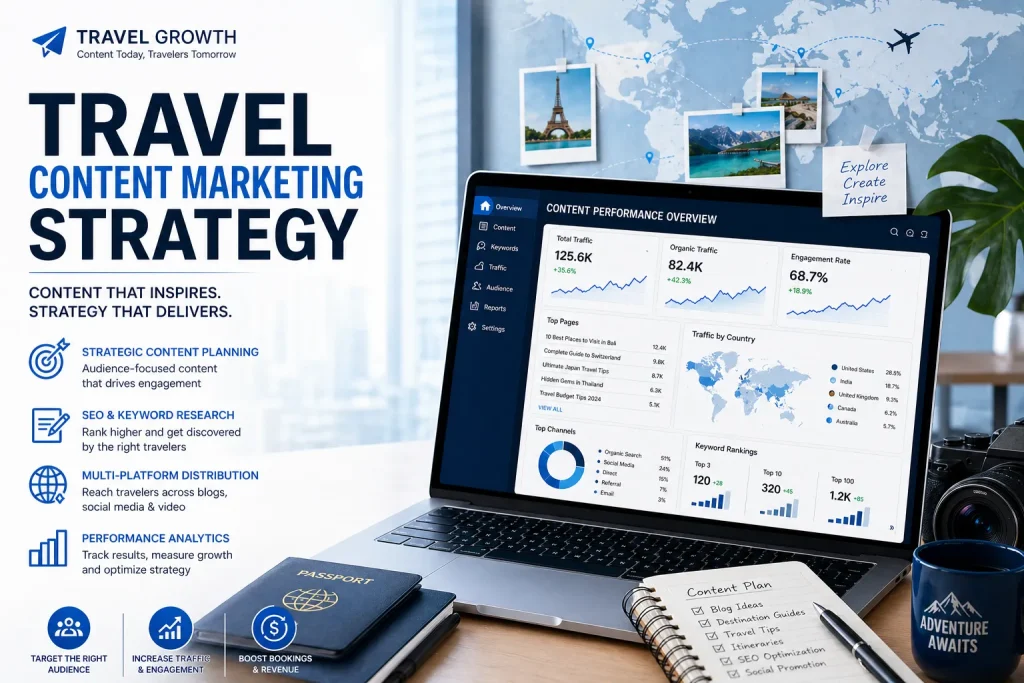
A travel content marketing strategy is a structured approach to creating and distributing content that attracts travelers, ranks on Google, and converts visitors into customers.
It involves:
- Targeting long-tail travel keywords
- Creating destination-based content
- Building topic clusters
- Using internal linking
- Optimizing for conversions
how travel websites rank on Google
Why Content Marketing Is Critical for Travel Websites
Most travelers rely on Google before making decisions.
They search for:
- destinations
- travel tips
- itineraries
- costs
- reviews
If your website provides useful content, you can attract these users early in their journey.
Benefits of Travel Content Marketing
- Increase organic traffic
- Build trust and credibility
- Generate qualified leads
- Improve SEO rankings
- Reduce dependency on paid ads
Unlike ads, content continues to bring traffic long-term.
Example of a Travel Content Strategy
Travel to Bali
→ Bali itinerary
→ Bali travel tips
→ Bali cost guide
→ Bali tour packages
Travel websites that consistently publish SEO content tend to grow organic traffic over time.
Travel Content Marketing Checklist
- Keyword research completed
- Content calendar created
- Blog posts published
- Internal links added
- SEO optimization applied
Content marketing is one of the most effective long-term strategies for travel businesses.
Simple Travel Content Marketing Plan
- Research long-tail keywords
- Create a content calendar
- Publish SEO-focused articles
- Build internal links
- Optimize for conversions
- Track performance
Understanding Search Intent in Travel Content
To rank, your content must match user intent.
Types of Search Intent
1. Informational
Users are researching.
Examples:
- best places to visit in Bali
- travel tips for Europe
2. Commercial
Users are considering options.
Examples:
- Bali vs Phuket
- best honeymoon destinations
3. Transactional
Users are ready to book.
Examples:
- Bali tour packages
- travel agency near me
👉 A strong strategy targets all three.
marketing blog writing services
Keyword Research for Travel Content Strategy
Keyword research is the foundation of your content.
Focus on Long-Tail Keywords
These are easier to rank and more targeted.
Examples:
- 5-day Bali itinerary for couples
- budget Thailand travel guide
- best time to visit Maldives for honeymoon
Keyword Sources
- Google autocomplete
- People Also Ask
- Competitor analysis
👉 Long-tail keywords = faster rankings + better conversions
Types of Content That Work for Travel Websites
1. Destination Guides
In-depth articles about locations.
Example:
- Travel guide to Bali
2. Travel Itineraries
Structured travel plans.
Example:
- 7-day Thailand itinerary
3. Travel Tips
Helpful advice.
Example:
- tips for first-time travelers
4. Comparison Content
Helps users decide.
Example:
- Bali vs Phuket
5. Cost Guides
Budget breakdown.
Example:
- cost of traveling to Europe
6. Seasonal Content
Example:
- best places to visit in winter
👉 These content types cover full search intent
Building Topic Clusters for Travel SEO
To rank consistently, you need topical authority.
Example Cluster
Pillar Page: Travel to Bali
Supporting Content:
- Bali itinerary
- best time to visit Bali
- Bali travel cost
- Bali tips
👉 All articles link to each other
This signals expertise to Google.
Internal Linking Strategy (Critical for SEO)
Internal linking connects your content and improves rankings.
Example
A blog about “Bali travel tips” should link to:
- Bali itinerary
- Bali cost guide
- travel packages
Benefits
- improves SEO
- increases page views
- drives conversions
👉 If you want structured content, use travel blog writing services to implement this properly
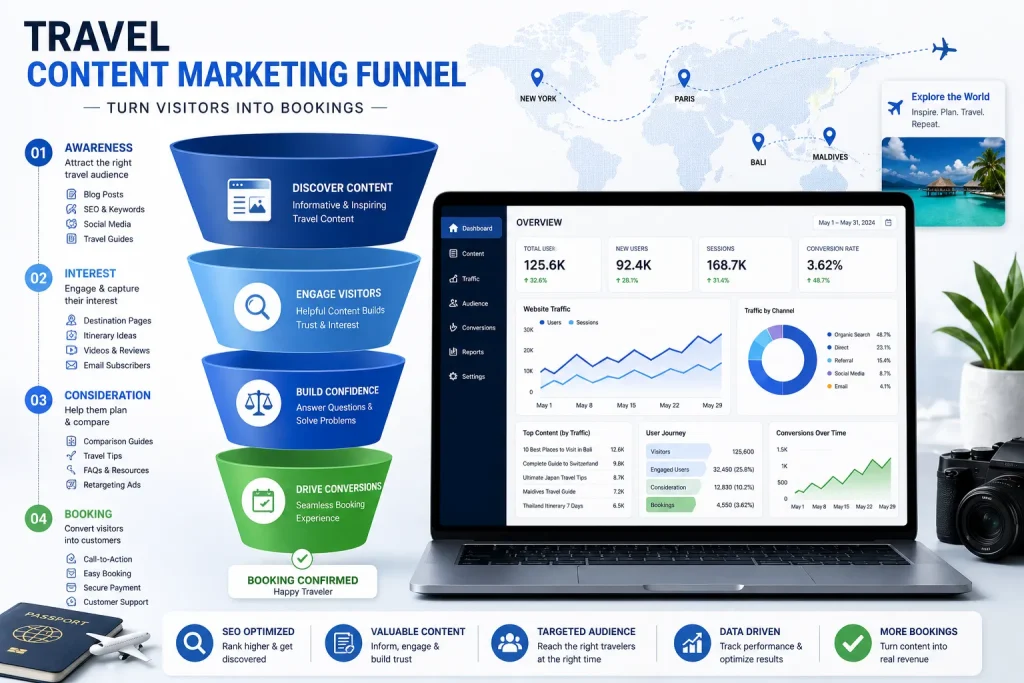
Content Funnel for Travel Websites
Your content should guide users step by step.
Top of Funnel (Awareness)
- destination guides
- travel tips
Middle of Funnel (Consideration)
- comparisons
- itineraries
Bottom of Funnel (Conversion)
- packages
- booking pages
👉 This turns traffic into customers
On-Page SEO for Travel Content
Each article must be optimized.
Key Elements
- keyword in title
- keyword in H1
- proper headings
- meta description
- internal links
Content Publishing Strategy
Consistency is key.
Recommended Plan
- publish 2–3 articles per week
- focus on long-tail keywords
- update old content
👉 More content = more ranking opportunities
Backlinks in Travel Content Marketing
Backlinks increase authority.
How to Get Backlinks
- guest posting
- collaborations
- travel blogs
- directories
👉 Quality backlinks boost rankings
User Experience and SEO
Google tracks how users interact with your site.
Important Factors
- page speed
- mobile optimization
- readability
- navigation
👉 Better UX = better rankings
Step-by-Step Travel Content Marketing Plan
Follow this system:
- Find long-tail keywords
- Create content calendar
- Publish SEO articles
- Build internal links
- Optimize pages
- Track results
👉 This is how successful travel sites grow
Common Mistakes in Travel Content Marketing
Avoid:
- publishing random content
- ignoring keyword research
- no internal linking
- thin articles
- inconsistent posting
How Travel Content Generates Traffic and Bookings
Content works like a funnel:
- User searches
- Finds your content
- Reads article
- Clicks internal links
- Visits service page
- Books
👉 SEO + content = growth system
Do Travel Websites Need Professional Content?
Content marketing requires:
- strategy
- consistency
- optimization
Final Thoughts
Travel content marketing is not about writing random blogs.
It is about building a structured system that:
- attracts traffic
- builds authority
- generates bookings
With the right strategy, your travel website can grow consistently over time.
Want to grow your travel website faster?
Use professional travel blog writing services to create SEO content that ranks and converts.