Complete Guide to Rankings and Growth
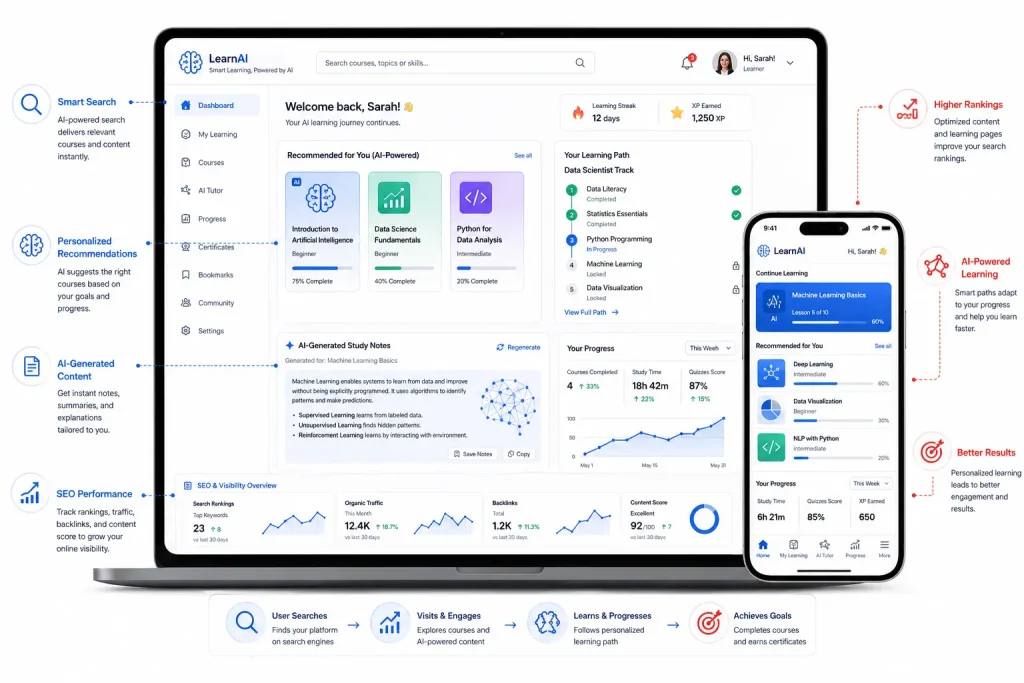
AI-based learning platforms are transforming how people acquire knowledge. From personalized course recommendations to automated content generation, these platforms are designed to scale rapidly and deliver tailored learning experiences. However, many of them struggle to gain consistent visibility in search results.
The challenge lies in the nature of AI-driven content. While AI can generate large volumes of material quickly, it does not automatically ensure quality, structure, or alignment with search intent. Search engines are becoming more sophisticated and prioritize content that is helpful, relevant, and well-organized.
SEO for AI-based learning platforms focuses on bridging this gap. It ensures that AI-generated and AI-supported content is optimized for discoverability, user experience, and long-term growth. When done correctly, it turns scalable content into a powerful source of organic traffic and engagement.
What Is SEO for AI-Based Learning Platforms
SEO for AI-based learning platforms involves optimizing AI-driven websites to improve their visibility in search engines while maintaining content quality and relevance.
AI Platforms vs Traditional Websites
Unlike traditional websites, AI platforms often generate dynamic content at scale. This creates unique challenges such as maintaining consistency, avoiding duplication, and ensuring meaningful content.
Role of SEO in AI Learning Systems
SEO helps structure, refine, and optimize AI-generated content so that search engines can understand and rank it effectively. It also ensures that content meets user expectations.
Why SEO Matters for AI Learning Platforms
AI platforms are built for scalability, but without proper SEO, even large volumes of content may fail to perform. Search engines prioritize quality, relevance, and user experience over sheer quantity.
A strong SEO strategy ensures that your platform’s content is discoverable, engaging, and aligned with user needs. It also helps build authority over time.
- Improves discoverability
- Enhances user engagement
- Builds authority
- Supports scalability
- Drives organic growth
Challenges of SEO for AI-Based Platforms
AI-based platforms face unique challenges when it comes to SEO. These challenges often arise from the way content is generated and structured.
Understanding these issues is essential for building an effective SEO strategy.
- Thin AI-generated content
- Duplicate content risks
- Lack of intent alignment
- Technical complexity
- Poor content structure
Understanding Search Intent in AI Learning Platforms
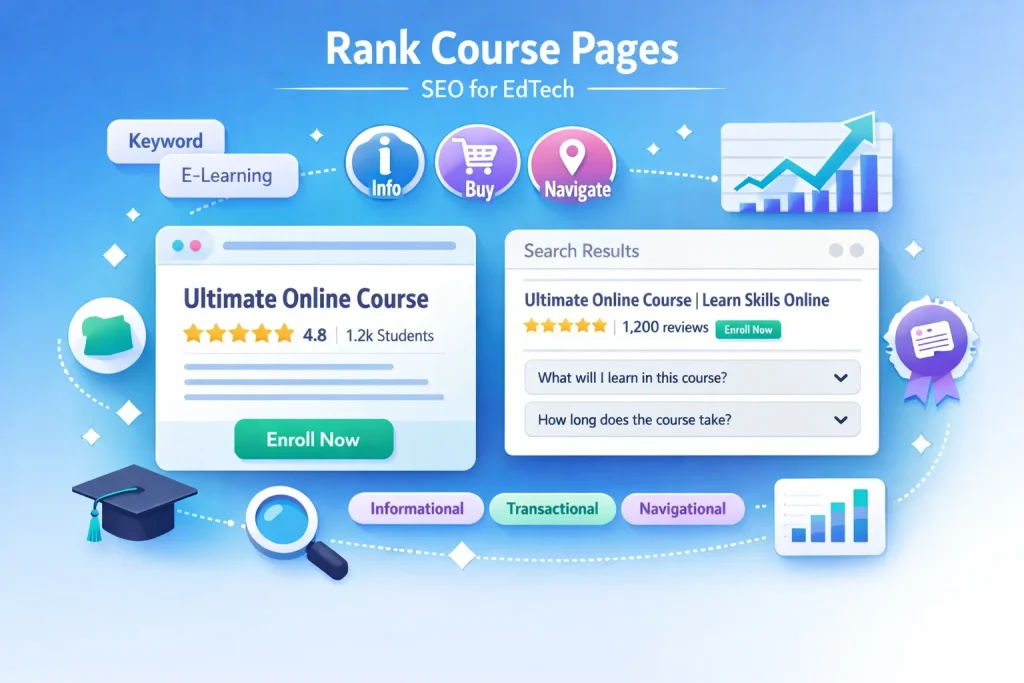
Search intent plays a crucial role in determining how content should be created and optimized. AI platforms must align their content with what users are actually looking for.
Informational Queries
Users seek knowledge and explanations. These queries require detailed and helpful content.
Learning-Based Queries
These are specific to education, where users want structured learning paths or course-related information.
Transactional Queries
Users are ready to take action, such as enrolling in a course or signing up for a platform.
Semantic SEO for AI Content
Semantic SEO focuses on meaning and context rather than just keywords. It is particularly important for AI platforms, where content needs to cover topics comprehensively.
A semantic approach helps search engines understand relationships between topics and improves overall content quality.
- Use topic clusters
- Include related terms
- Cover full topics
- Optimize context
- Build topical authority
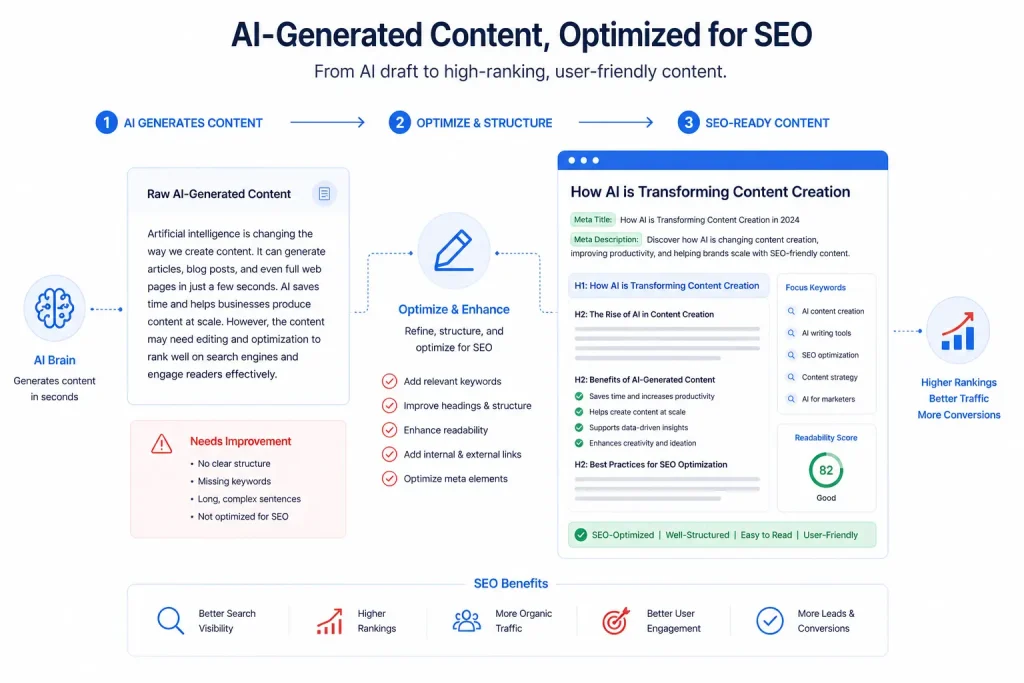
Optimizing AI-Generated Content for SEO
AI-generated content must be refined to meet SEO standards. Without proper optimization, it may lack depth, clarity, and relevance.
Improving AI content ensures that it performs well in search results and provides value to users.
- Add human editing
- Improve accuracy
- Enhance readability
- Add examples
- Avoid duplication
Technical SEO for AI-Based Learning Platforms
Technical SEO ensures that your platform is accessible, fast, and easy for search engines to crawl and index. This is especially important for AI platforms with large volumes of content.
A strong technical foundation supports scalability and improves overall performance.
- Structured data
- Fast loading speed
- Crawlability
- Indexing optimization
- Clean architecture
User Experience and Engagement Signals
User experience plays a significant role in SEO. Search engines analyze how users interact with your content to determine its value.
AI-based platforms must focus on creating engaging and user-friendly experiences to improve rankings.
- Improve navigation
- Reduce bounce rate
- Increase dwell time
- Optimize mobile experience
- Enhance usability
Internal Linking for AI Learning Platforms
Internal linking connects different parts of your platform and helps search engines understand content relationships. It also guides users through learning paths and improves engagement.
A strong internal linking strategy ensures that your content works as a connected system.
- Connect topics
- Link learning paths
- Use anchor text
- Improve structure
- Strengthen authority
Common SEO Mistakes in AI Platforms
Many AI-based platforms make mistakes that limit their SEO performance. These issues often arise from over-reliance on automation and lack of proper optimization.
Avoiding these mistakes is essential for achieving better results.
- Over-reliance on AI content
- Poor optimization
- Ignoring intent
- Weak structure
- No strategy
Step-by-Step SEO Strategy for AI Learning Platforms
Building an effective SEO strategy requires a structured approach. Without proper planning, it becomes difficult to manage and optimize AI-generated content.
A step-by-step process ensures consistent improvement and long-term success.
- Research keywords
- Analyze intent
- Optimize content
- Improve technical SEO
- Monitor performance
Future of SEO for AI-Based Platforms
The future of SEO for AI platforms will focus on quality, personalization, and context. Search engines are becoming better at understanding user intent and evaluating content depth.
AI platforms that combine automation with human insight will have a strong advantage. Balancing scalability with quality will be the key to long-term success.
Final Thoughts
SEO for AI-based learning platforms is not just about ranking content. It is about creating meaningful, structured, and user-focused experiences that align with search engine expectations.
By combining semantic SEO, technical optimization, and user experience improvements, you can build a platform that not only ranks well but also delivers real value to learners.
FAQs on AI Platform SEO
1. What is SEO for AI-based learning platforms?
It is the process of optimizing AI-driven websites to improve visibility and performance in search engines.
2. How does AI affect SEO?
AI enables content scalability but requires optimization to maintain quality and relevance.
3. Can AI-generated content rank on Google?
Yes, if it is high-quality, relevant, and properly optimized.
4. What are the challenges of AI SEO?
Common challenges include duplication, lack of intent alignment, and poor structure.
5. How to optimize AI content for SEO?
By refining it with human editing, improving structure, and aligning with search intent.
6. Does technical SEO matter for AI platforms?
Yes, it ensures that content is accessible and performs well.
7. How long does SEO take for AI platforms?
It typically takes a few months depending on competition and optimization efforts.