
E-commerce SEO in 2026 is no longer optional. It is one of the most reliable ways to grow traffic and increase sales without spending money on ads. Search engines like Google now use AI, user signals, and content quality to rank websites.
With AI Overviews and zero-click searches, only well-optimized stores get visibility. If you apply the right strategies, your store can rank higher, attract the right visitors, and convert them into buyers.

Start with Search Intent, Not Just Keywords
Before you write anything, understand why people are searching. Search engines like Google now focus on intent, not just keywords. If your content does not match what users expect, it will not rank.
Every keyword has intent:
- Informational – users want to learn something
- Commercial – users compare products or services
- Transactional – users are ready to take action
Do Smart Keyword Research
Writing a marketing blog that actually ranks on Google in 2026 is simpler than most people think. You don’t need expensive tools or years of SEO experience. You need to write content that Google and real readers both love.
In this guide, you will learn exactly how to write SEO-friendly marketing blogs that attract organic traffic, build trust, and turn readers into customers.
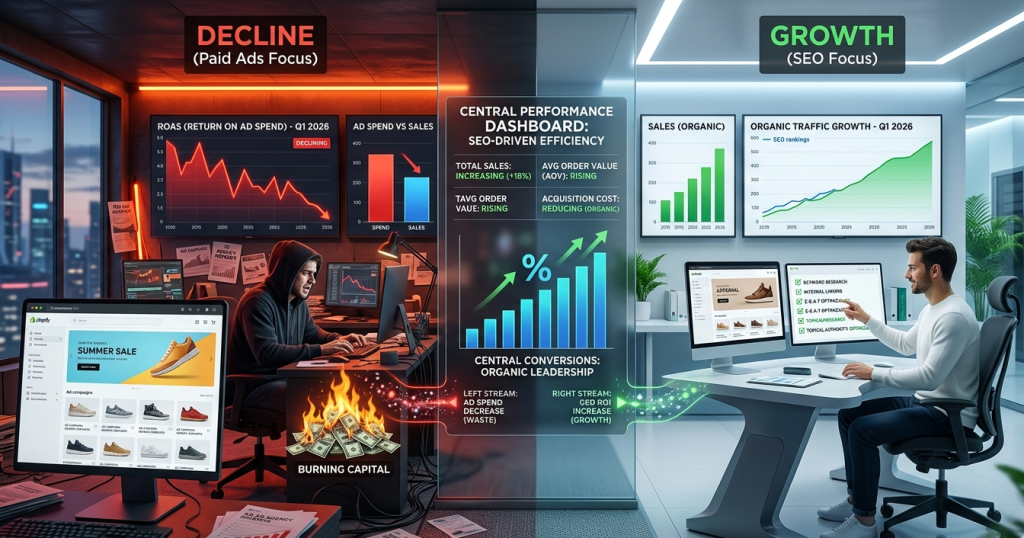
The Current State of Organic Search
| Traffic Source | Average ROI | Longevity | Scalability |
|---|---|---|---|
| SEO Blogs | 748% | 2-5 years | High |
| Paid Ads | 200% | Immediate | Medium |
| Social Media | 280% | 24-72 hours | Medium |
| Email Marketing | 420% | Campaign-based | High |
Writing SEO-friendly marketing blogs that rank does not require complex tactics. It requires a clear, reader-first structure that delivers value fast and proves your expertise. Use this 5-part format (Hook → Direct Answer → Detailed Explanation → Examples/Case Studies → FAQs) for every new blog post.
Start today. Pick one topic your audience cares about and write your next blog using this structure.
What topic will you write about first? Share it in the comments below, and I’ll help you create a strong title and outline. Your future customers are already searching. Make sure they find your helpful, well-structured content when they do. Take the first step right now — open a new document and write your hook. The results will come faster than you expect.

Create a Strong Blog Structure
Top-ranking blogs in 2026 follow a clear and proven structure that helps both readers and search engines. The most effective format begins with a strong hook — a relatable problem or direct question that immediately grabs attention.
It then delivers a direct answer within the first 100 words, so readers get instant value. This is followed by a detailed explanation that breaks down the topic step by step. Next come real examples or case studies that prove the advice works in practice.
Finally, the post ends with a helpful FAQ section that answers the most common follow-up questions. This simple 5-part structure improves readability, increases time on page, and boosts your chances of appearing in featured snippets and AI Overviews.
Write a Strong, Click-Worthy Title
Your title is the first thing users see in Google search results. It directly impacts whether they click or ignore your blog.
A strong title can significantly increase your click-through rate (CTR) and bring more traffic without changing your rankings.
Make your title:
- Clear
Avoid confusing or vague words. Let users instantly understand what your blog is about. - Benefit-Driven
Show what the reader will gain. Focus on results, not just topics. - Specific
Use numbers, timeframes, or clear outcomes to make your title more compelling.
Start with a Direct Answer
The first 100 words of your blog are critical for both users and search engines like Google.
Readers want quick answers. If they don’t find it immediately, they leave. Search engines also prefer content that delivers clear value right away.
What to do:
- Answer the main question immediately
Give a clear and simple response in the first 2–3 sentences. - Keep it concise
Avoid long introductions. Get straight to the point. - Then expand with details
Add examples, steps, and deeper explanations after the direct answer.
Use Clear Structure and Formatting
Most readers do not read every word. They scan content to find what they need quickly.
Search engines like Google also prefer well-structured content because it is easier to understand and index.
Use:
- Short Paragraphs
Keep paragraphs to 2–3 lines. This improves readability, especially on mobile devices. - Subheadings (H2, H3)
Break your content into clear sections. Each heading should describe what the section is about. - Bullet Points
Use bullet points to highlight key ideas. This makes your content easy to scan and understand.
Write High-Quality, Helpful Content
Content quality is the most important ranking factor today. Search engines like Google prioritize content that genuinely helps users.
If your blog solves real problems better than others, it has a strong chance to rank higher.
Your content should:
- Be Easy to Understand
Use simple language. Avoid jargon. Write as if you are explaining to a beginner. - Provide Real Value
Share useful insights, actionable tips, and clear solutions—not generic advice. - Include Examples
Add real-life examples, case studies, or scenarios to make your content more practical and trustworthy.
Optimize On-Page SEO
On-page SEO helps search engines like Google understand your content and rank it correctly. If your blog is not properly optimized, even great content may struggle to rank.
Checklist:
- Keyword in Title and Headings
Include your main keyword naturally in the title, H1, and key subheadings (H2, H3). - Optimized Meta Description
Write a clear, benefit-driven meta description (150–160 characters) to improve click-through rate. - Proper URL Structure
Keep URLs short, clean, and keyword-rich.
👉 Example:/seo-friendly-marketing-blogs - Image Alt Text
Add descriptive alt text with relevant keywords. This helps with SEO and accessibility.
Optimize On-Page SEO
On-page SEO helps search engines like Google understand your content and rank it correctly.
If your blog is not properly optimized, even great content may struggle to rank.
Checklist:
- Keyword in Title and Headings
Include your main keyword naturally in the title, H1, and key subheadings (H2, H3). - Optimized Meta Description
Write a clear, benefit-driven meta description (150–160 characters) to improve click-through rate. - Proper URL Structure
Keep URLs short, clean, and keyword-rich.
👉 Example:/seo-friendly-marketing-blogs - Image Alt Text
Add descriptive alt text with relevant keywords. This helps with SEO and accessibility.
Show Real Experience (E-E-A-T)
Trust is a key ranking factor. Search engines like Google prioritize content that demonstrates real Experience, Expertise, Authoritativeness, and Trustworthiness (E-E-A-T).
If your content feels genuine and credible, it is more likely to rank and convert.
Improve credibility by:
- Adding Real Examples
Show actual results, case studies, or practical use cases. This proves your content is based on real experience. - Sharing Insights
Include your own opinions, strategies, or lessons learned. Unique insights make your content stand out. - Including Author Details
Add an author bio with real name, expertise, and background. This builds trust with both users and search engines.
Update Content Regularly
SEO is not a one-time task. Search engines like Google prefer fresh, updated content that stays relevant over time. Regular updates help your blog maintain rankings and continue driving traffic.
Improve your blogs by:
- Updating Outdated Information
Replace old data, statistics, and examples with the latest information to keep your content accurate. - Adding New Insights
Include recent trends, new strategies, or updated best practices to increase value. - Improving Structure
Refine headings, formatting, and readability to make your content easier to scan and understand.
Writing SEO-friendly marketing blogs is not about tricks or shortcuts. It is about creating helpful, well-structured content that solves real user problems and matches search intent.
In today’s SEO landscape, search engines like Google reward content that is clear, useful, and trustworthy. That means your focus should always be on quality, structure, and consistency—not just keywords.
If you consistently apply the strategies in this guide—understanding intent, optimizing structure, improving readability, and updating content regularly—you can build blogs that rank higher and attract long-term organic traffic.

