
E-commerce looks easy from the outside. You build a store, add products, and expect steady sales. But in reality, many businesses struggle to keep customers. Traffic comes, but conversions stay low. Even worse, returning customers slowly disappear.
This is not random. There are real reasons behind it. Most e-commerce stores lose buyers due to small but critical mistakes. These issues affect trust, experience, and value.
In this article, you will learn the 10 shocking truths behind losing e-commerce customers. You will also get practical solutions based on real industry practices. This will help you improve conversions and build long-term customer trust.
10 Shocking Truths Behind Losing E-commerce Customers
1. Poor Website User Experience
A confusing website is one of the biggest reasons customers leave. When users cannot find what they need quickly, they lose interest. A messy layout or unclear navigation creates frustration.
For example, if a customer struggles to locate product categories or buttons, they may exit within seconds. This increases bounce rate and reduces trust.
How to Fix It
Focus on a clean and simple design. Make navigation easy and clear.
- Use visible menus and categories
- Keep buttons large and easy to click
- Maintain a consistent layout across pages
A smooth experience keeps users engaged and increases conversions.
2. Slow Loading Speed
Speed plays a huge role in e-commerce success. Even a few seconds’ delay can cause customers to leave. People expect fast and smooth browsing.
If your website loads slowly, users may not even see your products. This directly impacts your sales and SEO ranking.
How to Fix It
Improving speed should be a top priority.
- Optimize images without losing quality
- Use a reliable hosting service
- Minimize heavy scripts and plugins
A faster website builds trust and keeps users on your store longer.
3. Lack of Trust Signals
Trust is everything in e-commerce. Customers need proof before they buy. If your store looks new or lacks credibility, users hesitate.
Missing reviews, unclear policies, or no contact information can make your business look risky.
How to Fix It
Build trust through transparency and social proof.
- Add real customer reviews and ratings
- Show secure payment badges
- Display return and refund policies clearly
These small elements can greatly increase buyer confidence.
4. Complicated Checkout Process
A complex checkout process is a major reason for cart abandonment. When users face too many steps, they lose patience.
For example, forcing account creation or asking for too much information can drive users away.
How to Fix It
Keep the checkout process simple and fast.
- Enable the guest checkout option
- Reduce unnecessary form fields
- Offer multiple payment methods
A smooth checkout experience helps close more sales.
5. Hidden Costs at Checkout
Unexpected costs can instantly break trust. Customers feel frustrated when extra charges appear at the final step.
This includes delivery fees, taxes, or service charges that were not shown earlier.
How to Fix It
Be honest and transparent about pricing.
- Show a full cost breakdown early
- Avoid surprise charges
- Offer free shipping when possible
Clear pricing improves trust and reduces cart abandonment.
6. Weak Product Descriptions
Your product description is your sales pitch. If it is weak or unclear, customers will not feel confident to buy.
Many stores use short or generic descriptions that fail to explain value. This creates confusion and doubt.
How to Fix It
Write clear, benefit-driven descriptions.
- Highlight key features and benefits
- Use simple and engaging language
- Add bullet points for easy reading
Strong descriptions help customers make quick decisions.
7. No Mobile Optimization
Most e-commerce traffic now comes from mobile users. If your site is not mobile-friendly, you lose a large number of potential buyers.
A poor mobile experience includes broken layouts, slow speed, and difficult navigation.
How to Fix It
Optimize your store for mobile devices.
- Use responsive design
- Test across different screen sizes
- Improve mobile loading speed
A mobile-friendly store ensures better reach and engagement.
8. Poor Customer Support
Customer support directly affects trust and loyalty. When users do not get quick help, they leave and may never return.
Delayed responses or unclear communication can damage your brand image.
How to Fix It
Provide fast and helpful support.
- Offer live chat or instant messaging
- Respond quickly to queries
- Train your support team properly
Good support builds strong customer relationships.
9. Lack of Personalization
Modern customers expect personalized experiences. Generic content feels boring and less relevant.
When users see products that do not match their interests, they lose engagement.
How to Fix It
Use data to create personalized experiences.
- Recommend products based on browsing history
- Send personalized email offers
- Show recently viewed items
Personalization increases engagement and sales.
10. Weak Marketing Strategy
Even a great store cannot succeed without proper marketing. If people cannot find your business, you will lose customers.
Many e-commerce stores fail due to poor SEO, weak social presence, or a lack of ads.
How to Fix It
Build a strong and consistent marketing strategy.
- Invest in SEO for organic traffic
- Use social media to engage users
- Run targeted advertising campaigns
Effective marketing brings steady traffic and growth.
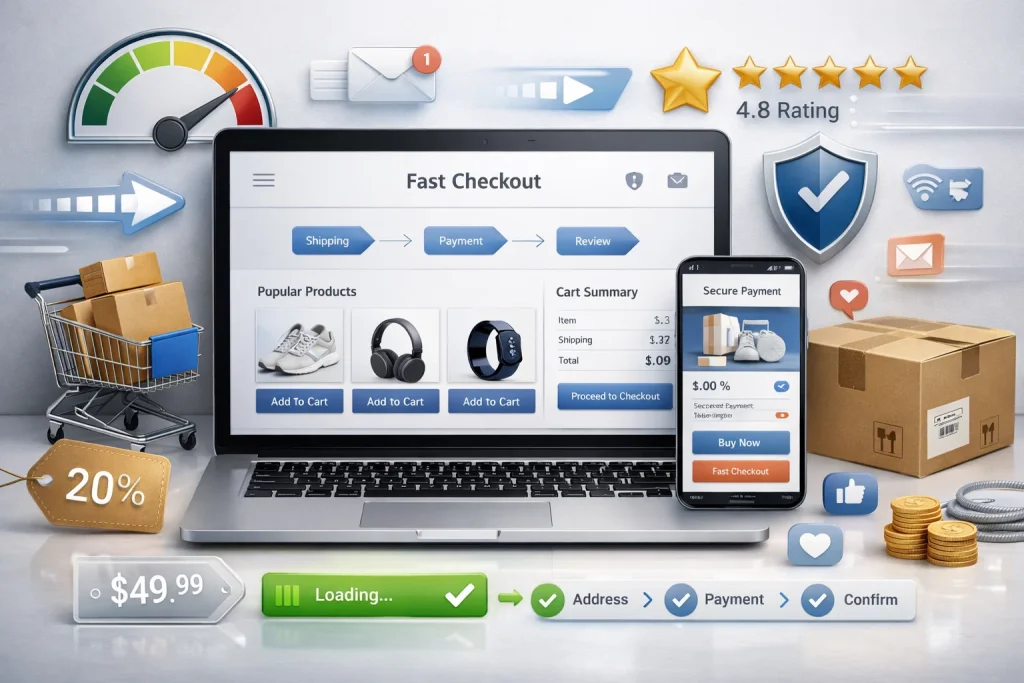
How to Fix These E-commerce Problems Fast
You do not need to fix everything at once. Focus on the areas that impact users the most. Start with website speed, user experience, and checkout process. These are the core elements that directly affect conversions.
Follow this step-by-step plan to see fast improvement:
- Improve site speed and performance
Compress images, reduce heavy scripts, and use a reliable hosting service. Even a 1-second improvement can boost conversions. - Simplify navigation and checkout
Make it easy for users to find products and complete purchases. Use clear menus and reduce checkout steps. - Add trust signals and customer reviews
Show real reviews, ratings, and secure payment icons. This reduces doubt and increases buyer confidence. - Optimize for mobile users
Ensure your website works smoothly on all devices. Most users now shop from mobile phones. - Be transparent with pricing
Show delivery charges, taxes, and fees upfront. Hidden costs often cause cart abandonment.
When you apply these fixes, you create a smoother buying journey. This leads to higher engagement, better trust, and more sales.
Pro Tips to Improve Customer Retention
Getting new customers is expensive. Keeping existing customers is more profitable. You need to build trust and long-term relationships.
Smart Retention Strategies
Use these proven strategies to keep your customers loyal:
- Offer discounts for repeat purchases
Give special deals to returning customers. This makes them feel appreciated and encourages repeat buying. - Send follow-up emails after orders
Thank customers, share order updates, and suggest related products. This keeps your brand fresh in their mind. - Create a loyalty rewards program
Reward customers with points, cashback, or exclusive offers. This increases long-term engagement. - Provide excellent after-sales support
Help customers even after the purchase. Quick support builds trust and improves brand reputation. - Ask for feedback and improve continuously
Listen to your customers. Their feedback helps you fix problems and improve your service.
Extra Tip for Better Results
Consistency is key. Do not apply these strategies once and stop. Track your performance, test new ideas, and keep improving over time.
When you focus on customer satisfaction and experience, your e-commerce business becomes stronger, more trusted, and more profitable.
Conclusion
Losing ecommerce customers is a serious issue, but it is not impossible to fix. Most problems stem from poor experience, a lack of trust, and a weak strategy.
When you understand these issues, you can take action. Small improvements can create big results. Focus on delivering value, building trust, and improving user experience.
A well-optimized e-commerce store not only attracts customers but also keeps them coming back.
FAQs for 10 Shocking Truths Behind Losing E-commerce Customers
1. What causes sudden drops in e-commerce sales?
Sudden drops often happen due to slow website speed, poor user experience, or weak marketing efforts.
2. How important is website speed for e-commerce success?
Website speed is very important. A slow site can increase bounce rate and reduce conversions quickly.
3. Can poor product images affect e-commerce sales?
Yes, low-quality images reduce trust. Clear and high-quality images help customers feel confident to buy.
4. Why do customers abandon carts before checkout?
Customers leave due to hidden costs, complicated checkout steps, or lack of trust in the payment process.
5. How can small e-commerce stores compete with big brands?
Small stores can compete by offering better service, personalization, and building strong customer relationships.

