Create SEO-Friendly URLs That Rank
When users search on Google, they often come across results like “SEO services near me,” “best digital marketing agency,” or “website design services in Dhaka.” Before they even click, one of the first things they notice is the URL. A clean, readable URL builds trust, while a messy and confusing one can reduce clicks instantly.
For search engines, URLs are more than just page addresses. They help understand what a page is about, how it fits into the website structure, and how relevant it is to a search query. Poorly structured URLs can create confusion for both users and search engines, limiting your ability to rank effectively.
This is why following proper URL structure best practices is essential. A well-optimized URL improves visibility, enhances user experience, and supports your overall SEO strategy.
What Is an SEO-Friendly URL Structure
An SEO-friendly URL structure refers to how URLs are formatted to make them easy for both users and search engines to understand. A good URL clearly describes the page content and follows a clean, logical format.
Components of a URL
A URL typically includes the domain, path, and sometimes parameters. The domain represents your website, while the path defines the specific page. Keeping the path clean and meaningful is key for SEO.
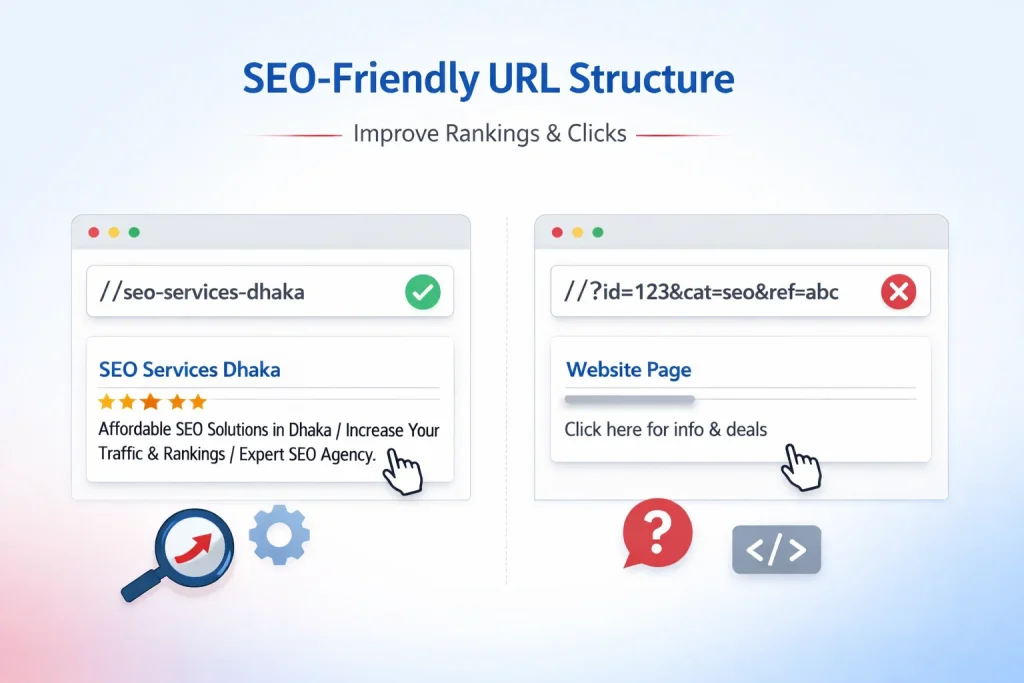
Clean vs Dynamic URLs
Clean URLs are simple, readable, and include relevant keywords, such as /seo-services-dhaka. Dynamic URLs, on the other hand, often contain parameters like ?id=123&cat=seo, which can be harder to understand and less SEO-friendly.
Why URL Structure Matters for SEO
Search engines use URLs to understand the topic and relevance of a page. A well-structured URL gives clear signals about the content, helping search engines crawl and index your website more efficiently. It also improves how your pages appear in search results, influencing user behavior.
A strong URL structure aligns with your website hierarchy, making it easier for both users and search engines to navigate your content. This directly impacts rankings, crawlability, and overall site performance.
- Improves crawlability
- Helps with keyword relevance
- Enhances user experience
- Increases click-through rates
- Supports site structure
Keyword Optimization in URLs
Using keywords in URLs is an important SEO practice, but it must be done carefully. The goal is to make URLs descriptive and relevant without overloading them with unnecessary keywords.
Primary Keywords in URLs
Including your main keyword in the URL helps search engines quickly understand what the page is about. For example, a page targeting “SEO services” should include that phrase naturally in the URL.
Avoiding Keyword Stuffing
Overloading URLs with multiple keywords can make them look spammy and reduce readability. A clean and focused approach works best.
URL Readability
Readable URLs improve user trust and make it easier for visitors to understand what they will find on the page. This can positively influence click-through rates.
URL Length and Simplicity
Short and simple URLs perform better in both search rankings and user experience. Long URLs with unnecessary words or symbols can confuse users and dilute keyword relevance.
Keeping URLs concise ensures they are easy to read, share, and remember. It also helps search engines process them more efficiently and improves overall site structure.
- Keep URLs short and descriptive
- Remove unnecessary words
- Avoid special characters
- Use lowercase letters
- Make URLs easy to read
Hyphens vs Underscores in URLs
When separating words in URLs, hyphens are the recommended choice. Search engines treat hyphens as spaces between words, making it easier to interpret the content of the URL.
Underscores, however, are not interpreted the same way and can make URLs harder to read. Using hyphens ensures better readability and aligns with SEO best practices.
Static vs Dynamic URLs
Static and dynamic URLs serve different purposes, but from an SEO perspective, static URLs are generally preferred because they are cleaner and easier to understand.
When to Use Static URLs
Static URLs are ideal for most website pages, including service pages, blog posts, and landing pages. They provide clear information about the page content and are more user-friendly.
Handling Dynamic Parameters
Dynamic URLs are sometimes necessary for filtering, tracking, or database-driven content. In such cases, it is important to manage parameters properly using canonical tags and avoid creating duplicate content issues.
URL Hierarchy and Website Structure
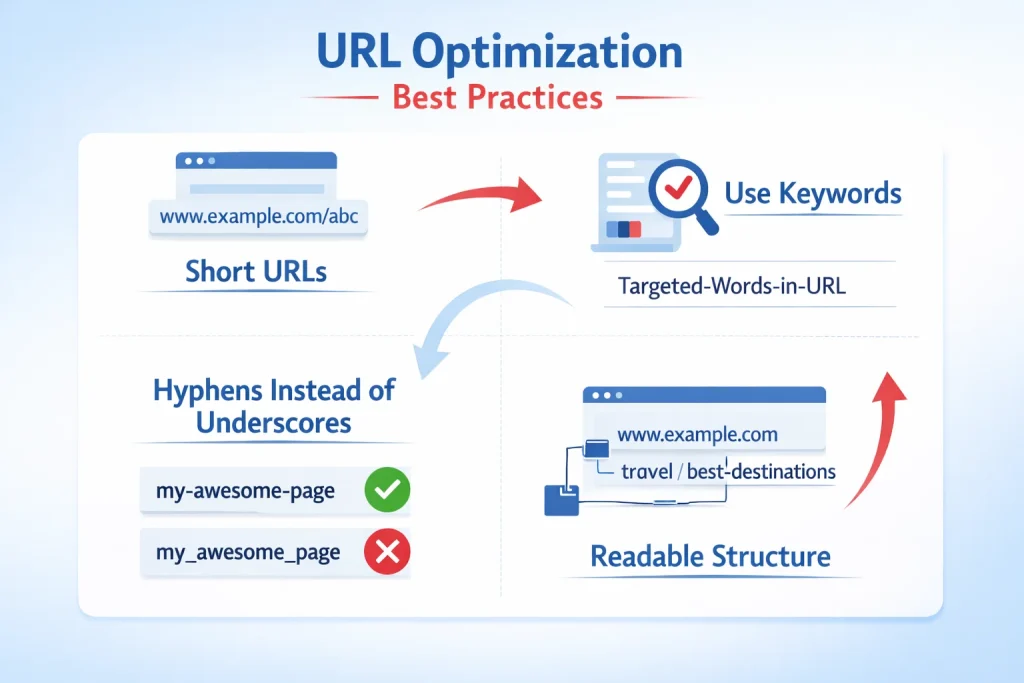
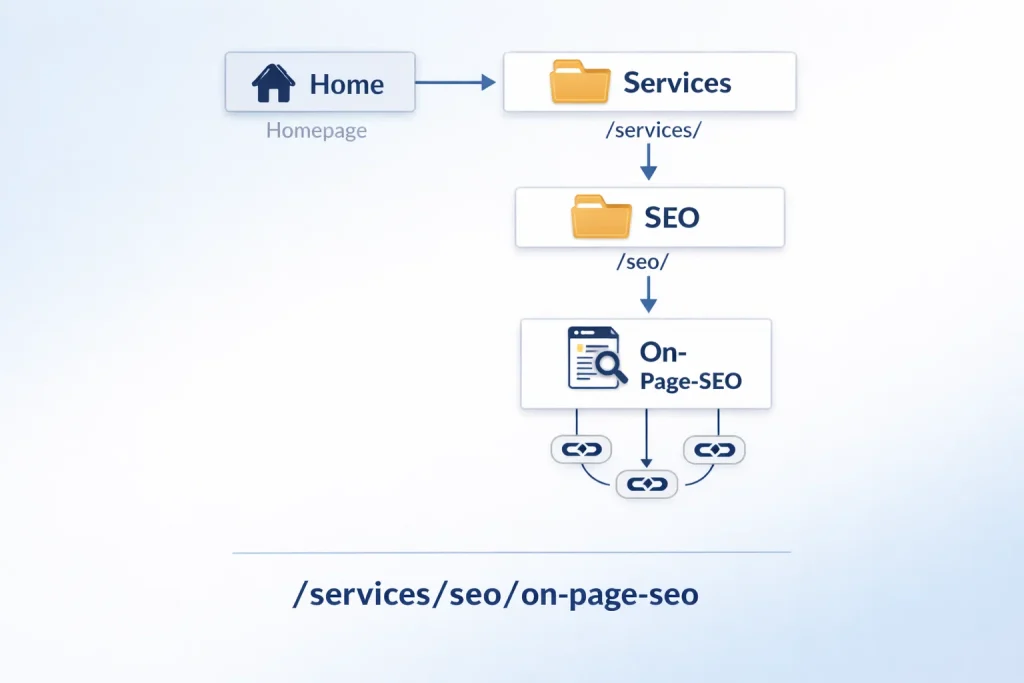
Your URL structure should reflect your website’s hierarchy. This helps search engines understand the relationship between pages and improves navigation for users.
A well-organized structure ensures that important pages are easy to find and that link equity flows properly throughout the site.
Category and Subcategory Structure
Using categories and subcategories in URLs helps organize content logically. For example, /services/seo/on-page-seo clearly shows the relationship between pages.
Flat vs Deep Structure
A flatter structure, where important pages are closer to the homepage, is generally better for SEO. Deep structures can make pages harder to crawl and index.
Internal Linking Connection
URL structure and internal linking work together. A clear structure makes it easier to implement effective internal links across your site.
Common URL Structure Mistakes to Avoid
Many websites struggle with SEO because of poor URL practices. These mistakes often seem small but can have a significant impact on rankings, crawlability, and user experience.
Avoiding these errors ensures your website remains optimized and easy to navigate for both users and search engines.
- Long and complex URLs
- Keyword stuffing
- Using underscores instead of hyphens
- Duplicate URLs
- Ignoring redirects
Does Blog Content Help Improve URL Structure SEO
Blog content plays a key role in improving URL structure by expanding your website’s content hierarchy. It allows you to create organized, keyword-targeted URLs that support your main pages.
Additionally, blogs help build internal linking networks that strengthen your overall SEO strategy and improve crawlability.
- Creates structured content hierarchy
- Improves internal linking
- Helps target long-tail keywords
- Supports SEO strategy
- Enhances crawlability
Best Practices Checklist for SEO-Friendly URLs
Implementing URL best practices consistently across your website ensures long-term SEO success. A checklist approach helps maintain quality and prevents common mistakes during content creation or site updates.
By following a structured process, businesses can ensure every URL contributes positively to their search performance.
- Use keywords naturally
- Keep URLs short
- Use hyphens
- Maintain hierarchy
- Avoid duplicates
- Use HTTPS
- Implement proper redirects
Final Thoughts on URL Structure Best Practices
URL structure is a foundational element of SEO that directly impacts how search engines and users interact with your website. A clean, logical, and keyword-optimized URL can improve rankings, increase click-through rates, and enhance user experience.
By following best practices, avoiding common mistakes, and maintaining a consistent structure, businesses can create a strong SEO foundation that supports long-term growth.
FAQs about URL structure best practices
What is an SEO-friendly URL?
An SEO-friendly URL is a clean, readable, and keyword-optimized web address that clearly describes the page content.
How does URL structure affect SEO?
It impacts crawlability, indexing, keyword relevance, and user experience, all of which influence rankings.
What is the ideal URL length for SEO?
Shorter URLs are generally better, ideally under 60–75 characters while remaining descriptive.
Should URLs include keywords?
Yes, including relevant keywords helps search engines understand the page topic and improves visibility.
Are hyphens better than underscores in URLs?
Yes, hyphens are preferred because search engines treat them as word separators.
What are dynamic URLs in SEO?
Dynamic URLs contain parameters and are often generated automatically, but they can be harder to optimize.
Do URLs impact click-through rates?
Yes, clean and readable URLs can increase trust and encourage users to click on your link.