Focus on What Actually Improves Rankings
Fixing everything at once is one of the fastest ways to slow down your SEO progress. After an audit, most websites end up with dozens of issues like missing tags, thin content, slow pages, broken links, and more. The problem is not the lack of tasks. It is the lack of direction.
When every issue feels important, teams either get stuck or spend time on low-impact fixes that do not move rankings. Meanwhile, the pages that could drive real growth remain untouched. This is why prioritization is not just helpful ,it is necessary.
A structured approach to prioritizing on page SEO fixes ensures that your efforts are focused on changes that actually improve visibility, traffic, and conversions.
Why Prioritizing On Page SEO Fixes Is Important
Not all SEO issues contribute equally to performance. Some fixes can significantly improve rankings and user experience, while others have minimal impact. Without prioritization, it becomes easy to spend time on tasks that do not generate meaningful results.
SEO resources like time, budget, and effort are always limited. Prioritizing helps you allocate these resources effectively and focus on actions that deliver measurable outcomes. It also creates a clear workflow, making SEO execution more efficient and strategic.
- Saves time and resources
- Focuses on high-impact changes
- Improves faster results
- Reduces wasted effort
- Aligns with business goals
Understanding Impact vs Effort in SEO
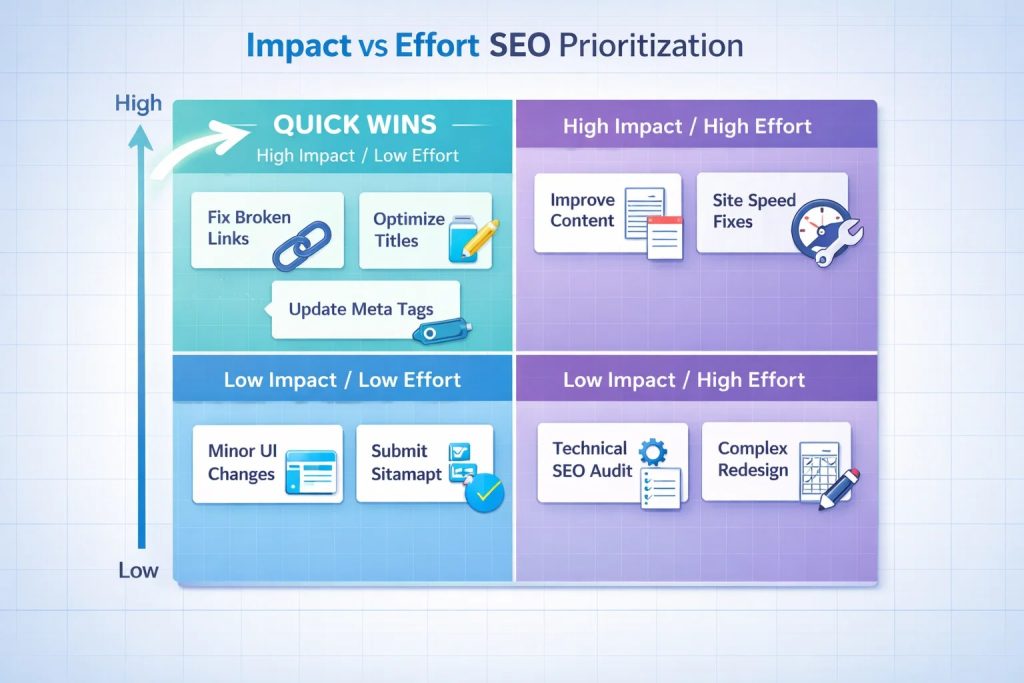
One of the most practical ways to prioritize SEO fixes is by using the impact vs effort framework. This approach helps you evaluate tasks based on how much they can improve performance and how much work they require.
By categorizing fixes into different levels of impact and effort, you can create a clear roadmap for execution.
High Impact, Low Effort (Quick Wins)
These are the most valuable tasks. They require minimal effort but can produce noticeable improvements in rankings or engagement. These should always be prioritized first.
High Impact, High Effort
These fixes can significantly improve performance but require more time and resources. They should be planned carefully and executed after quick wins.
Low Impact, Low Effort
These tasks are easy to implement but do not contribute much to overall performance. They can be completed when time allows.
Low Impact, High Effort
These should generally be avoided or postponed. They consume resources without delivering meaningful results.
Identifying High-Impact On Page SEO Fixes
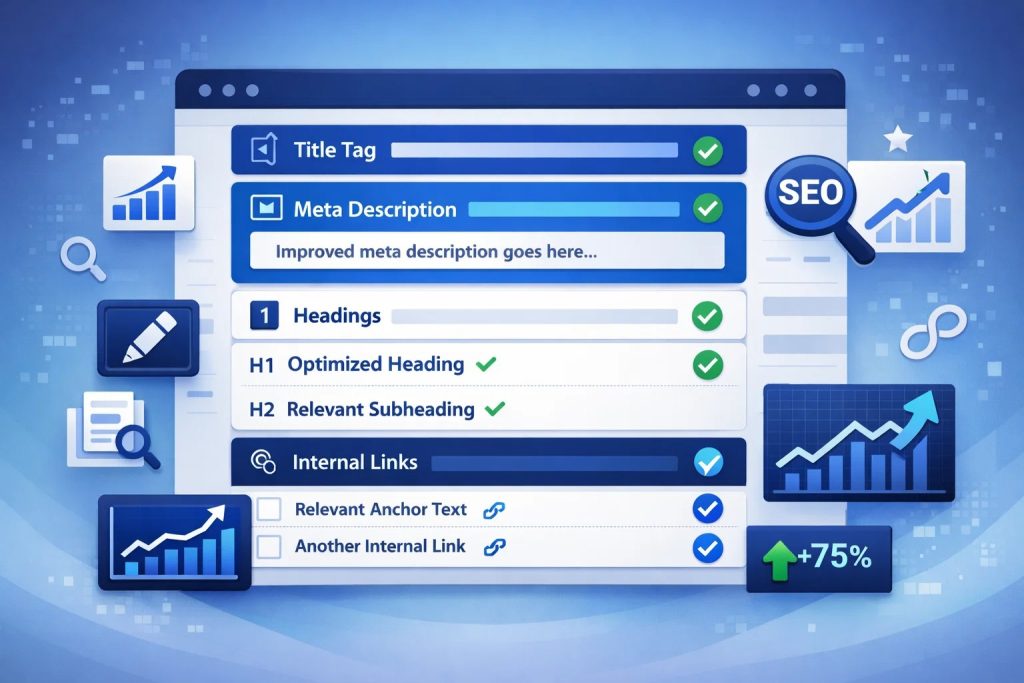
High-impact fixes are those that directly influence how search engines understand and rank your pages. These changes often improve visibility, relevance, and user engagement.
Identifying these fixes requires understanding ranking factors and analyzing which elements have the strongest influence on performance. Focusing on these areas ensures that your efforts produce measurable SEO improvements.
- Title tag optimization
- Meta description improvements
- Content optimization
- Internal linking fixes
- Fixing indexing issues
Quick Wins You Should Prioritize First
Quick wins are small changes that can deliver immediate improvements. These are especially valuable when you need to show early results or build momentum in your SEO strategy.
They often involve optimizing existing elements rather than creating new content, making them efficient and effective.
- Fix broken links
- Optimize headings
- Improve page titles
- Update outdated content
- Add internal links
Technical vs Content SEO Fixes
On page SEO includes both technical and content-related elements. Understanding the difference helps you prioritize correctly and maintain balance in your strategy.
Technical SEO Fixes
Technical fixes focus on how search engines crawl and index your website. This includes improving site speed, fixing crawl errors, and ensuring proper indexing.
Content SEO Fixes
Content fixes focus on improving relevance and user experience. This includes updating content, optimizing keywords, and improving readability.
Both areas are important, but prioritization depends on which issues are currently limiting your performance.
Using Data to Prioritize SEO Fixes
Data-driven SEO ensures that decisions are based on real performance insights rather than assumptions. Tools and analytics platforms provide valuable information about how your pages are performing and where improvements are needed.
By analyzing data, you can identify which pages drive traffic, which ones underperform, and where users drop off. This allows you to focus your efforts on areas with the highest potential impact.
- Google Analytics insights
- Search Console data
- Crawl reports
- Page performance metrics
- User behavior data
Common Mistakes in SEO Prioritization
Many websites struggle with SEO not because they lack effort, but because they focus on the wrong tasks. Poor prioritization leads to wasted resources and slow progress.
Understanding common mistakes helps you avoid these pitfalls and maintain a clear, effective strategy.
- Focusing on low-impact tasks
- Ignoring high-traffic pages
- Over-fixing technical issues
- Not tracking results
- Lack of strategy
Does Blog Content Need SEO Prioritization Too
Blog content is often a major driver of organic traffic, but it also requires prioritization. Not all blog posts contribute equally to performance, and optimizing the right ones can significantly improve results.
Analyzing blog performance helps you identify opportunities for improvement and maximize the value of your content.
- Updating top blogs
- Fixing low-performing posts
- Improving internal linking
- Expanding high-traffic topics
- Aligning with search intent
Step-by-Step Process to Prioritize On Page SEO Fixes
A structured workflow ensures consistency and prevents confusion during execution. Without a clear process, it is easy to overlook important tasks or misallocate resources.
Following a step-by-step approach helps you stay organized and focus on actions that deliver results.
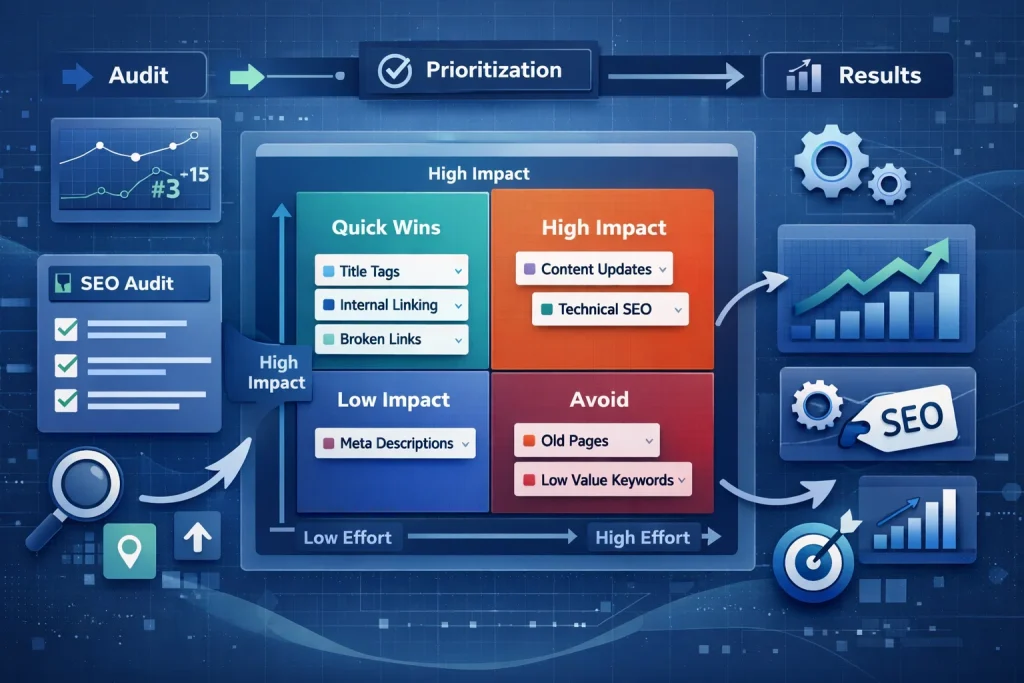
- Conduct SEO audit
- Identify issues
- Categorize by impact
- Prioritize fixes
- Monitor results
Final Thoughts on Prioritizing On Page SEO Fixes
SEO success is not about doing everything—it is about doing the right things at the right time. Prioritizing on page SEO fixes allows you to focus on high-impact changes that drive real improvements in rankings and user experience.
By using frameworks like impact vs effort, leveraging data, and following a structured process, businesses can execute SEO more efficiently and achieve faster, more sustainable growth.
FAQs about Prioritizing On Page Fixes
1. What are on page SEO fixes?
They are improvements made directly on website pages to enhance SEO performance, such as optimizing content, titles, and internal links.
2. How do you prioritize SEO issues?
By evaluating their impact on performance and the effort required to fix them.
3. What are quick wins in SEO?
Quick wins are low-effort changes that can deliver immediate improvements in rankings or engagement.
4. Which SEO fixes have the most impact?
Content optimization, title tags, internal linking, and indexing fixes usually have the highest impact.
5. Should technical SEO be prioritized first?
Only if technical issues are blocking crawling or indexing. Otherwise, content improvements may come first.
6. How often should you fix SEO issues?
SEO should be an ongoing process with regular audits and updates.
7. Can small changes improve SEO rankings?
Yes, even small optimizations can lead to noticeable improvements when applied strategically.