
Industrial technology has reshaped the way modern factories operate, driving efficiency, innovation, and growth across the manufacturing sector. From automated machines to smart systems, these advancements help companies produce faster, reduce errors, and meet rising customer demands. Understanding how industrial technology influences production, costs, and workforce practices is key to staying competitive in today’s fast-paced industrial world.
What Is Industrial Technology?
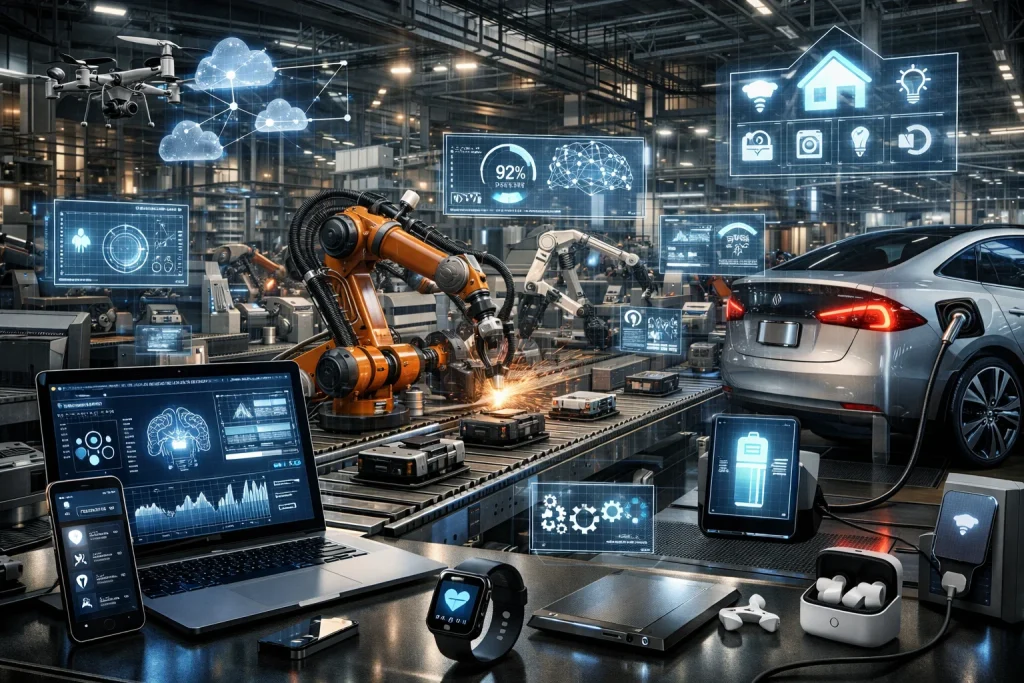
Industrial technology refers to tools, machines, and systems designed to improve production processes. Unlike traditional methods, which rely heavily on manual labor, industrial technology integrates automation, data analytics, and intelligent systems to streamline operations and enhance output.
Types of Industrial Technology
Modern manufacturing relies on several key technological advancements:
- Automation systems – machines and software handling repetitive tasks.
- Robotics – robotic arms and autonomous machines that perform complex operations.
- IoT (Internet of Things) – connected sensors that monitor machinery and production in real time.
- AI and Machine Learning – algorithms that analyze data, optimize production, and predict maintenance needs.
How Technology Impacts Our Daily Life
Communication
- Smartphones, messaging apps, and video calls let us connect instantly with friends, family, and colleagues worldwide.
- Social media keeps us updated with news, trends, and personal connections.
Work and Productivity
- Laptops, cloud software, and AI tools allow remote work and online collaboration.
- Automation helps complete repetitive tasks quickly, saving time and reducing errors.
Education
- Online learning platforms, e-books, and educational apps make learning accessible from anywhere.
- AI tutors and interactive tools help students understand concepts better.
Health and Fitness
- Wearable devices track heart rate, steps, and sleep patterns.
- Telemedicine allows online doctor consultations without leaving home.
Entertainment
- Streaming services, gaming platforms, and social media provide endless entertainment options.
- Virtual reality (VR) and augmented reality (AR) make experiences more immersive.
Daily Convenience
- Smart homes automate lighting, security, and appliances.
- Online shopping and digital payments save time and reduce the need for cash transactions.
Transportation
- GPS and navigation apps make travel easier and faster.
- Ride-sharing apps and electric vehicles improve accessibility and sustainability.
Technology impacts almost every part of our daily lives. It improves convenience, communication, education, health, and entertainment. While it brings many benefits, we also need to use it responsibly to avoid overdependence or digital stress.
Key Trends Driving Modern Manufacturing
Automation and Robotics
Automation and robotics are central to modern manufacturing. Factories equipped with robotic arms and automated systems can produce goods faster and with fewer errors. Companies experience increased output and reduced labor costs, allowing them to remain competitive globally.
Smart Factories and IoT Integration
IoT-enabled factories, often called “smart factories,” allow real-time monitoring of machines and workflows. This technology improves predictive maintenance, reduces downtime, and ensures consistent production quality.
Artificial Intelligence and Machine Learning
AI-driven systems help manufacturers analyze vast amounts of data to make informed decisions. Quality control improves as AI detects defects beyond human capability, while production schedules are optimized to maximize efficiency.
Additive Manufacturing (3D Printing)
3D printing allows rapid prototyping and customized production. Manufacturers can quickly test designs, reduce material waste, and produce small batches of specialized products at lower costs.
Benefits of Industrial Technology in Manufacturing
Increased Productivity
Modern technology accelerates production cycles, enabling manufacturers to produce more with the same resources. Automation and intelligent systems reduce manual interventions and human errors.
Cost Reduction
Implementing industrial technology reduces labor costs, minimizes material waste, and lowers error-related losses. Over time, these savings can offset the initial investment in technology.
Improved Quality and Consistency
Machines and AI ensure precise production processes. Consistency improves, defects decrease, and customer satisfaction rises.
Enhanced Worker Safety
By automating risky tasks, industrial technology protects workers from hazardous environments. Safety measures, such as AI-powered monitoring systems, reduce workplace accidents.
Challenges and Limitations
High Implementation Costs
Advanced machinery and software require significant investment. Small and medium-sized manufacturers may struggle to adopt these technologies due to budget constraints.
Skill Gaps and Workforce Training
The shift to technology-driven manufacturing demands skilled personnel. Workers must be trained to operate machines, analyze data, and maintain advanced systems.
Cybersecurity Concerns
Connected factories are vulnerable to cyberattacks. Manufacturers must implement strong cybersecurity measures to protect data, intellectual property, and operational continuity.
Real-World Examples
Smart Factory Adoption
A leading electronics manufacturer implemented IoT sensors across its production lines. Real-time monitoring reduced downtime and optimized workflow efficiency.
Robotics in Automotive Manufacturing
Automotive companies use robotic arms for assembly, painting, and welding. This automation reduces production time and improves precision, enabling higher vehicle output.
AI-Powered Quality Control
AI systems can detect defects in products beyond human capability. For instance, AI inspection in electronics manufacturing identifies micro-level faults that might go unnoticed by human inspectors.
Future Outlook for Manufacturing
Emerging Technologies
Next-generation innovations such as edge computing and augmented reality (AR) are expected to enhance production monitoring, maintenance, and training processes.
Sustainable Manufacturing
Environmental concerns push manufacturers toward green technology. Energy-efficient machines, waste reduction, and eco-friendly processes will define the future of manufacturing.
The Role of Human Workers
While machines handle repetitive tasks, human creativity, critical thinking, and decision-making remain irreplaceable. Collaboration between humans and machines will shape modern manufacturing’s evolution.
Summery
Industrial technology is revolutionizing manufacturing growth worldwide. From robotics and AI to smart factories and 3D printing, these technologies increase productivity, reduce costs, and enhance product quality. Despite challenges like high costs and workforce training needs, manufacturers who embrace innovation are better positioned for sustainable growth and future competitiveness.
FAQs: Impact of Industrial Technology on Modern Manufacturing Growth
1. What is industrial technology in manufacturing?
Industrial technology refers to tools, machines, and systems that automate and optimize manufacturing processes. It includes robotics, AI, IoT, and advanced production systems that improve efficiency and product quality.
2. How does industrial technology impact manufacturing growth?
By increasing productivity, reducing costs, and improving quality, industrial technology accelerates manufacturing growth. Smart factories and automation allow companies to produce more with fewer resources.
3. What are the key trends in modern manufacturing technology?
- Robotics and automation for faster production
- IoT for real-time monitoring
- Artificial intelligence for quality control and decision-making
- 3D printing for rapid prototyping and custom production
4. What are the benefits of adopting industrial technology?
- Higher productivity and faster production cycles
- Reduced operational and labor costs
- Improved product quality and consistency
- Safer work environments for employees
5. What challenges do manufacturers face with industrial technology?
- High initial investment costs
- Need for a skilled and trained workforce
- Cybersecurity risks in connected systems
- Continuous technology upgrades to stay competitive
6. Can small manufacturers benefit from industrial technology?
Yes. While the initial costs may be high, small manufacturers can adopt selective automation, cloud-based systems, and cost-effective AI tools to enhance productivity and reduce waste.
7. What is the future of industrial technology in manufacturing?
Emerging technologies like augmented reality (AR), edge computing, and sustainable production methods will shape the future. Human-machine collaboration will continue to grow, enhancing efficiency and innovation.

