
The Boards of Education in Bangladesh play a vital role in shaping the academic and administrative environment of schools and colleges. Their decisions influence student learning, teacher development, and community engagement.
Staying informed about these decisions helps parents guide their children, enables teachers to adapt to policy changes, and allows communities to participate actively in local education. This article highlights the most important decisions from recent board meetings, providing insights and practical implications for all stakeholders.
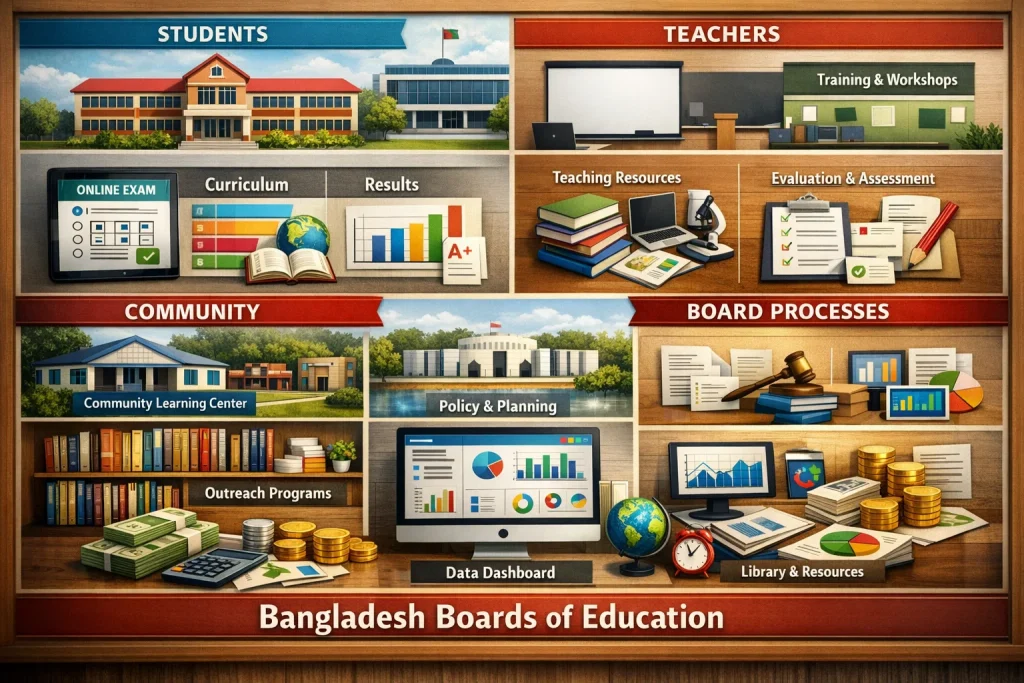
Overview of the Board of Education in Bangladesh
What is the Board of Education?
In Bangladesh, Boards of Education such as the Dhaka Board, Rajshahi Board, and Chittagong Board oversee secondary and higher secondary education within their regions. They are responsible for implementing national education policies, conducting public examinations, regulating school curricula, and ensuring quality standards. For instance, the Bangladesh Ministry of Education specifies that boards “ensure efficient administration and smooth operation of public education programs” across districts.
How Decisions Are Made
Decisions by the boards follow a structured process to maintain transparency and accountability. Proposals may come from school administrators, government officials, or education committees. These are reviewed, discussed in board meetings, and finalized through official approval. The process may include public consultations, particularly for major changes in curriculum or examination policies.
Key steps in decision-making include:
- Proposal submission by authorities or committees
- Review and discussion in board meetings
- Official approval or modification by the board
- Publication of decisions in official notifications
Importance of Transparency and Accountability
Transparency in board operations is critical to maintaining trust. Official notifications, publicly available minutes, and government circulars allow parents, teachers, and students to understand decisions clearly. Boards in Bangladesh regularly issue circulars and updates via official websites like the Dhaka Education Board to ensure accountability and stakeholder awareness.
Why the Education Board Is Often Considered Weak in Bangladesh
- Centralized Decision-Making
Most decisions come from higher authorities like the Ministry of Education, leaving local boards with limited autonomy. This slows down responses to local school needs. - Bureaucratic Inefficiency
The education system relies heavily on paperwork and traditional procedures. Delays in approvals, exam processes, or policy implementation reduce effectiveness. - Lack of Accountability and Transparency
While boards publish circulars, many decisions aren’t explained clearly to teachers, parents, or students. This reduces trust and makes it hard for stakeholders to engage. - Inadequate Monitoring and Evaluation
Boards sometimes fail to monitor school performance or teacher effectiveness consistently. Without data-driven evaluation, poor practices continue unchecked. - Resource Limitations
Many boards lack sufficient funding, technology, or skilled staff to modernize exams, curricula, and student services. - Political and Administrative Pressure
Boards can face political influence or favoritism, affecting decisions on staffing, policies, and resource allocation.
How the Weakness Can Be Solved
- Decentralize Decision-Making
Boards should have more authority to implement local policies, curriculum adjustments, and exam systems based on community needs. - Introduce Digital Systems
Online management for exams, results, and school data can reduce inefficiency and improve transparency. Example: digital exam registration and automated result processing. - Strengthen Accountability
Regular audits, public reporting, and community feedback can ensure boards act responsibly. Making board meetings more open and accessible increases trust. - Improve Monitoring and Evaluation
Boards should track school performance using standardized metrics and regular inspections. Data-driven decisions help improve student outcomes. - Increase Resources and Training
Provide boards with skilled staff, funding for technology, and professional training to modernize administrative and educational functions. - Reduce Political Interference
Policies should protect boards from undue political influence. Independent committees or oversight councils can ensure fair decision-making.
Recent Key Decisions from Bangladesh Board Meetings
Decisions Affecting Students
Recent board meetings have focused on improving student outcomes and ensuring equitable access to education. Key decisions include:
- Updates to the secondary and higher secondary curriculum to align with modern education standards.
- Introduction of online examination systems in selected regions to ensure efficient and transparent assessments.
- Implementation of new student guidance programs, including career counseling and mental health support.
These changes aim to enhance learning opportunities, reduce academic pressure, and prepare students for higher education and career challenges.
Decisions Affecting Teachers and Staff
Teachers and staff are directly impacted by board policies. Recent decisions include:
- Approving professional development programs for teachers, including training on digital teaching methods.
- Revising teacher evaluation systems to encourage performance-based improvements.
- Updating regulations on staff recruitment and promotion to maintain merit-based standards.
These initiatives ensure that educators are equipped to provide quality education while maintaining fairness and accountability.
Decisions Affecting the Community
Board decisions also benefit the broader community by improving educational infrastructure and resources. Examples include:
- Allocation of funds for modernizing classrooms and school laboratories.
- Establishing community learning centers and public libraries.
- Expanding after-school and extracurricular programs that involve parents and local organizations.
These initiatives strengthen the relationship between schools and communities, ensuring that education contributes to broader social development.
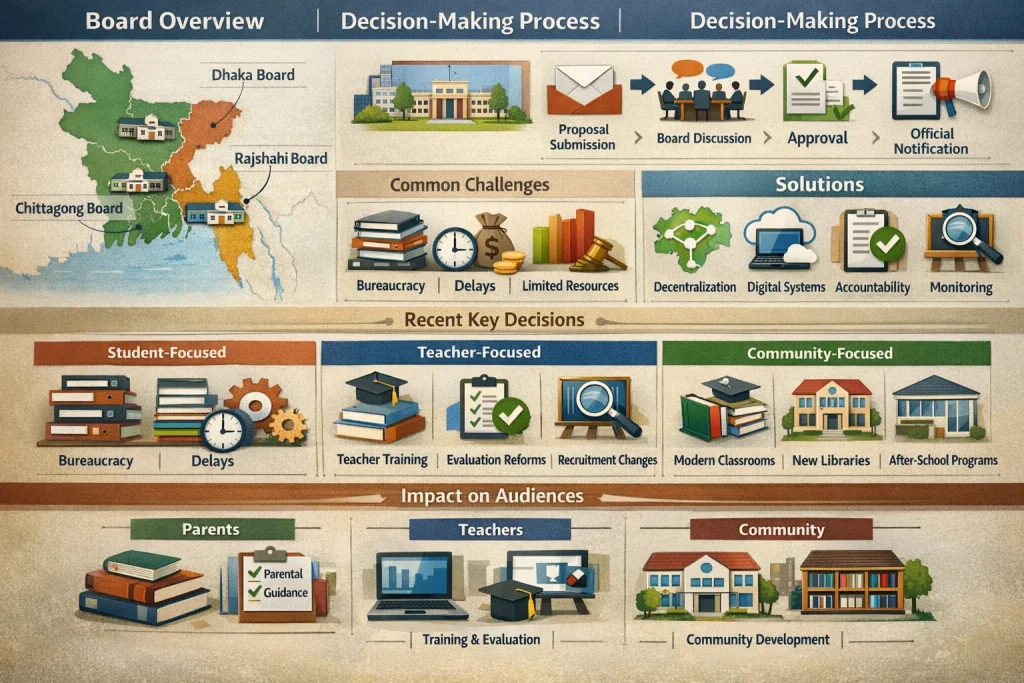
How These Decisions Affect Different Audiences
For Parents
Parents benefit from understanding how board decisions impact their children. Changes in curriculum, assessment methods, and student support services help parents provide better guidance. Staying informed about board circulars and updates ensures parents can participate actively in their child’s education.
For Teachers and Staff
Teachers need to adapt to new teaching guidelines, evaluation criteria, and professional development programs. Board decisions directly influence classroom management, teaching quality, and career progression, making awareness and engagement crucial.
For the Local Community
Community members are affected by policies related to school infrastructure, community learning programs, and extracurricular activities. Engagement through public consultations and advisory meetings allows communities to voice concerns and contribute to local education improvements.
Examples and Case Studies
- Curriculum Update Example: The Dhaka Board recently approved changes in the science curriculum for higher secondary students, including more practical experiments to enhance hands-on learning.
- Teacher Training Example: Rajshahi Board launched a digital teaching training program for teachers, helping them integrate technology into daily lessons.
- Community Initiative Example: The Chittagong Board allocated funds to upgrade school libraries and provide access to digital resources for students and local residents.
These examples reflect the boards’ commitment to evidence-based and practical decision-making.
How to Stay Updated on Board Decisions
Parents, teachers, and community members can stay informed through multiple channels:
- Subscribe to official newsletters and notifications from the respective board.
- Visit official websites for circulars, examination updates, and meeting summaries.
- Attend public meetings or advisory sessions whenever possible.
- Follow the official social media pages of the boards and the Ministry of Education for announcements.
Being proactive ensures all stakeholders can respond effectively to changes and participate in decision-making processes.
Conclusion
The Boards of Education in Bangladesh play a central role in shaping the academic landscape and ensuring quality education. Their decisions impact students, teachers, and communities alike.
Staying informed, engaging with official channels, and participating in public consultations help stakeholders contribute positively to education development. Understanding board decisions is essential for building a transparent, accountable, and effective education system in Bangladesh.
FAQ – Important Decisions from Board of Education Meetings
1. How can I access official board decisions in Bangladesh?
Official board decisions are published on board websites and through circulars sent to schools. Parents and teachers can also request updates from school offices.
2. How do board decisions affect students’ academic progress?
Curriculum updates, examination methods, and student support programs directly influence learning outcomes, exam readiness, and overall educational experience.
3. Can parents attend board meetings in Bangladesh?
Yes, many boards allow parents to attend public sessions. Schedules and registration details are provided through official websites or school notices.
4. How can teachers provide feedback on board policies?
Teachers can participate in professional committees, attend board meetings, or submit formal feedback to the respective board office. Public consultations are also an important channel for input.

