Common travel SEO mistakes
Travel blogs aren’t just digital diaries or pretty photo galleries. When strategically built, they’re conversion engines that attract dreamers, answer high-intent questions, and guide readers straight to your booking page.
But here’s the reality: even the most compelling travel content won’t drive reservations if it’s invisible on search engines. That’s where many brands lose momentum. Common travel SEO mistakes and overlooked travel website SEO errors silently drain organic traffic, break user trust, and kill conversions before they happen.
Let’s break down exactly how travel blogs turn readers into bookers, and the SEO pitfalls you must fix to make it work.
How Travel Blogs Actually Drive Bookings
- They Capture High-Intent Long-Tail Searches
Travelers don’t just search “Paris hotels.” They search “best boutique hotels in Le Marais for couples in October.” Blog posts targeting these specific queries attract users already in planning mode, dramatically increasing booking likelihood. - They Build Trust Before the Pitch
Travel is a high-consideration purchase. Detailed itineraries, packing tips, seasonal guides, and honest reviews position your brand as the expert. Trust reduces friction and makes the “Book Now” button feel like a natural next step. - They Nurture Users Through the Funnel
A single blog can serve multiple funnel stages:
Top: “10 Hidden Gems in Costa Rica” (inspiration)
Mid: “How to Choose Between Manuel Antonio & La Fortuna” (comparison)
Bottom: “7-Day Costa Rica Itinerary + Bookable Tours” (conversion) - They Compound Organic Traffic Over Time
Unlike paid ads, a well-optimized travel blog post can rank for years, delivering consistent, low-cost traffic that converts month after month.
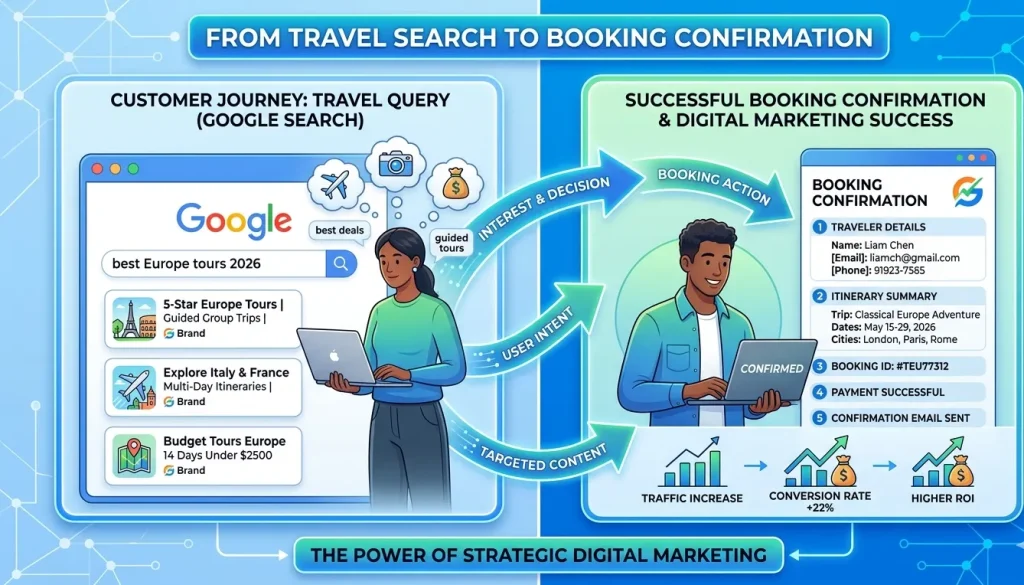
Travel Blogs Build Authority
People book with people they trust. A well-written, experience‑driven travel blog positions the brand (or blogger) as an expert.
- Real stories, photos, and local insights create an emotional connection.
- Authority signals (reviews, expert tips, deep local knowledge) reduce buyer hesitation.
- SEO mistake to avoid: Publishing generic, AI‑generated content with no unique voice or local insight.
→ Result: Google sees it as low‑value; readers see it as irrelevant → no bookings.
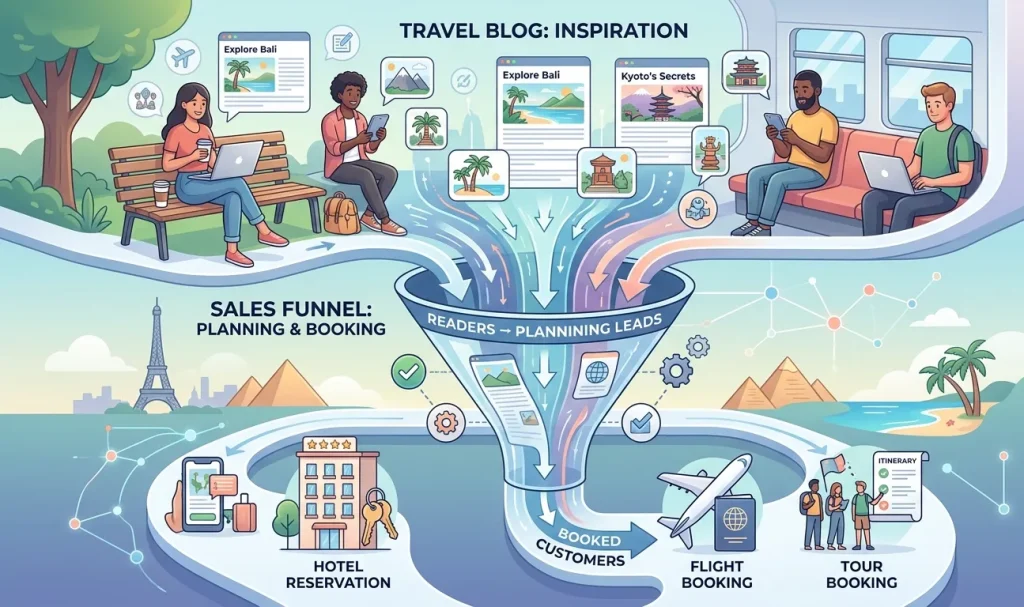
The Hidden Roadblock: Travel SEO Mistakes That Cost You Bookings
Inspiration means nothing if no one finds your content. Many travel brands invest heavily in blogging only to see zero ROI because of preventable travel website SEO errors. These don’t just hurt rankings; they break the path from reader to guest.
5 Common Travel SEO Mistakes (And How to Fix Them)
| Mistake | Why It Kills Bookings | Quick Fix |
|---|---|---|
| Ignoring Search Intent | Writing “Beautiful Beaches in Thailand” when users want “how to book a beach resort in Phuket.” Traffic bounces; zero conversions. | Map every post to a funnel stage. Use modifiers like “book,” “price,” “itinerary,” or “best time to visit.” |
| Thin or Duplicate Content | Copy-pasting tour operator descriptions or relying on AI fluff triggers Google’s quality filters. Rankings drop, trust evaporates. | Add original insights, local expertise, real photos, pricing tips, and firsthand experiences. |
| Poor Internal Linking & Broken Booking Paths | Blogs don’t link to relevant booking pages, or CTAs are buried. Readers leave instead of converting. | Add contextual links to relevant tours/hotels. Use clear, action-oriented CTAs like “Check Availability for Your Dates.” |
| Neglecting Technical SEO | Slow load times, non-mobile layouts, or missing schema frustrate users. 70%+ of travel research happens on mobile. | Optimize Core Web Vitals, compress images, implement FAQ/HowTo schema, and ensure mobile-first design. |
| Ignoring Local & Destination SEO | Missing location-specific keywords or unoptimized Google Business Profiles means you lose “near me” and destination-driven traffic. | Create location hub pages, link them from relevant blogs, and keep NAP/schema consistent across your site. |
Turning Blog Traffic into Actual Bookings
SEO gets them to your site. Conversion optimization gets them to pay. Pair your content with these booking-focused tactics:
- Contextual CTAs: Replace generic “Book Now” buttons with intent-matched prompts like “Reserve Your Spot for Dry Season” or “See Real-Time Availability.”
- Lead Magnets + Email Nurture: Offer downloadable itineraries or packing checklists in exchange for emails. Follow up with targeted booking offers.
- Embedded Social Proof: Add recent guest reviews, UGC photos, or trust badges directly inside high-traffic blog posts.
- Retargeting & Analytics: Install Meta/Google pixels, track UTM-tagged blog links in GA4, and retarget readers who engaged but didn’t book.
- Content-to-Booking Audits: Quarterly, check which posts drive the most sessions vs. actual reservations. Double down on what converts; prune or update what doesn’t.
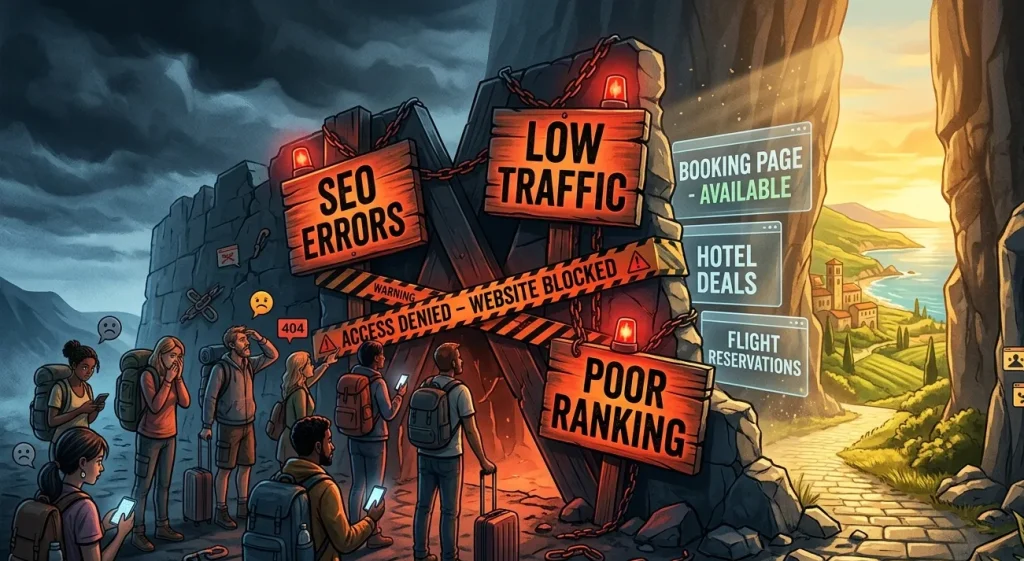
Blogs Feed High‑Converting Landing Pages
A travel blog post is top‑of‑funnel content. The real conversion happens when readers are guided to a booking page.
How it works:
- Blog post → solves a problem / answers a query
- Soft CTA (e.g., “Check our handpicked hostels in this area”)
- User lands on an optimized listing/booking page
This funnel converts search traffic → leads → bookings.
Travel SEO mistake:
- The blog and booking page have no thematic link (no internal linking, no keyword alignment).
→ Google can’t connect relevance → both pages underperform.
Travel website SEO error:
- The booking page has poor on‑page SEO: missing meta title, slow load speed, and no schema markup (e.g., Hotel, Review, Tour).
→ Even high‑intention traffic fails to convert → lower booking rate.
Blogs Improve Technical & On‑Page SEO (Without Errors)
A travel blog is a testing ground for SEO best practices — if done correctly, the entire website benefits.
What good blogs do:
- Optimized titles: “Best Glamping Sites in Namibia (2025 Guide + Bookings).”
- Optimized URLs: https://blogwriting.services/
- Fast loading, mobile‑first layout
- Image alt‑text with keywords (“Cape Town Table Mountain view”)
- Internal links to accommodation pages
- Schema markup (Article, HowTo, LocalBusiness)
Travel SEO mistakes that kill rankings:
| Mistake | Impact |
|---|---|
| Thin content (< 600 words, no unique insight) | Google de‑ranks; no conversion trigger |
| No keyword mapping (content not aligned to search intent) | Misses long‑tail traffic = missed bookings |
| Duplicate content (same guide copied across sites) | Google sees it as spam → drop in visibility |
| Poor URL structure (random IDs, no keywords) | Hard to index & recall later |
Travel website SEO errors that kill conversions:
| Error | Impact |
|---|---|
| Slow page speed (>3s load) | 53% of users leave → fewer bookings |
| No structured data (no Hotel / Tour / Review schema) | Google shows no rich snippets → lower CTR |
| Broken internal links | Users & Google can’t reach booking pages |
| No mobile‑optimized booking forms | Mobile users (60%+ of travel searches) abandon site |
| Missing meta descriptions | Low click‑through from SERPs → less traffic |
Blogs Generate Backlinks and Social Signals
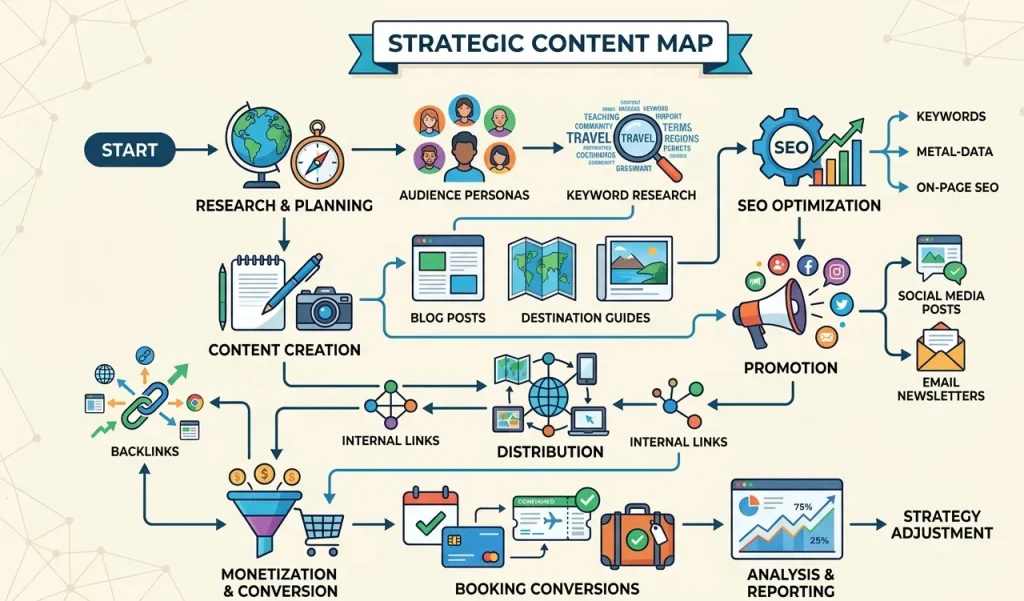
High‑quality travel blogs—especially with original photos, maps, and unique itineraries—naturally attract:
- Media outlets
- Niche forums (trip forums, Reddit, travel groups)
- Other travel sites linking to your guides
Backlinks = strong ranking signal.
SEO mistake:
- Spamming low‑quality links or keyword‑stuffed comments.
→ Google penalizes → rankings collapse → bookings drop.
Website SEO error:
- No link‑building strategy tied to blog content.
→ Even great blogs stay hidden on page 2 of Google.
Pro Strategies Used by Top Travel Blogs
Top travel blogs do not rely on beautiful images alone. They design each post to attract the right people, build trust fast, and guide readers toward booking. This is what makes them convert better.
First, they focus on long-tail, high-intent keywords. Instead of targeting broad terms like “Bali resorts,” they go for specific searches like “best family-friendly villas in Ubud with private pool.” These keywords have lower competition and stronger booking intent, so you get visitors who are ready to take action.
Next, they use strategic internal linking. Every blog connects to related guides, booking pages, and travel offers. This creates a smooth journey for the reader. There are no dead ends—just clear next steps that move users closer to booking.
They also simplify decisions with comparison content. Posts often include side-by-side comparisons like budget vs luxury or Tour A vs Tour B. This helps readers choose faster and reduces confusion, which increases conversions.
Another key strategy is using clear, contextual calls to action. Instead of generic buttons, they use phrases that match user intent. For example, “Check real-time availability” or “Reserve your spot for peak season.” These feel more natural and drive more clicks.
Finally, top blogs update their content regularly. Travel information changes fast. Prices, routes, and availability can shift anytime. By updating posts every few months, they keep rankings strong, maintain trust, and improve booking rates over time.
Final Thoughts
Your travel blog is not just a place to share stories—it is a powerful booking engine when used the right way. A well-optimized blog works like a 24/7 sales funnel that brings in high-intent travelers, not just casual readers. It builds trust before you ever make an offer and helps users make clear decisions without confusion.
When your content answers real travel questions and includes smart calls to action, it naturally drives direct bookings. At the same time, it helps you avoid common travel SEO mistakes and hidden website errors that slowly reduce your revenue. So, stop treating your blog like a simple journal. Start building it as a conversion-focused asset that grows your traffic, trust, and bookings every day.