Boost Rankings Fast
When users search for services like “SEO agency near me,” “web design services,” or “digital marketing company,” they expect instant results. A slow-loading website creates friction, increases bounce rates, and directly impacts conversions. In competitive service industries, even a one-second delay can lead to lost leads and reduced trust.
Page speed optimization for SEO is no longer just a technical enhancement—it is a core ranking factor. Search engines prioritize websites that deliver fast, seamless experiences across devices. Businesses that invest in performance optimization gain a measurable advantage in rankings, user engagement, and revenue growth.
Why Page Speed Optimization Is Important for SEO
Page speed plays a critical role in both user experience and search engine rankings. Faster websites allow users to access information quickly, reducing frustration and improving interaction rates. Search engines interpret these positive signals as indicators of quality, which can improve visibility in search results.
For service-based businesses, speed directly impacts lead generation. A slow-loading service page can cause potential customers to abandon the site before even viewing your offer. Additionally, page speed is closely tied to Core Web Vitals, which are now key ranking signals used to evaluate real-world user experience.
Understanding Core Web Vitals and Performance Metrics
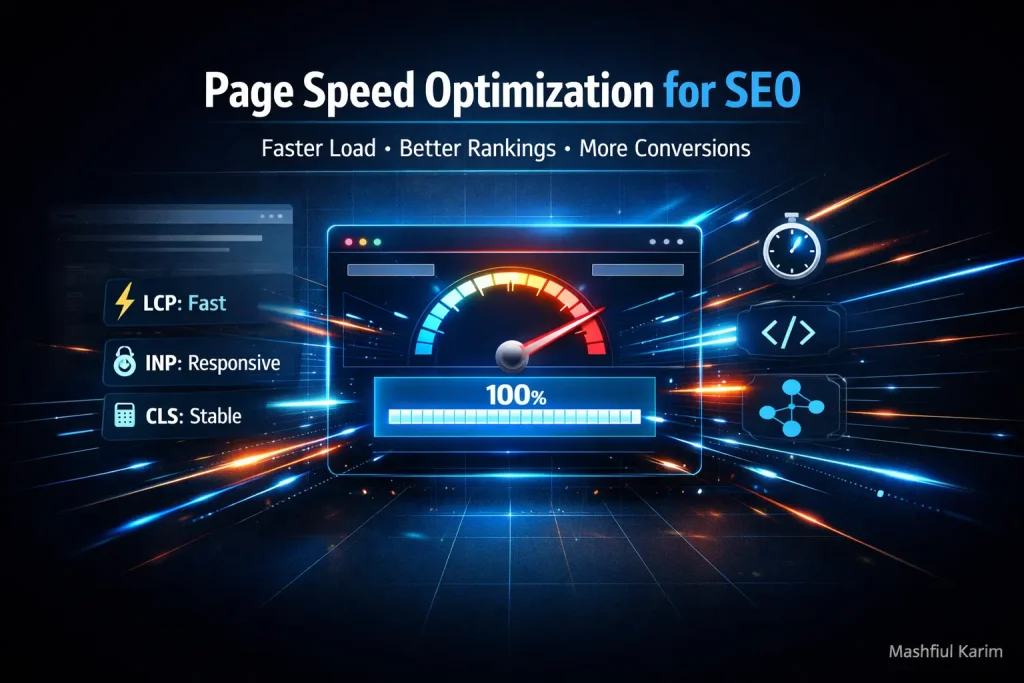
Before implementing optimization strategies, it is essential to understand how website performance is measured. Core Web Vitals focus on loading speed, interactivity, and visual stability. These metrics provide insights into how users experience your website in real-world conditions and highlight areas that need improvement.
Largest Contentful Paint (LCP)
Measures how quickly the main content of a page loads. A good LCP score ensures users can see meaningful content without delays.
Interaction to Next Paint (INP)
Evaluates responsiveness by measuring how quickly a page reacts to user interactions such as clicks or taps.
Cumulative Layout Shift (CLS)
Tracks visual stability. A low CLS score ensures that elements on the page do not shift unexpectedly, improving usability.
Keyword Research for Page Speed Optimization
Targeting the right keywords ensures your content reaches users actively searching for performance improvements. These keywords often reflect both technical intent and business needs, making them valuable for attracting qualified traffic.
Effective keyword targeting also helps position your content as a solution-oriented resource, increasing the likelihood of engagement and conversions.
Technical SEO Keywords
- Core Web Vitals optimization
- server response time
- browser caching
- reduce page load time
Performance-Based Keywords
- website speed optimization
- improve page speed SEO
- website performance optimization
- page load speed optimization
High-Intent Optimization Keywords
- how to improve page speed for SEO
- best tools to check website speed
- how to optimize website speed for mobile SEO
- ways to reduce website loading time fast
Tools to Measure Website Speed Performance
Accurate data is essential for effective optimization. Without performance insights, businesses cannot identify bottlenecks or measure improvements. Speed testing tools provide detailed reports on loading times, resource usage, and optimization opportunities.
These tools also offer actionable recommendations, allowing businesses to prioritize fixes that deliver the highest impact.
Google PageSpeed Insights
Analyzes website performance and provides Core Web Vitals data along with optimization suggestions.
GTmetrix
Offers detailed performance reports, including waterfall analysis and load time breakdowns.
Lighthouse
Provides in-depth audits covering performance, accessibility, and SEO metrics.
Key Page Speed Optimization Techniques
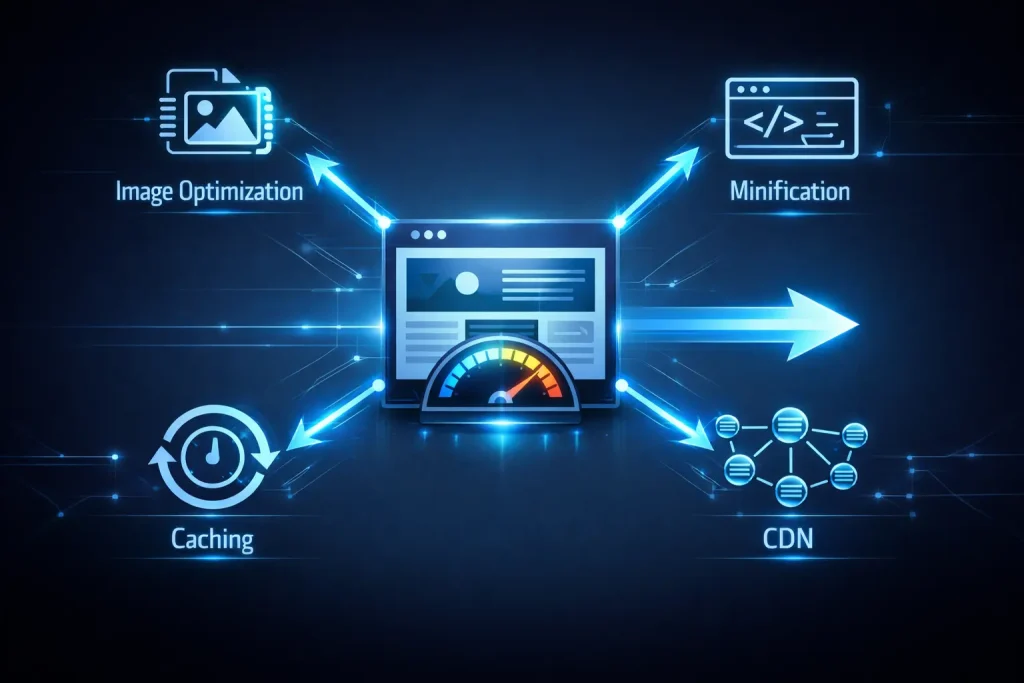
Improving page speed requires a combination of technical fixes and strategic improvements. These optimizations focus on reducing load times, minimizing resource usage, and improving server efficiency. Implementing these techniques can significantly enhance both rankings and user experience.
A structured approach ensures that improvements are sustainable and scalable as your website grows.
Image Optimization Techniques
- Compress images without losing quality
- Use modern formats like WebP
- Implement responsive image sizes
- Avoid oversized media files
Minifying CSS, JavaScript, and HTML
- Remove unnecessary code and whitespace
- Combine files to reduce HTTP requests
- Use minification tools to optimize scripts
Browser Caching
- Store static resources in user browsers
- Reduce repeated server requests
- Improve load time for returning visitors
Using a Content Delivery Network (CDN)
- Distribute content across multiple servers
- Reduce latency based on user location
- Improve global website performance
Reducing Server Response Time
- Choose high-performance hosting
- Optimize database queries
- Use efficient backend configurations
Lazy Loading for Media
- Load images and videos only when needed
- Reduce initial page load time
- Improve performance on content-heavy pages
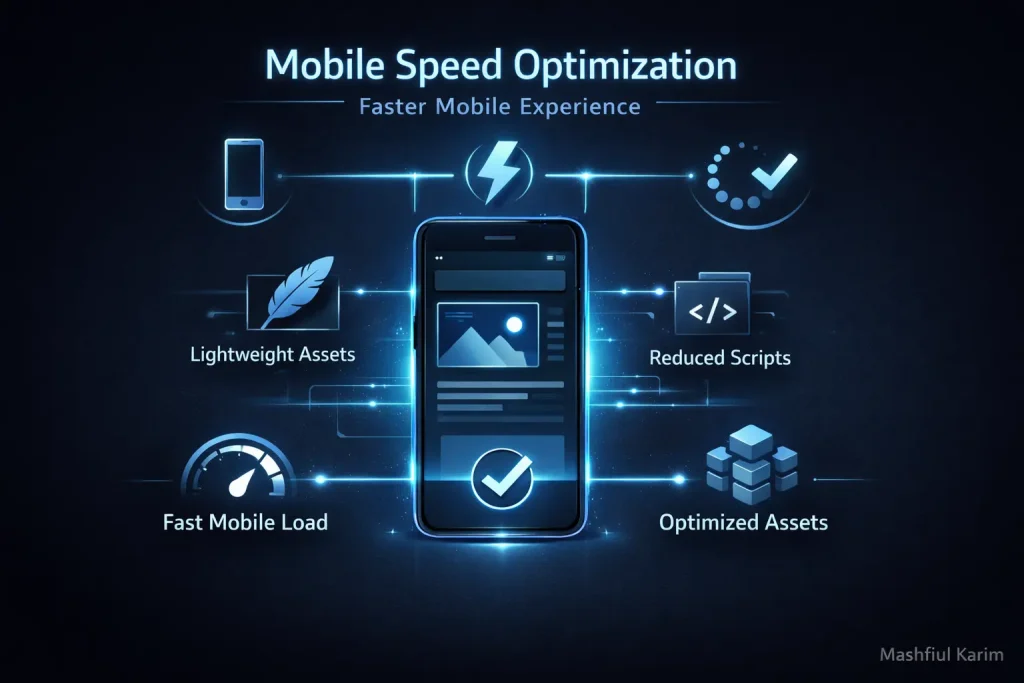
Mobile Page Speed Optimization
Mobile optimization is critical due to Google’s mobile-first indexing approach. Most users access websites through mobile devices, often on slower networks. A poorly optimized mobile experience can lead to high bounce rates and lower rankings.
Focusing on mobile performance ensures that your website delivers a consistent and fast experience across all devices.
Mobile-Friendly Design
- Use responsive layouts
- Ensure proper scaling across screen sizes
- Avoid intrusive pop-ups
Reducing Mobile Load Time
- Minimize heavy scripts
- Optimize mobile assets
- Reduce unnecessary elements
Optimizing Mobile Assets
- Compress images specifically for mobile
- Use lightweight design components
- Prioritize above-the-fold content
Optimizing Different Website Pages for Speed
Each type of page on your website serves a different purpose and requires targeted optimization. A one-size-fits-all approach often leads to inefficiencies. Instead, businesses should optimize pages based on their function and user intent.
This ensures that all parts of the website contribute to overall performance and SEO success.
Homepage Speed Optimization
- Optimize hero images and banners
- Reduce heavy scripts
- Prioritize fast loading of key sections
Service Page Optimization
- Keep layouts clean and focused
- Optimize images and call-to-action elements
- Reduce unnecessary plugins
Blog Page Optimization
- Use lightweight themes
- Optimize images and media
- Implement lazy loading
Why Your Website Needs a Blog for SEO
A blog is a powerful tool for improving search visibility and driving organic traffic. It allows businesses to target long-tail keywords, answer customer queries, and establish authority within their industry.
Blogs also improve internal linking structure, helping search engines crawl and index your website more effectively. Regularly updated content signals relevance, which can positively impact rankings over time.
Common Page Speed Optimization Mistakes
Many businesses attempt to improve page speed but overlook critical factors that limit results. Avoiding these mistakes is essential for achieving meaningful performance improvements.
A strategic approach ensures that optimization efforts are aligned with SEO goals and user expectations.
Ignoring Core Web Vitals
- Failing to monitor performance metrics
- Overlooking real user experience data
Using Unoptimized Images
- Uploading large image files
- Not using compression or modern formats
Overloading Plugins
- Installing unnecessary plugins
- Increasing server load and conflicts
Poor Hosting Choices
- Using low-quality hosting providers
- Experiencing slow server response times
Final Thoughts
Page speed optimization for SEO is a continuous process that requires regular monitoring and updates. As search engines evolve and user expectations increase, maintaining fast website performance becomes essential for staying competitive.
Businesses that prioritize speed gain better rankings, improved user engagement, and higher conversion rates. Investing in performance optimization is not just a technical decision—it is a strategic move that directly impacts long-term growth.
Frequently Asked Questions (FAQs)
1. What is page speed optimization for SEO?
It is the process of improving website loading time and performance to enhance user experience and search engine rankings.
2. How does page speed affect search rankings?
Faster websites provide better user experience, which is a key ranking factor used by search engines.
3. What are Core Web Vitals?
They are performance metrics that measure loading speed, interactivity, and visual stability of a webpage.
4. How can I test my website speed?
You can use tools like Google PageSpeed Insights or GTmetrix to analyze performance.
5. How long does it take to improve page speed?
Basic improvements can be done quickly, but full optimization may take several weeks depending on the website.
6. Does mobile speed impact SEO rankings?
Yes, mobile speed is critical due to mobile-first indexing and directly affects rankings.
7. What is the ideal page load time for SEO?
Ideally, a website should load within 2–3 seconds for optimal performance and user experience.
SEO Meta Section
SEO Title:
Page Speed Optimization for SEO: Boost Rankings Fast
Meta Description:
Improve rankings with page speed optimization for SEO. Learn how to reduce load time, enhance performance, and boost conversions fast.