How to Rank Higher on Google and Get More Clients
The beauty industry has become extremely competitive, and most clients now begin their search for services online. Whether someone is looking for a haircut, facial treatment, bridal makeup, or a relaxing spa session, their first step is usually searching on Google. If your salon website does not appear in those search results, potential clients may never discover your business.
This is where on page SEO for beauty salons becomes essential. On-page SEO helps search engines clearly understand your website’s services and relevance to search queries. When implemented correctly, it allows salon websites to rank for high-intent searches, attract local clients, and generate more appointment bookings.
In this guide, we’ll explore the most effective on-page SEO strategies that beauty salons can use to improve rankings, increase visibility, and convert website visitors into loyal customers.
Why SEO Matters for Beauty Salon Websites
Before someone books a beauty service, they usually compare multiple salons online. They look for reviews, browse services, check prices, and view portfolios of previous work. If your salon website appears prominently in search results, you instantly gain a major competitive advantage.
Search engine optimization helps salons position their websites where potential customers are actively searching. Instead of relying entirely on paid ads or social media promotion, SEO allows salons to attract a steady flow of organic traffic from Google.
When a beauty salon website is properly optimized, it becomes easier for people to find services such as hair styling, skincare treatments, nail services, and bridal makeup. This increased visibility often translates into more consultations, inquiries, and confirmed bookings.
For service businesses—including salons, spas, and even home services like HVAC, cleaning services, pest control, landscaping, and painting contractors—search visibility plays a critical role in attracting consistent clients.
What Is On Page SEO for Beauty Salons?
On-page SEO refers to optimizing elements directly on your website so search engines can better understand the content and rank it for relevant searches. For beauty salons, this means improving service pages, headings, images, and website structure.
Unlike off-page SEO strategies such as backlinks, on-page SEO focuses on improving the content and structure within the website itself. When done correctly, these optimizations help search engines clearly identify what services your salon provides and which search queries your pages should rank for.
Key Elements of On Page SEO
Search engines analyze many aspects of a webpage to determine how relevant it is to a search query. These elements help Google understand the structure, topic, and value of a page. When beauty salon websites optimize these components effectively, it becomes easier for search engines to rank them for relevant beauty and grooming services.
Important on-page SEO elements include:
- Title tags and meta descriptions
- SEO-friendly URLs
- Heading structure (H1, H2, H3)
- Keyword-optimized service pages
- Image optimization with alt text
- Internal linking between pages
- Mobile-friendly website design
- Page speed optimization
Each of these elements helps improve both search visibility and user experience.
Keyword Optimization for Beauty Salon Services
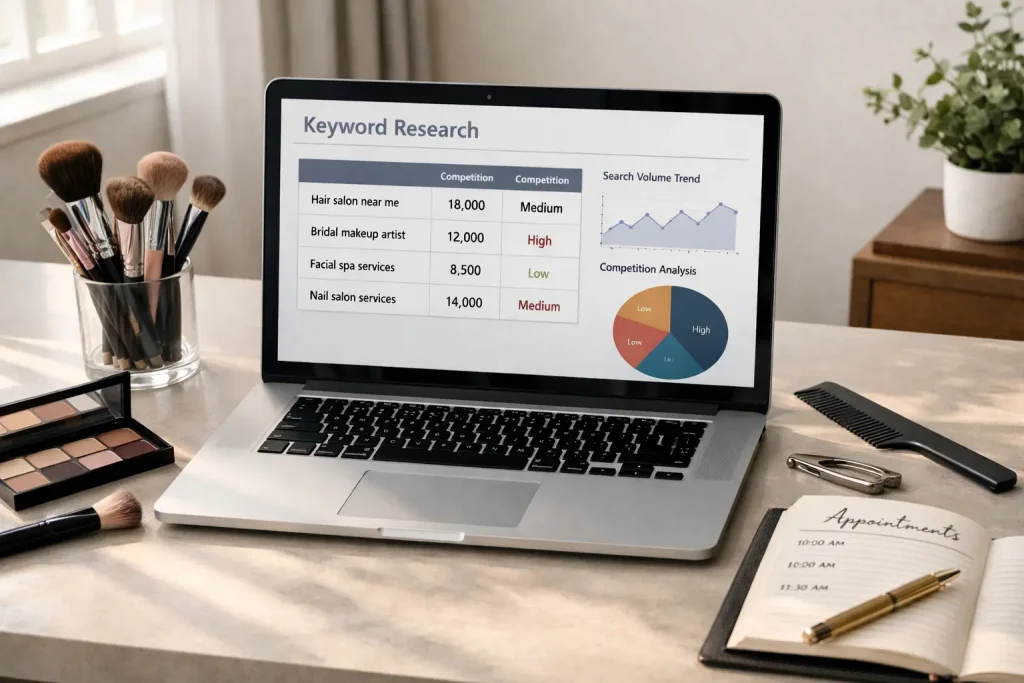
Keywords are the foundation of any SEO strategy. These are the phrases people type into Google when searching for services. For beauty salons, these queries usually include both the service and the location.
Targeting the right keywords ensures that your website appears when potential clients are actively searching for services you offer. This is why each service page should target specific search phrases related to the treatment.
Examples of High Intent Salon Keywords
Most salon clients search using service-based queries combined with their location. These keywords often indicate strong purchase intent because the user is actively looking to book a service.
Common high-intent keywords for salon websites include:
- hair salon in [city]
- bridal makeup artist near me
- facial spa in [city]
- nail salon services near me
- best beauty salon in [location]
Optimizing your service pages around these keywords significantly increases the chances of appearing in local search results.
Create Dedicated Pages for Every Salon Service
One of the most common SEO mistakes salon websites make is placing all services on a single page. While this may seem convenient, it limits your ability to rank for multiple service-specific keywords.
Search engines prefer clear, focused pages that target a single topic or service. By creating separate pages for each treatment, you allow Google to better understand the relevance of each page and rank it accordingly.
Examples of SEO Friendly Salon Service Pages
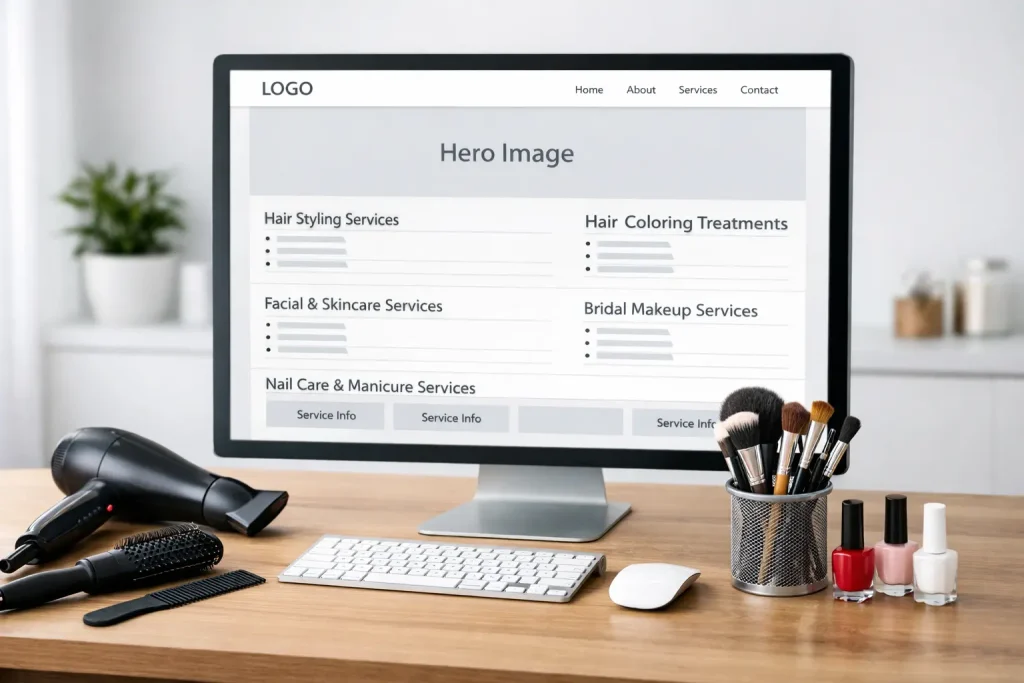
Each beauty service should have its own dedicated page optimized for relevant keywords and client search intent. This structure allows salons to target a wider range of search queries and attract clients looking for specific treatments.
Examples of well-structured salon service pages include:
- Haircuts and styling
- Hair coloring and balayage
- Facial and skin treatments
- Bridal makeup services
- Nail care and manicure services
- Spa and relaxation treatments
This approach not only improves SEO but also makes it easier for visitors to find the exact service they need.
Optimize Titles, Headings, and Meta Descriptions
Titles and headings are among the most important ranking signals for search engines. They help define the topic of a page and indicate how the content is structured.
When beauty salon websites optimize these elements with relevant keywords, it becomes easier for search engines to understand the page’s focus and match it with user searches. At the same time, clear titles and descriptions encourage users to click your result in Google.
Best Practices for Salon Website Meta Tags
Meta tags play a significant role in both search rankings and click-through rates. A well-written title and description can attract more visitors even when competing with multiple salons in the same area.
Key meta tag optimization practices include:
- Include the primary keyword in the title
- Keep titles under 60 characters
- Write compelling meta descriptions
- Use keywords naturally within headings
- Avoid duplicate titles across pages
Optimizing these elements ensures your pages stand out in search results.
Optimize Images of Your Salon Work
Visual content is extremely important for beauty salons. Clients want to see examples of hairstyles, makeup transformations, nail designs, and skincare results before choosing a salon.
However, images must also be optimized properly so they contribute to SEO rather than slowing down your website. Large, unoptimized images can negatively impact page speed and search rankings.
Image Optimization Best Practices
Search engines cannot interpret images in the same way humans can. Instead, they rely on descriptive information such as file names and alt text to understand what the image represents. Proper image optimization improves both search visibility and website performance.
Best practices include:
- Use descriptive file names for images
- Add keyword-rich alt text
- Compress images to improve loading speed
- Use real photos of your salon work
- Include images within service pages
Optimized visuals not only enhance SEO but also build trust with potential clients.
Why Having a Blog Section Is Important for Beauty Salon SEO
A blog section allows beauty salons to target informational searches that potential clients often make before booking services. Many people search for beauty advice, skincare tips, or hairstyle inspiration before deciding which salon to visit.
Publishing helpful content regularly allows your website to appear in these informational searches. Over time, this builds authority and increases organic traffic from potential customers researching beauty topics.
Internal Linking Between Salon Pages
Internal linking helps search engines understand how different pages on your website are connected. It also improves navigation by guiding visitors to related services and helpful content.
For beauty salons, internal linking is especially useful because many services are closely related. For example, someone interested in hair coloring might also be interested in hair treatments or styling services.
Examples of Internal Linking Opportunities
Strategic internal links distribute authority across your website and encourage visitors to explore more services. This improves both SEO performance and user engagement.
Common internal linking opportunities include:
- Hair styling → hair coloring services
- Bridal makeup → facial treatments
- Nail care → spa services
- Skin treatments → beauty packages
This approach keeps visitors on your website longer while strengthening the SEO value of important pages.
Blog Topics Beauty Salons Can Write About
Educational blog posts help salons attract visitors who are researching beauty treatments or learning about skincare and hair care. These visitors may later convert into customers once they trust your expertise.
Useful blog topics include:
- Hair care tips for healthy hair
- Skincare routines for different skin types
- Bridal beauty preparation guides
- Nail care maintenance tips
- Beauty trends and styling ideas
Consistent blogging can significantly expand the number of keywords your website ranks for.
Conclusion
SEO has become an essential marketing strategy for beauty salons looking to attract more clients online. A well-optimized website allows salons to appear when potential customers search for services such as hair styling, facials, nail treatments, or bridal makeup.
By implementing the right on page SEO for beauty salons, businesses can improve their search visibility and generate consistent organic traffic. Optimizing service pages, images, headings, and internal links helps search engines clearly understand your website while improving the overall user experience.
Over time, these SEO improvements can transform a salon website into a powerful lead generation channel that continuously attracts new clients.
FAQs about On Page SEO for Beauty Saloons
What is on page SEO for beauty salons?
On-page SEO for beauty salons involves optimizing website elements such as service pages, titles, headings, images, and content to improve visibility in search engine results.
How can a beauty salon rank higher on Google?
Salons can rank higher by optimizing service pages, targeting local keywords, improving website speed, creating helpful blog content, and ensuring the website is mobile friendly.
Why should salons create separate pages for services?
Separate pages allow salons to target specific keywords related to each treatment, increasing the chances of ranking for different search queries.
What keywords should beauty salons target for SEO?
Beauty salons should target service-based keywords such as hair salon in [city], bridal makeup artist near me, facial spa services, and nail salon services.
Does blogging help beauty salons get more clients?
Yes. Blogging helps attract visitors searching for beauty tips and skincare advice. These visitors often become future clients once they trust the salon’s expertise.
How important are images for salon website SEO?
Images showcase the quality of a salon’s work and help build trust. When optimized correctly with alt text and compressed file sizes, they also improve SEO performance.
How long does SEO take to work for beauty salons?
SEO results usually begin appearing within 3–6 months depending on competition, website quality, and the consistency of optimization efforts.