
Money worries affect almost everyone at some point. From mounting debts to lack of savings, financial problems can create stress, affect relationships, and limit future opportunities. While challenges vary from person to person, most financial struggles have clear solutions if approached wisely.
This article explores the top financial problems people face, why they happen, and actionable ways to fix them. Whether you are a student, professional, or entrepreneur, these insights can help you take control of your money and plan for a secure future.
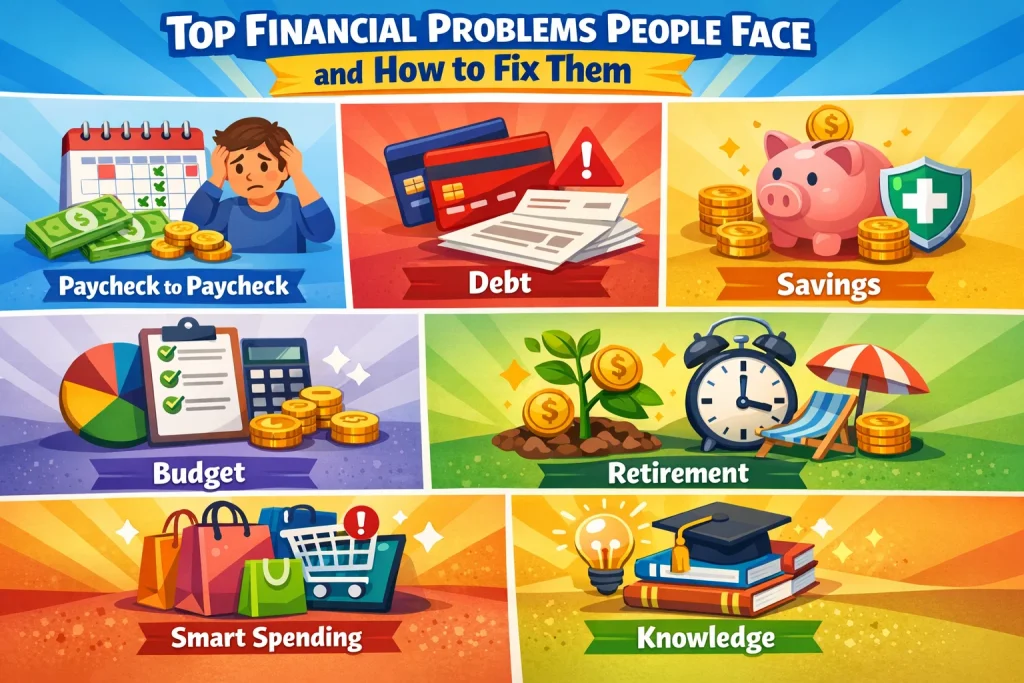
Why Financial Problems Happen
Financial problems rarely occur overnight. Most develop gradually due to habits, lifestyle choices, or unexpected events. Common causes include:
- Poor budgeting habits: Not tracking income and expenses can quickly lead to overspending.
- Lifestyle inflation: When income rises, spending often rises faster.
- High-interest debt: Loans and credit card balances can grow uncontrollably.
- Unexpected emergencies: Medical bills, car repairs, or job loss can strain finances.
- Limited financial knowledge: Lack of understanding about saving, investing, or debt management makes it hard to make smart money choices.
Understanding the root causes is the first step to solving these problems effectively.
Living Paycheck to Paycheck
Many people barely manage to cover monthly expenses, leaving little or no room for savings. Living paycheck to paycheck can make even minor emergencies stressful and overwhelming.
How to Fix It
- Create a detailed monthly budget: Track every expense and categorize spending.
- Prioritize needs over wants: Focus on essentials like rent, utilities, and groceries first.
- Cut unnecessary expenses: Cancel unused subscriptions, limit eating out, and avoid impulse purchases.
- Set a small savings goal: Even saving $50–$100 monthly can grow into an emergency fund over time.
Tip: Use budgeting apps to monitor expenses in real-time and prevent overspending.
High Credit Card Debt
Credit cards are convenient but can trap users in high-interest debt if not managed properly. Many people only pay the minimum balance, causing interest to accumulate rapidly.
How to Fix It
- Pay more than the minimum: Even a small extra payment reduces interest significantly.
- Focus on high-interest debt first: Use the “avalanche method” to save money on interest.
- Avoid new debt: Stop using credit cards for non-essential purchases until balances are cleared.
- Consider debt consolidation: Merging multiple debts into one lower-interest loan can make payments easier to manage.
Example: Someone with $5,000 in credit card debt at 20% APR can save hundreds in interest by paying extra monthly or consolidating the debt.
Lack of Emergency Savings
Unexpected events can happen to anyone—medical emergencies, car repairs, or temporary job loss can leave a person financially vulnerable without a safety net.
How to Fix It
- Build an emergency fund gradually: Start with a small goal, like $500, then increase over time.
- Aim for 3–6 months of expenses: This covers most sudden costs without needing loans or credit cards.
- Keep funds separate: Use a dedicated savings account that’s easy to access but not for everyday spending.
Tip: Automate savings to ensure money is added to your emergency fund every month without effort.
Poor Budgeting Skills
Many people do not have a clear picture of their finances. Without proper budgeting, it’s easy to overspend, accumulate debt, or miss opportunities to save.
How to Fix It
- Use the 50/30/20 rule:
- 50% of income for needs (rent, bills, groceries)
- 30% for wants (entertainment, dining, shopping)
- 20% for savings and debt repayment
- Track every expense: Apps, spreadsheets, or even a notebook can help track spending habits.
- Review and adjust monthly: Regularly analyze your budget and make changes as needed.
Tip: Budgeting is not restrictive—it ensures you have control over your money and can enjoy it wisely.
Not Saving for Retirement
Many people delay retirement planning because it feels distant, but postponing saving can make it hard to accumulate enough funds later.
How to Fix It
- Start early: Even small contributions can grow significantly over decades due to compound interest.
- Invest in retirement accounts: 401(k), IRA, or other long-term plans provide tax benefits and growth.
- Increase contributions over time: As income grows, gradually increase the amount saved for retirement.
Example: Saving $200 monthly from age 25 can accumulate over $150,000 by age 60 at a reasonable return rate.
Impulsive Spending
Online shopping, seasonal promotions, and social pressure often lead to unplanned purchases. Small, frequent purchases can quickly erode savings and create financial stress.
How to Fix It
- Use the 24-hour rule: Wait one day before making non-essential purchases.
- Create a shopping list and stick to it: Avoid buying things not planned.
- Identify triggers: Emotional spending can be reduced by recognizing patterns like boredom or stress.
Tip: Set a monthly “fun money” allowance to enjoy shopping without harming your finances.
Lack of Financial Knowledge
Many financial struggles occur because people have never learned basic money management skills. Without knowledge about budgeting, investing, and debt, making smart choices is challenging.
How to Fix It
- Educate yourself: Read personal finance blogs, books, and articles.
- Follow trusted experts: Financial advisors, podcasts, and online courses provide reliable guidance.
- Practice what you learn: Apply budgeting, saving, and investing principles consistently.
Tip: Start small with one concept at a time—don’t overwhelm yourself with everything at once.
Practical Tips to Improve Financial Health
Improving finances is a journey. Here are simple habits to strengthen financial security:
- Track income and expenses consistently
- Save before spending (pay yourself first)
- Avoid unnecessary debt and high-interest loans
- Build an emergency fund
- Invest wisely for long-term goals
- Review financial plans regularly
Remember: Small changes made consistently lead to big results over time.
Final Thoughts
Financial problems are common but not insurmountable. The key is recognizing the problem, understanding the root cause, and taking practical action. By budgeting, controlling debt, saving, and improving financial knowledge, anyone can achieve financial stability and reduce stress.
FAQs
What is the most common financial problem people face?
One of the most common financial problems is living paycheck to paycheck. Many people spend their entire income without saving.
How can someone improve their financial situation quickly?
Start by creating a budget, reducing unnecessary spending, and saving a small portion of income each month.
Why is an emergency fund important?
An emergency fund protects you from unexpected expenses such as medical bills, repairs, or job loss.
How much should someone save every month?
A common rule suggests saving at least 10–20% of monthly income if possible.
What is the first step to solving financial problems?
The first step is understanding your current financial situation. Track income, expenses, debts, and savings clearly.

