
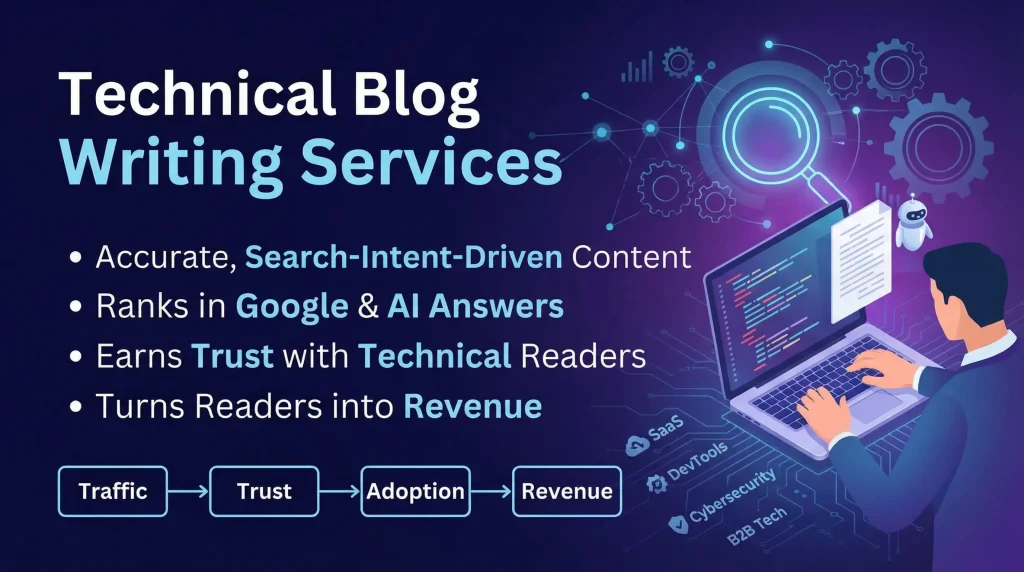
OK, you are looking for professional technical blog writing services; you need more than polished grammar and a couple of keywords.
You need SEO-driven technical blog content that ranks in search results, gets cited in AI answers, earns developer trust, and turns product curiosity into trials, signups, demos, and revenue.
At BlogWriting.Services, our technical blog writing is built to help:
- SaaS companies explain complex features without dumbing them down
- DevTools brands win “how-to” and integration searches
- Cybersecurity and compliance teams publish accurate, defensible guidance
- B2B tech companies rank for comparison and “alternatives” keywords
- Global software brands scale multilingual technical content (without hreflang chaos)
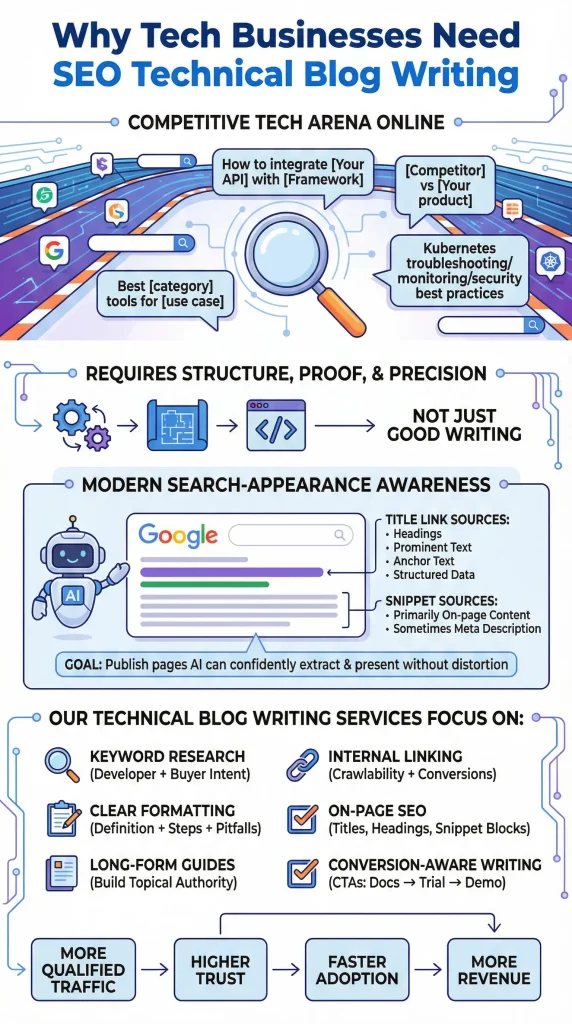
Why Tech Businesses Need SEO Technical Blog Writing
The tech space is one of the most competitive arenas online.
Ranking for queries like:
- How to integrate [Your API] with [Framework]
- [Competitor] vs [Your product]
- Best [category] tools for [use case]
- [Competitor] alternatives
- Kubernetes troubleshooting/monitoring/security best practices
…requires more than “good writing.” It requires structure, proof, and technical precision.
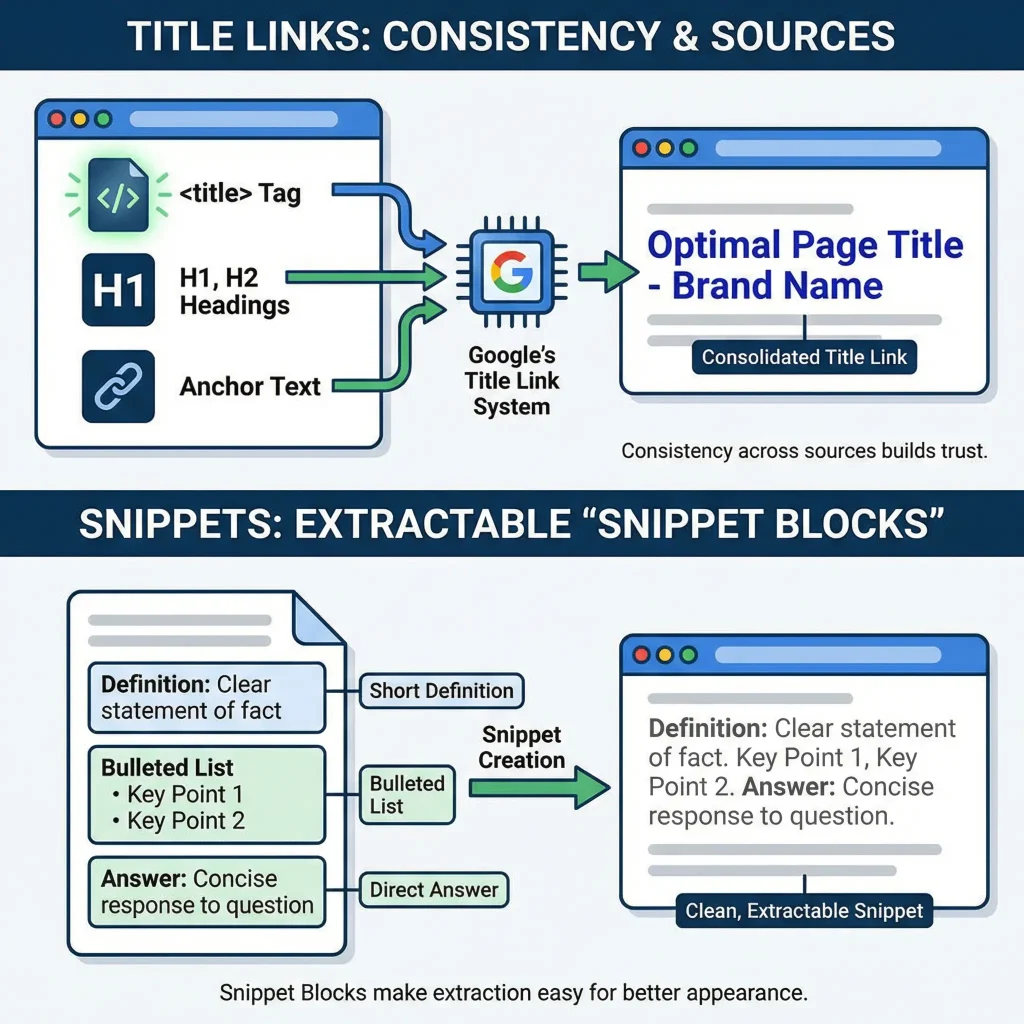
It also requires modern search-appearance awareness. Google can generate your title link from multiple sources (not just the <title> tag), including headings, prominent on-page text, anchor text, and even structured data.
And Google primarily generates the snippet from on-page content (sometimes using the meta description when it’s a better fit).
So the real goal isn’t “write metadata.” The goal is: publish pages that Google and AI systems can confidently extract and present—without distorting meaning.
Our technical blog writing services focus on:
- Keyword research based on search intent (developer intent + buyer intent)
- Clear “definition + steps + pitfalls” formatting that wins snippets
- Long-form technical guides that build topical authority
- Internal linking strategy that supports crawlability and conversions
- On-page SEO best practices (titles, headings, snippet blocks, tables)
- Conversion-aware writing (CTAs that match stage: docs → trial → demo)
The goal is simple:
More qualified traffic → higher trust → faster adoption → more revenue.
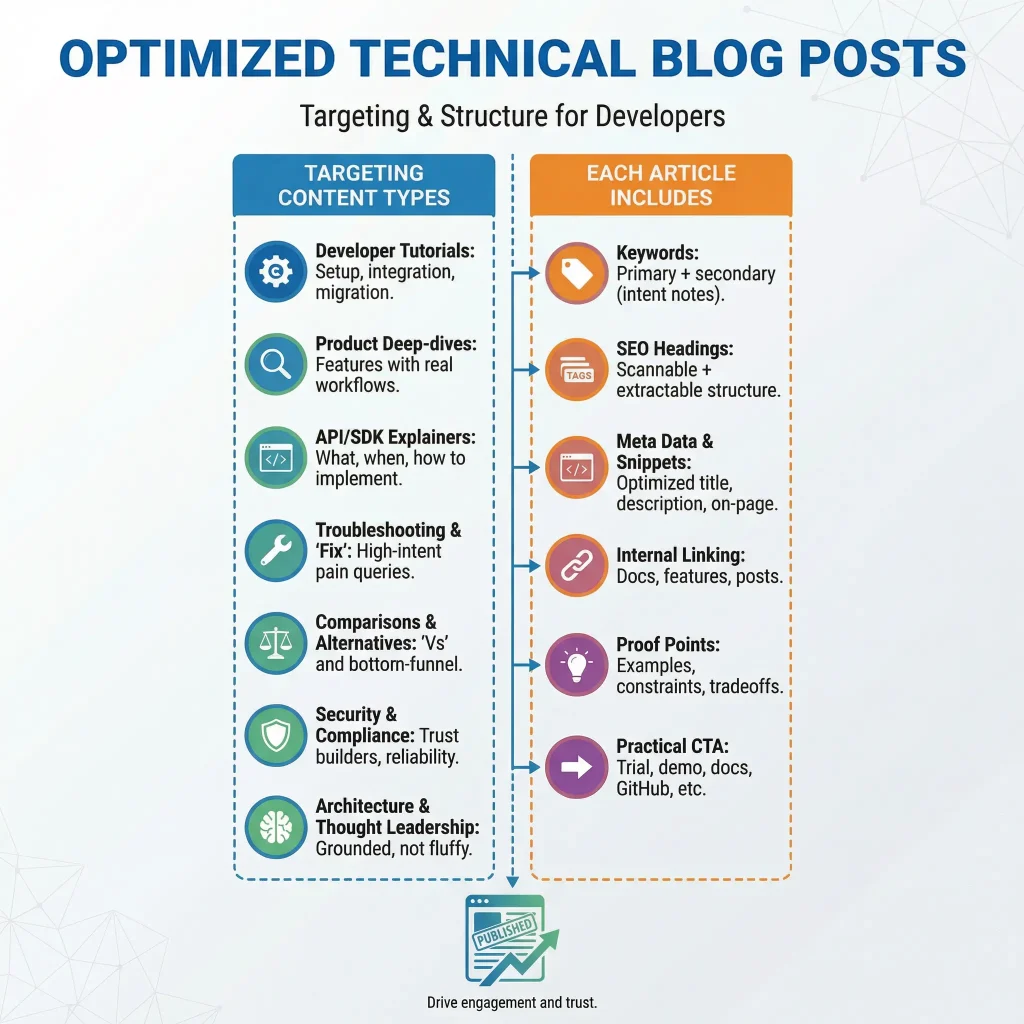
We write optimized Technical Blog posts targeting
- Developer tutorials (setup, integration, migration)
- Product deep-dives (features explained with real workflows)
- API/SDK explainers (what it is, when to use it, how to implement)
- Troubleshooting and “fix” content (high-intent pain queries)
- Comparisons (“vs”) and “alternatives” pages (bottom-funnel)
- Security, compliance, and reliability explainers (trust builders)
- Architecture & engineering thought leadership (grounded, not fluffy)
Each article includes:
- Primary + secondary keywords (with intent notes)
- SEO-structured headings (scannable + extractable)
- Optimized meta title + meta description and on-page snippet sections
- Internal linking suggestions (docs, feature pages, integration pages, posts)
- Proof points (examples, constraints, tradeoffs, and “when not to do this”)
- A practical CTA (trial, demo, docs, newsletter, GitHub, template, etc.)
A quick 2026 reality check: avoid "scaled content" risk
Using AI isn’t automatically a problem—but publishing lots of low-value pages “just to rank” is exactly the behavior Google calls out under spam policy updates (scaled content abuse). Google’s guidance emphasizes the abusive pattern: content produced at scale primarily to manipulate rankings rather than help users—regardless of whether it’s made by automation, humans, or both.
That’s why our approach is built around human accountability, technical QA, and real value—not mass publishing.
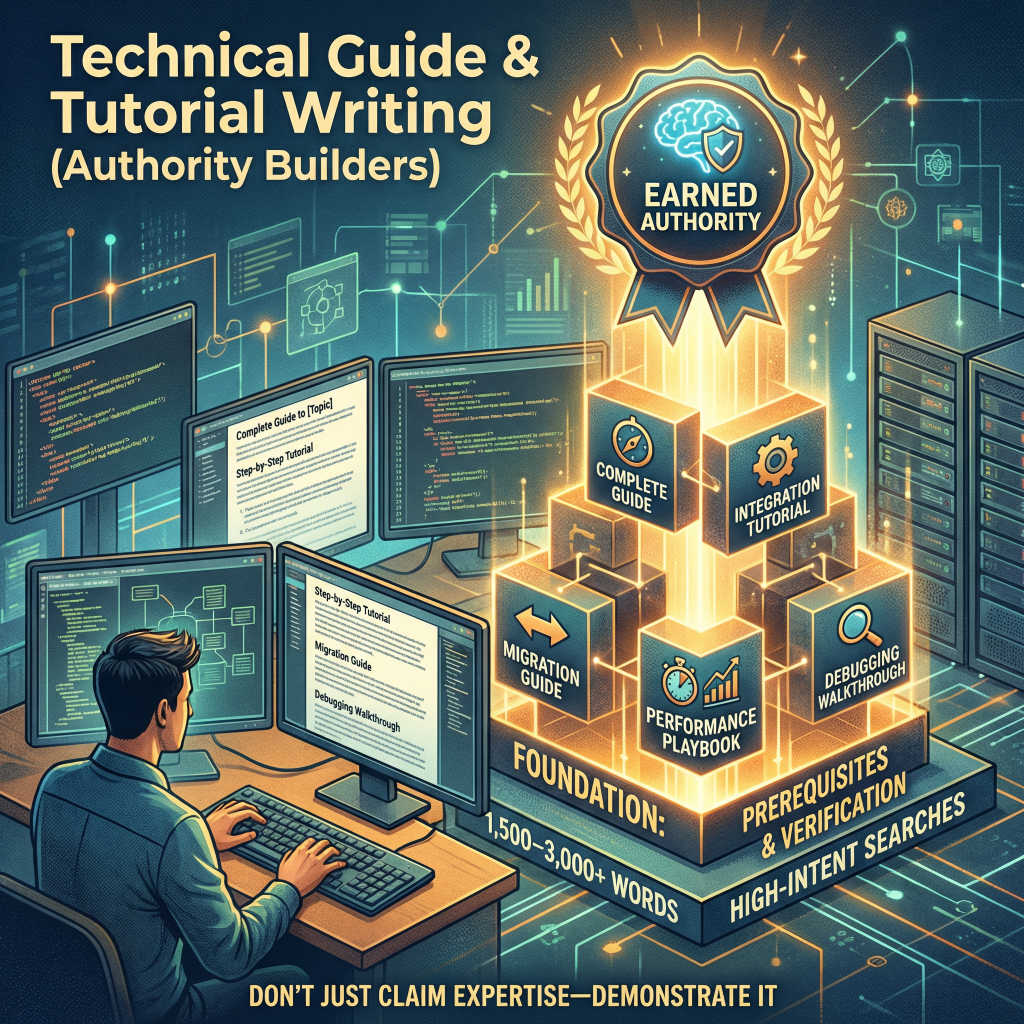
Technical Guide & Tutorial Writing (Authority Builders)
Long-form tutorials and guides (typically 1,500–3,000+ words) are designed to rank for high-intent searches and earn developer trust.
Examples of guide formats we write:
- Complete Guide to [Topic] for [Persona]
- Step-by-step [integration] tutorial with prerequisites + verification steps
- Migration guides (e.g., “Move from X to Y without downtime”)
- Performance and reliability playbooks (what to measure, what to change)
- Debugging walkthroughs (common errors + fixes + why it happens)
Why this works: tutorials create “earned authority.” They don’t just claim expertise—they demonstrate it with steps, constraints, and outcomes.
SaaS Product & Integration Technical Blog Writing
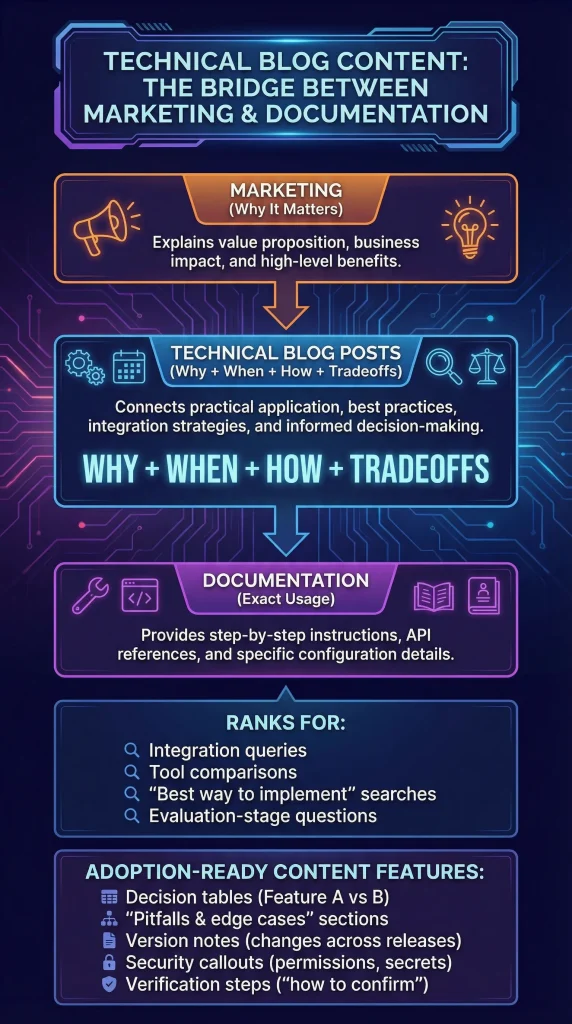
We create technical blog content that sits between marketing and documentation:
- Marketing explains why it matters
- Documentation explains the exact usage
- A strong technical blog post connects both: why + when + how + tradeoffs
That’s the content that tends to rank for:
- integration queries,
- tool comparisons,
- “best way to implement” searches,
- and evaluation-stage questions.
We translate complex product features into adoption-ready content using:
- Decision tables (Feature A vs Feature B; when to choose what)
- “Pitfalls & edge cases” sections (where most articles fail)
- Version notes (what changes across releases)
- Security callouts (permissions, secrets handling, safe defaults)
- Verification steps (“how to confirm it’s working”)
Search appearance advantage: title links + snippets
Google’s title link system can pull from your <title>prominent on-page titles/headings, anchor text, and other sources—so consistency matters.
And because snippets are primarily created from the page content, your page should contain clean, extractable answers—not just marketing copy.
So we write “snippet blocks” inside the article (short definitions, lists, and direct answers) to make extraction easy.
Developer Onboarding & Documentation-Style Blog Content
If your product has an API, SDK, CLI, plugin, or complex setup, onboarding content can cut support load and speed up time-to-value.
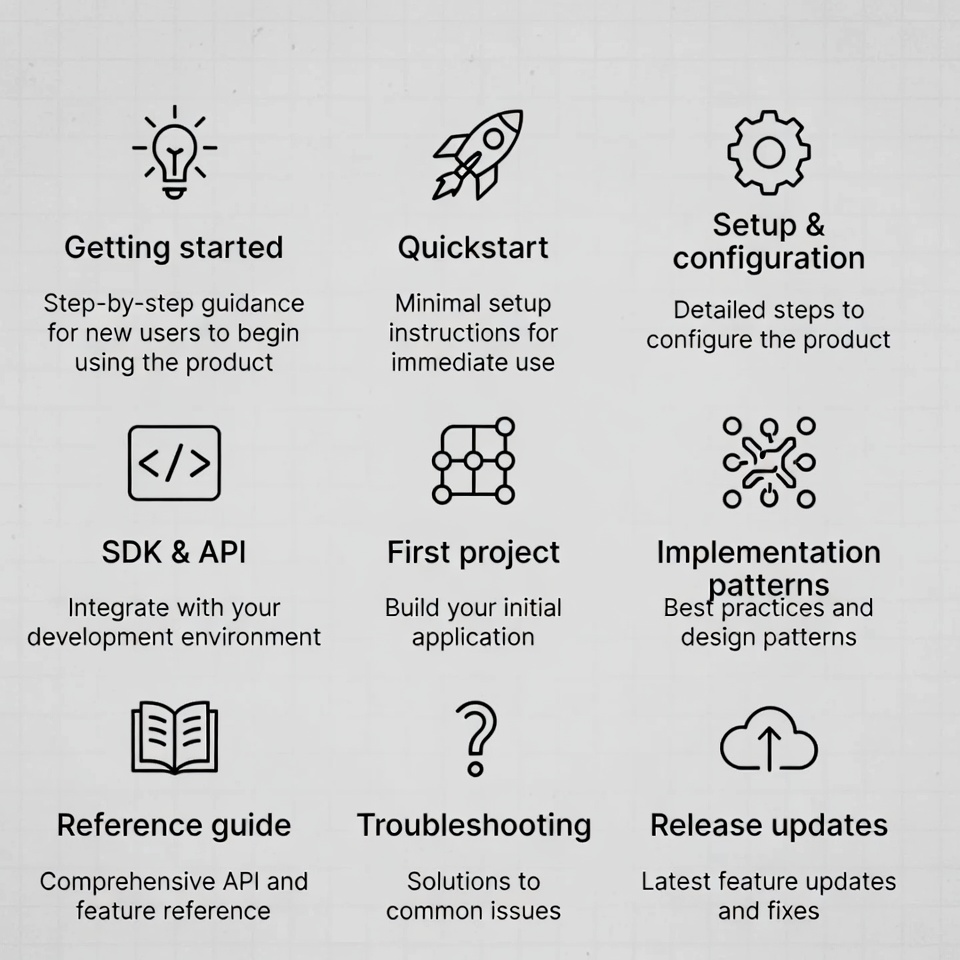
We write documentation-style technical blog content for:
- “Getting started” and quickstart posts
- Set up and configuration walkthroughs
- SDK/API “first project” tutorials
- Implementation patterns and reference guides
- Troubleshooting knowledge-base articles
- Release update explainers (what changed, what to do)
This is also where many brands get hurt by “parasite SEO” shortcuts (third-party content dumped on reputable domains). Google has explicitly reinforced policies against site reputation abuse and pay-to-play schemes designed to game rankings.
We build content that’s clearly first-party, aligned with your product, and reviewed for accuracy.
Technical Blog SEO Content Strategy (Topical Authority That Compounds)
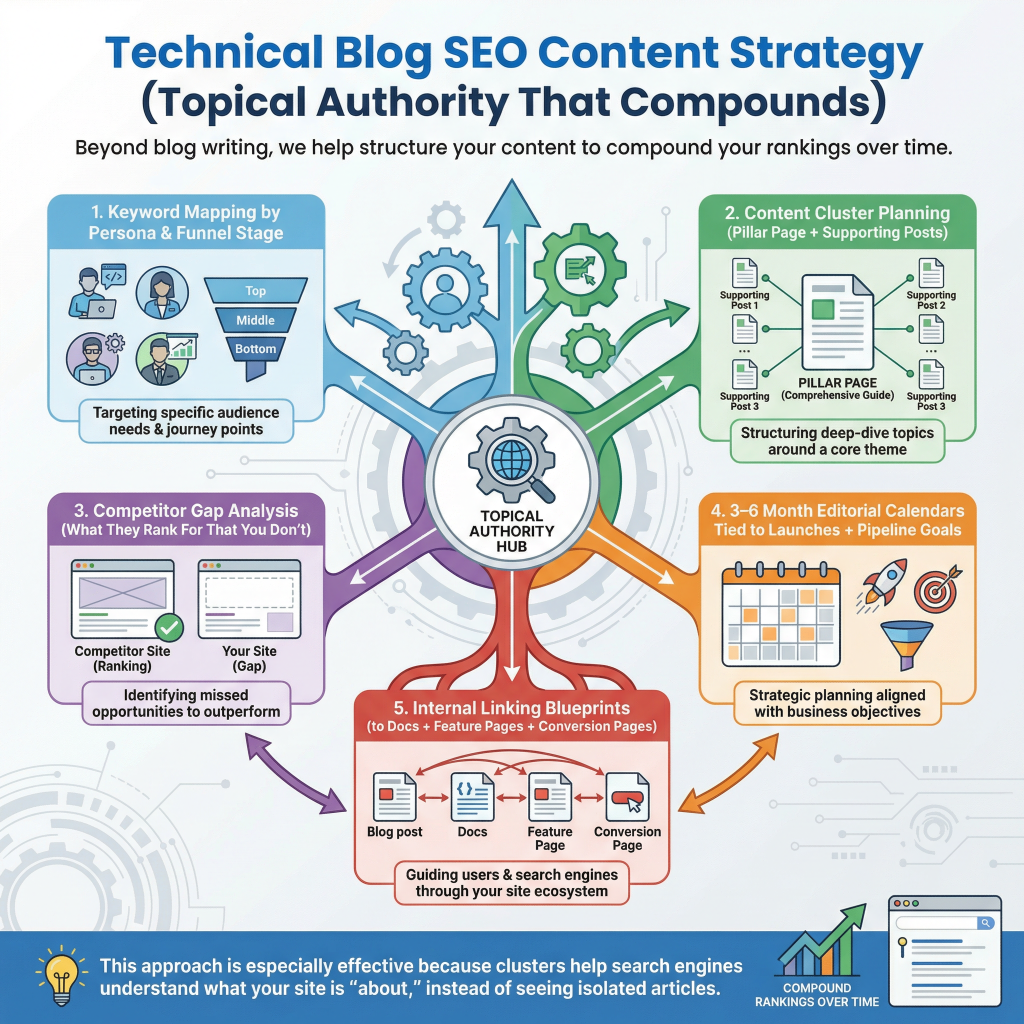
Beyond blog writing, we help structure your content to compound your rankings over time.
We provide:
- Keyword mapping by persona and funnel stage
- Content cluster planning (pillar page + supporting posts)
- Competitor gap analysis (what they rank for that you don’t)
- 3–6 month editorial calendars tied to launches + pipeline goals
- Internal linking blueprints (to docs + feature pages + conversion pages)
This approach is especially effective because clusters help search engines understand what your site is “about,” instead of seeing isolated articles.
Multilingual Technical Blog writing (global SaaS-ready)
If you’re publishing in multiple languages or regions, you need proper international SEO. Google recommends clearly indicating localized versions and supports multiple implementation methods (HTML, HTTP headers, or sitemaps) via hreflang.
The key is consistency and bidirectional annotations; otherwise, search engines may ignore the signals.
We treat localization as technical SEO + editorial quality, not “translate and hope.”
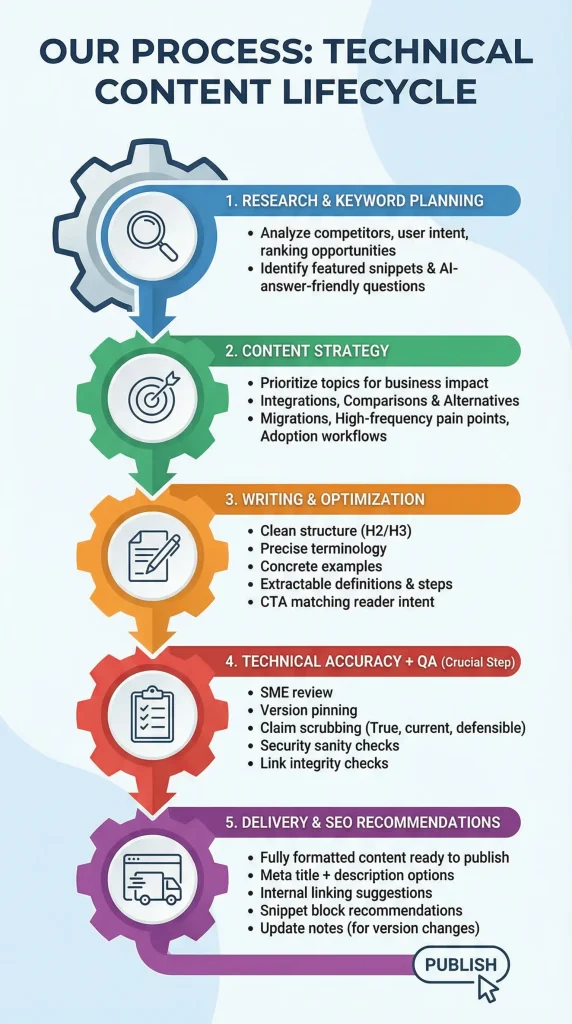
Our Process
Research & Keyword Planning
We analyze competitors, user intent, and ranking opportunities. We also identify patterns in featured snippets and AI-answer-friendly question framing.
Content Strategy
We prioritize topics that move the business, not just traffic:
- integrations,
- comparisons and alternatives,
- migrations,
- high-frequency pain points,
- and adoption workflows.
Writing & Optimization
Every technical blog article is written for both readers and search systems:
- clean structure (H2/H3 that mirrors intent),
- precise terminology,
- concrete examples,
- extractable definitions and steps,
- and a CTA that matches where the reader is.
Technical Accuracy + QA (the part most services skip)
Depending on scope, our QA checklist can include:
- SME review (your team or ours)
- Version pinning (tool/library versions referenced)
- Claim scrubbing (“is this true, current, and defensible?”)
- Security sanity checks (no dangerous defaults or secret leaks)
- Link integrity checks (docs links, API endpoints, resources)
Delivery & SEO Recommendations
You receive fully formatted content ready to publish, plus:
- meta title + meta description options,
- internal linking suggestions,
- snippet block recommendations,
- and update notes (what to refresh when versions change).
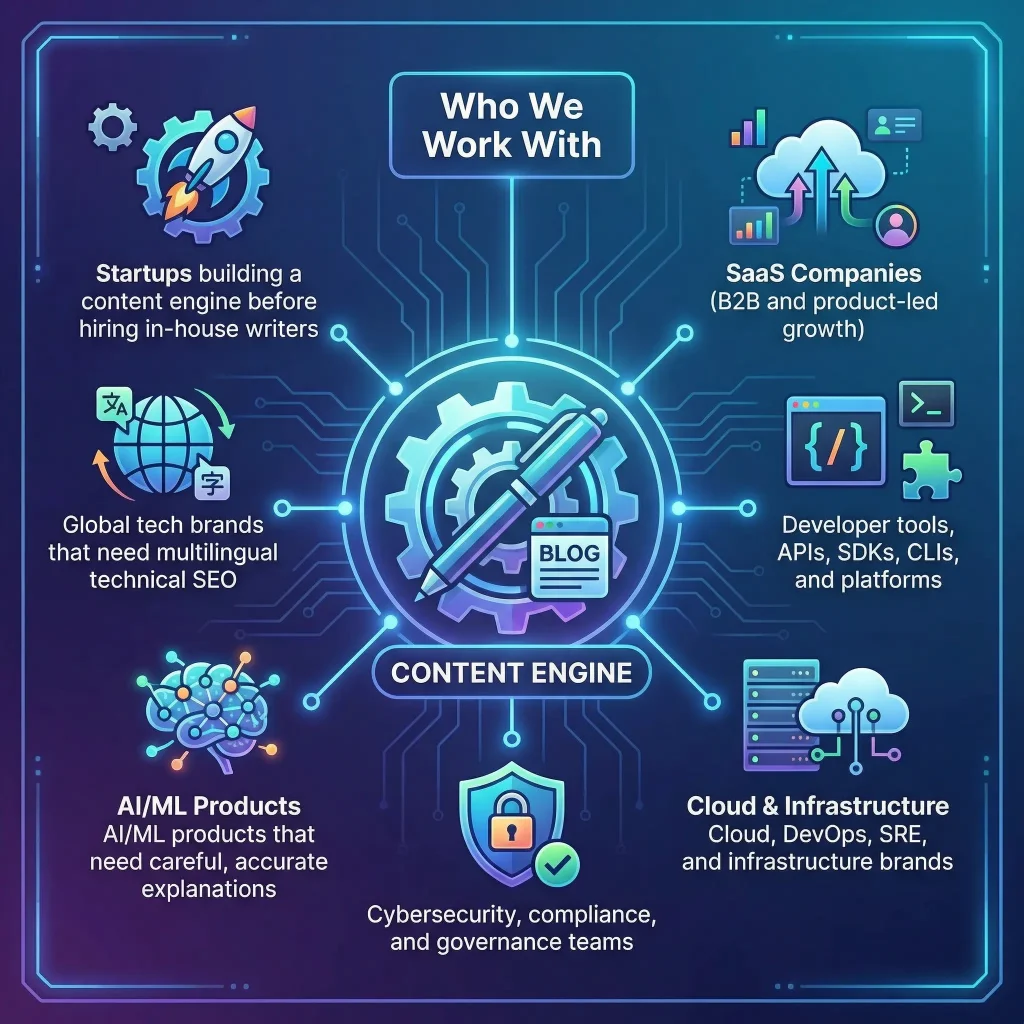
Who We Work With
Our technical blog writing services are ideal for:
- SaaS companies (B2B and product-led growth)
- Developer tools, APIs, SDKs, CLIs, and platforms
- Cloud, DevOps, SRE, and infrastructure brands
- Cybersecurity, compliance, and governance teams
- AI/ML products that need careful, accurate explanations
- Global tech brands that need multilingual technical SEO
- Startups building a content engine before hiring in-house writers
Technical Blog Writing Packages
4 Blog Post / Month
- 1200 Words/Article
- Blog Image Include
- Well Researched Article
- Grammar Error Check
- Punctuation Error Check
- 100% Plagiarism-Free
- SEO Optimized Writing
- Industry Expert Writer
- Proofreading
- 1 Revision
8 Blog Posts / Month
- 1200 Words/Article
- Blog Image Include
- Well Researched Article
- Grammar Error Check
- Punctuation Error Check
- 100% Plagiarism-Free
- SEO Optimized Writing
- Industry Expert Writer
- Proofreading
- 1 Revision
12 Blog Posts / Month
- 1200 Words/Article
- Blog Image Include
- Well Researched Article
- Grammar Error Check
- Punctuation Error Check
- 100% Plagiarism-Free
- SEO Optimized Writing
- Industry Expert Writer
- Proofreading
- 1 Revision
16 Blog Posts / Month
- 1200 Words/Article
- Blog Image Include
- Well Researched Article
- Grammar Error Check
- Punctuation Error Check
- 100% Plagiarism-Free
- SEO Optimized Writing
- Industry Expert Writer
- Proofreading
- 1 Revision
It’s ideal for:
- SaaS and B2B software companies
- API/SDK and DevTools brands
- Cloud/DevOps/SRE platforms
- Cybersecurity + compliance companies
- AI/ML products that need careful explanation and claim control
Yes. We can write for:
- Developers (tutorials, integrations, code explanations)
- Technical decision-makers (architectures, tradeoffs, security, performance)
- Business stakeholders (benefits, ROI, use cases—without technical inaccuracies)
Yes—when they match search intent and build topical authority through clusters (pillar + supporting posts), which is a common strategy content agencies use to improve competitive rankings over time.
We typically prioritize:
- Integration keywords (“How to connect X with Y”)
- Pain/problem keywords (“error”, “timeout”, “best practice”, “how to fix”)
- Comparison keywords (“X vs Y”, “X alternatives”)
- Workflow keywords (use-case-driven “how to” searches)
We can do either:
- Writing-only (you provide topics/briefs)
- Strategy + writing (keyword mapping, clusters, internal linking plan, content calendar)
We use an accuracy workflow that may include:
- Source-based research (official docs, vendor specs, standards)
- Clear assumptions + version notes
- Optional SME review (your engineer/product manager)
- Claim-checking (security/compliance statements, performance claims)