
For many small businesses, paid advertising feels like the only way to get noticed. Whether it is Google Ads or social media promotions, the promise of instant traffic is tempting. You pay a fee, and immediately, customers start clicking through to your site.
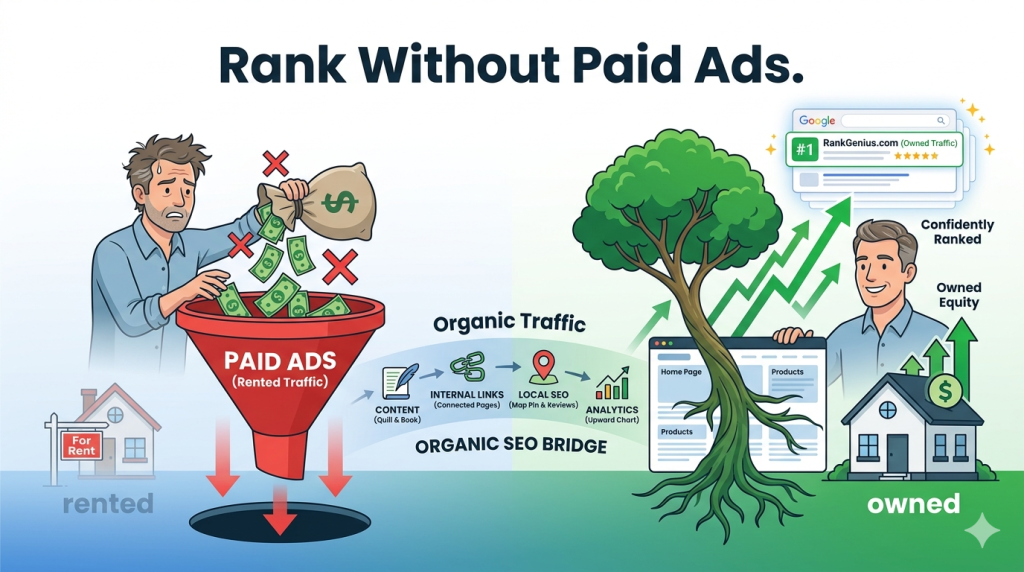
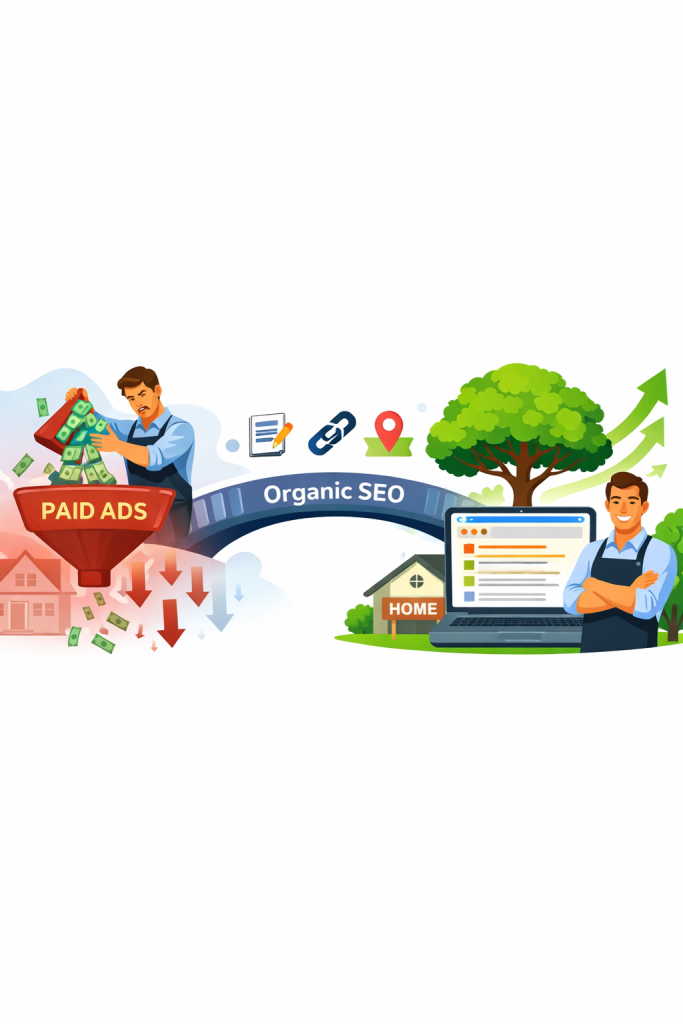
However, this model creates a dangerous dependency. The moment you stop paying, the traffic stops. It is like renting a house versus buying one; you build no equity, and your visibility evaporates the second your budget runs out.
The opportunity lies in organic Search Engine Optimization (SEO). Unlike paid ads, organic SEO focuses on building long-term assets. By optimizing your website and content to appear naturally in search results, you can create a steady stream of traffic that continues to flow long after you have done the initial work.
In this guide, you will learn how to rank high on Google without spending a fortune on ads. We will cover local SEO, keyword strategy, content creation, and technical optimizations that any small business can implement.
Why Ranking Without Ads Is Possible
1. Organic SEO vs Paid Ads
The fundamental difference between paid ads and organic SEO is the trade-off between time and money.
- Paid Ads: This is the “pay-to-play” model. It provides instant gratification. As soon as your campaign goes live, your website appears at the top of the page. However, this visibility is temporary. If you exhaust your budget or pause the campaign, your visibility drops to zero immediately.
- SEO: This is the “earned” model. It requires patience. It might take three to six months to see significant results. However, once you earn a top ranking, that position is much more stable. You do not pay Google every time someone clicks your link. Over time, the cost per acquisition drops dramatically, while the ROI increases.
2. How Google Ranks Websites
Google does not rank websites based on who pays the most; it ranks them based on value. Google’s primary goal is to serve the most helpful and relevant results to the user. It uses three main pillars to determine this:
- Relevance: Does your content actually answer what the user searched for? If someone searches for “best vegan leather shoes,” and your page is about rubber boots, you won’t rank, regardless of your budget.
- Authority: Does the internet trust you? Google looks at how many other websites link back to you (backlinks). If reputable sites link to you, Google views your site as credible.
- Experience: How user-friendly is your site? Google measures site speed, mobile-friendliness, and how easy it is to navigate.
Start with Local SEO (Quick Wins for Small Businesses)
For brick-and-mortar businesses or those serving specific areas, Local SEO is the fastest route to the first page of Google.
1 Optimize Google Business Profile
Your Google Business Profile (formerly Google My Business) is the box that appears on the map when people search locally. To optimize it:
- Complete all details: Ensure your hours, location, and categories are 100% accurate.
- Add photos and updates: Upload high-quality photos of your storefront, team, and products. Post regular updates like special offers or news.
- Collect and reply to reviews: Positive reviews signal trust to Google. Reply to every review—thank the happy ones and address the negative ones professionally.
2 Maintain NAP Consistency
NAP stands for Name, Address, and Phone number. Google crawls the web to verify your business information. If your website lists one phone number and Yelp lists another, Google gets confused and may penalize your ranking. Ensure your NAP is identical across your website, social media, and directory listings.
3 Target Local Keywords
People search differently when looking for local services. They often include “near me” or the city name.
- Instead of trying to rank for “plumber,” target “plumber in [City Name].”
- Write content specific to your location, such as “Best Coffee Shops in [Neighborhood].”
Target Low-Competition Keywords
Trying to rank for broad, high-volume keywords like “shoes” or “marketing” is a waste of time for a small business. You are competing with giants like Amazon and HubSpot. You need a smarter approach.
1. Focus on Long-Tail Keywords
Long-tail keywords are longer, more specific search phrases. While fewer people search for them, the intent is much higher.
- Broad keyword: “Running shoes” (High competition, low intent).
- Long-tail keyword: “Best running shoes for flat feet beginners” (Low competition, high intent).
Because these are easier to rank for, you can start seeing traffic faster.
2. Understand Search Intent
You must give the user what they want. Google categorizes search intent into:
- Informational: “How to tie a tie” (User wants to learn).
- Commercial: “Best Nike vs Adidas reviews” (User is comparing).
- Transactional: “Buy red tie online” (User is ready to buy).
If your page is a product page (transactional), don’t try to rank for an “informational” keyword like “history of ties.” Create blog posts for information and product pages for transactions.
Create High-Quality Content That Ranks
Content is the fuel that drives your SEO engine. Google rewards content that genuinely helps users.
1 Solve Real Customer Problems
Don’t write content just to fill space. Put yourself in your customer’s shoes. What questions do they ask before buying? What problems keep them up at night? Write blog posts that answer these questions thoroughly.
2 Use Content Formats That Work
Certain formats tend to perform better in search results because they are easy to read:
- Guides: Comprehensive, long-form articles (e.g., “The Ultimate Guide to Home Roofing”).
- How-to Articles: Step-by-step tutorials.
- Comparison Posts: “Product A vs. Product B” articles help users make decisions.
3 Repurpose Content
Maximize your reach by turning one piece of content into many. Turn a blog post into a LinkedIn article, an infographic for Pinterest, or a script for a short video. This builds signals across multiple platforms without reinventing the wheel.
Build a Smart Internal Linking Strategy
Internal linking is connecting one page of your website to another. This helps Google find and index your pages, and it helps users stay on your site longer.
- Connect blog posts to service pages: If you write a blog about “How to fix a leaky faucet,” include a link in the text to your “Plumbing Services” page.
- Use topic clusters: Create one “Pillar Page” that covers a broad topic, then write several “Cluster Content” pieces that cover specific sub-topics, linking back to the Pillar Page.
- Improve website structure: Use clear anchor text (the clickable words) that describes what the linked page is about.
Get Free Backlinks (Authority Building)
Backlinks are votes of confidence from other websites. While high-end agencies pay thousands for links, small businesses can build them for free with effort.
1. Local Directories
Submit your business to local business directories (citations). Sites like Yelp, Yellow Pages, TripAdvisor, and your local Chamber of Commerce website provide free, legitimate backlinks.
2. Guest Posting
Offer to write articles for other blogs or local news sites in your industry. In exchange for providing valuable content, ask for a link back to your website in the author bio.
3. Community Engagement
Participate in industry forums, Reddit communities, or niche Facebook groups. Don’t spam links; contribute helpful advice. If you provide value, you can occasionally link back to a relevant article on your site as a resource.
Optimize Technical SEO (Often Ignored)
You can have the best content in the world, but if your website is technically broken, Google won’t rank it.
- Improve page speed: Use tools like Google PageSpeed Insights to see how fast your site loads. Compress images and remove unnecessary code.
- Make website mobile-friendly: Most searches happen on phones. If your site is hard to use on a mobile device, Google will lower your ranking.
- Fix broken links: Check for “404 errors” (links that lead to nowhere) and fix them.
- Use SEO-friendly URLs: Keep your URLs short and descriptive.
Use Free SEO Tools
You don’t need expensive software to succeed. The biggest players offer free versions that are incredibly powerful:
- Google Search Console (GSC): The most important tool. It tells you exactly what you rank for, who links to you, and if Google has any errors crawling your site.
- Google Analytics (GA4): Helps you track what users do once they arrive on your site.
- Google Trends: Shows you what is trending and popular in your niche right now.
- Free keyword tools: Tools like Ubersuggest or AnswerThePublic have free tiers that help generate keyword ideas.
Conclusion
The belief that you need a massive advertising budget to rank on Google is a myth. While ads provide a temporary shortcut, organic SEO builds a foundation for sustainable growth.
By focusing on local SEO, targeting the right keywords, creating helpful content, and maintaining a technically sound website, you can compete with businesses ten times your size. You do not need a big budget; you need the right strategy.
