
How Chiropractic Clinics Can Rank Higher on Google

Today, most patients begin their search for healthcare providers online. Whether someone is experiencing back pain, neck stiffness, posture problems, or sports injuries, their first step is usually searching Google for solutions. If your clinic does not appear in those search results, potential patients may never discover your services.
This is why on page SEO for chiropractors has become an essential strategy for modern chiropractic clinics. A properly optimized website helps search engines understand your treatments, services, and expertise. As a result, your clinic can rank higher for searches related to chiropractic care and attract patients actively looking for treatment.
In this guide, we will explore the most important on-page SEO strategies chiropractors can implement to improve search visibility, attract new patients, and build long-term organic traffic.
Why SEO Is Important for Chiropractic Clinics
When someone experiences pain or discomfort, they rarely rely on traditional directories anymore. Instead, they search online for treatment options, nearby clinics, and healthcare providers with good reputations. If your website appears at the top of search results, you gain immediate visibility and credibility.
Search engine optimization allows chiropractic clinics to reach potential patients at the exact moment they are searching for help. Unlike paid advertising, which stops generating traffic once the budget ends, SEO builds sustainable visibility that continues to bring patients over time.
For service businesses—including healthcare providers like chiropractors, dentists, and physical therapists, as well as industries such as HVAC, cleaning services, pest control, landscaping, painting contractors, and moving companies—search visibility is one of the most reliable ways to attract consistent clients.
When your chiropractic website is optimized correctly, it becomes a powerful marketing channel capable of generating appointments without ongoing advertising costs.
What Is On Page SEO for Chiropractors?
On-page SEO refers to optimizing elements directly within your website so search engines can clearly understand your content and rank it for relevant search queries. For chiropractic clinics, this includes optimizing treatment pages, headings, images, content structure, and internal links.
Unlike off-page SEO strategies such as backlinks, on-page SEO focuses on improving the quality and structure of the content on your website itself. This helps Google identify what treatments you offer and match your pages with patient searches.
Core Elements of On Page SEO
Search engines evaluate multiple elements on a webpage to determine whether it is relevant to a search query. These elements provide signals that help Google understand the topic, structure, and quality of your content. When chiropractors optimize these components correctly, it becomes easier for their websites to rank for treatment-related searches.
Important on-page SEO elements include:
- Title tags and meta descriptions
- SEO-friendly URLs
- Heading structure (H1, H2, H3)
- Keyword-optimized treatment pages
- Image optimization with alt text
- Internal linking strategy
- Mobile-friendly design
- Page speed optimization
Each of these factors plays a role in improving both search rankings and user experience.
Keyword Optimization for Chiropractic Services

Keywords represent the phrases patients type into search engines when looking for treatment. For chiropractic clinics, these searches usually focus on specific symptoms or treatments, often combined with a location.
Targeting the right keywords ensures your website appears when patients are actively looking for solutions to their health problems. By aligning your website content with these search queries, you significantly increase the chances of attracting qualified visitors.
Examples of High Intent Chiropractic Keywords
Many patient searches indicate strong intent to visit a chiropractor. These searches usually combine a specific treatment with location-based modifiers. When chiropractic websites optimize their pages for these queries, they can capture patients who are ready to book an appointment.
Examples of high-intent chiropractic keywords include:
- chiropractor near me
- back pain chiropractor in [city]
- neck pain chiropractor near me
- spinal adjustment clinic in [city]
- sports injury chiropractor near me
These keywords often represent individuals actively seeking treatment rather than simply researching symptoms.
Create Dedicated Pages for Each Chiropractic Treatment
One of the most common SEO mistakes healthcare websites make is listing all treatments on a single page. While this approach may seem convenient, it limits the ability to rank for multiple treatment-related searches.
Search engines prefer pages that focus on a specific topic. By creating separate pages for each chiropractic treatment, your website can rank for a wider range of search queries and attract patients looking for specific solutions.
Examples of Chiropractic Treatment Pages
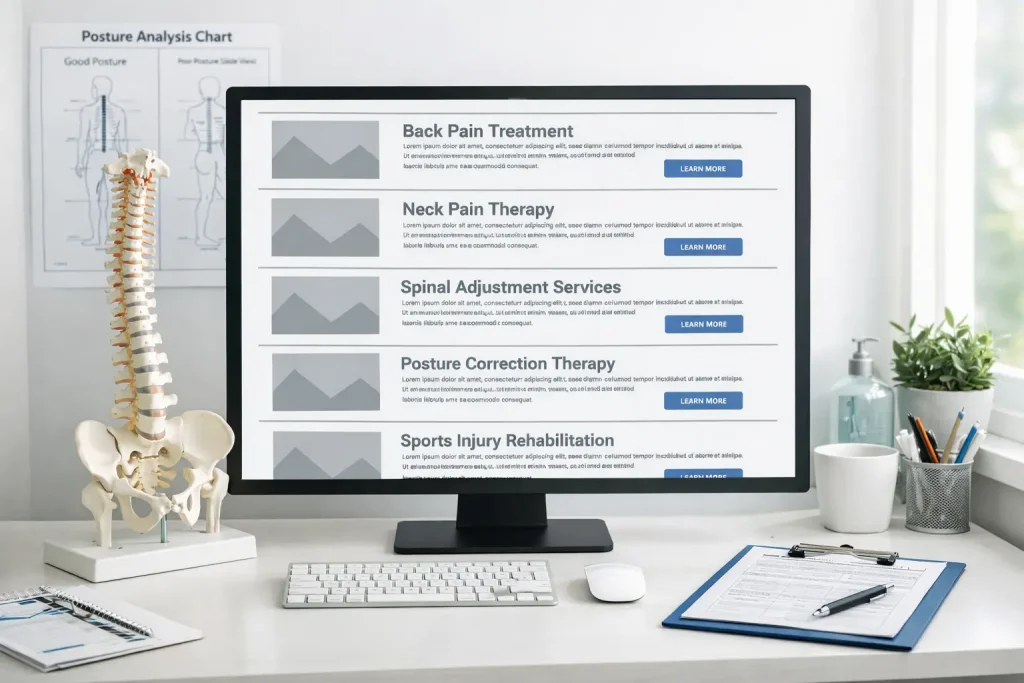
A well-structured chiropractic website typically includes dedicated pages for different treatments and conditions. These pages allow the clinic to target specific keywords and provide detailed information that helps patients understand their treatment options.
Examples of optimized treatment pages include:
- Back pain treatment
- Neck pain therapy
- Spinal adjustment services
- Posture correction therapy
- Sports injury rehabilitation
- Sciatica treatment
This approach not only improves SEO performance but also helps patients find the exact treatment they need.
Optimize Titles, Headings, and Meta Descriptions
Titles and headings are critical components of on-page SEO. They help search engines determine what a page is about and how its content is structured. Well-optimized titles also improve click-through rates because they clearly communicate the value of the page to users.
For chiropractic websites, titles and headings should include relevant treatment keywords while remaining natural and readable.
Best Practices for Chiropractic Website Meta Tags
Meta tags influence both how search engines understand your content and how users interact with your website in search results. A compelling title and description can significantly increase the number of people who click on your page.
Key meta tag optimization practices include:
- Include the primary keyword in the title
- Keep titles under 60 characters
- Write compelling meta descriptions
- Avoid duplicate meta tags across pages
- Use keywords naturally in headings
Following these best practices helps improve both search rankings and click-through rates.
Optimize Images on Chiropractic Websites
Chiropractic websites often include images showing treatment techniques, posture correction demonstrations, clinic facilities, and therapy sessions. These visuals help patients understand the treatments and build trust with your practice.
However, images must be optimized properly to ensure they support SEO rather than slowing down the website.
Image Optimization Best Practices
Search engines cannot interpret images directly. Instead, they rely on descriptive text and file information to understand what the image represents. Proper optimization ensures that images contribute positively to search rankings and website performance.
Image optimization practices include:
- Use descriptive image file names
- Add keyword-rich alt text
- Compress images for faster loading
- Use real clinic photos rather than stock images
- Add images to treatment pages
Optimized images improve both the user experience and the overall SEO performance of the website.
Why Having a Blog Section Is Important for Chiropractic SEO
A blog section allows chiropractic clinics to target informational searches that potential patients often make before seeking treatment. Many individuals research symptoms, causes of pain, and treatment options before deciding to visit a chiropractor.
By publishing educational content regularly, chiropractic websites can appear in these informational searches and attract potential patients earlier in their decision-making process.
Blog Topics Chiropractors Can Write About
Educational blog posts help clinics establish authority while providing valuable information to people researching health problems. Over time, this content can bring a steady stream of organic traffic to the website.
Examples of useful blog topics include:
- Exercises to reduce back pain
- Causes of chronic neck pain
- How chiropractic adjustments improve posture
- Tips to prevent sports injuries
- When to visit a chiropractor for back pain
This content builds trust with potential patients and increases the number of keywords your website can rank for.
Internal Linking Between Treatment Pages
Internal linking connects different pages within your website and helps search engines understand how your content is organized. It also guides visitors toward related treatments and helpful information.
For chiropractic clinics, internal linking is particularly useful because many treatments are connected. For example, someone searching for neck pain treatment may also benefit from spinal adjustment or posture correction therapy.
Examples of Internal Linking Opportunities
Strategic internal linking distributes SEO value across your website and helps visitors navigate between related services. This improves engagement while strengthening the authority of important pages.
Common internal linking opportunities include:
- Back pain treatment → posture correction therapy
- Neck pain therapy → spinal adjustment services
- Sports injury treatment → rehabilitation therapy
- Sciatica treatment → spinal alignment
These connections create a stronger website structure and improve SEO performance.
Conclusion
Search engine optimization has become an essential marketing strategy for chiropractic clinics seeking consistent patient growth. When a website is optimized correctly, it becomes much easier for potential patients to discover your treatments through search engines.
By implementing effective on page SEO for chiropractors, clinics can improve search visibility and attract individuals actively searching for pain relief and chiropractic care. Optimizing treatment pages, headings, images, and internal links helps search engines understand your content while improving the experience for website visitors.
Over time, these improvements can transform your website into a reliable source of new patient appointments and long-term growth.
FAQs About On PAge SEO for Chiropractors
What is on page SEO for chiropractors?
On-page SEO for chiropractors involves optimizing website elements such as treatment pages, headings, images, and meta tags to improve search rankings and attract more patients.
How can chiropractors rank higher on Google?
Chiropractors can improve rankings by optimizing treatment pages, targeting local keywords, improving website speed, creating helpful content, and maintaining a mobile-friendly website.
What keywords should chiropractors target for SEO?
Chiropractors should focus on treatment-based keywords such as back pain chiropractor, neck pain chiropractor near me, spinal adjustment clinic, and sports injury chiropractor.
Why should chiropractic websites create treatment pages?
Dedicated treatment pages allow chiropractic clinics to target specific keywords related to each service, increasing their chances of ranking for multiple searches.
Does blogging help chiropractors get more patients?
Yes. Blogging attracts visitors searching for health advice and pain management tips, which can eventually lead to patient appointments.
How important is local SEO for chiropractors?
Local SEO is extremely important because most patients search for chiropractors in their city or nearby areas when looking for treatment.
How long does chiropractic SEO take to show results?
SEO results typically begin appearing within three to six months, depending on competition, website quality, and the consistency of optimization efforts.