
Healthy eating doesn’t have to be complicated. Many people think preparing healthy meals takes too much time or effort, but that’s not true. With simple recipes and fresh ingredients, you can make everyday cooking both easy and nutritious.
Cooking at home gives you full control over what goes into your meals. You can cut down on sugar, salt, and unhealthy fats while adding more vegetables, lean proteins, and whole grains.
For busy families or beginners, healthy cooking might seem tricky at first. But with a few simple recipes and smart ingredient choices, anyone can enjoy balanced meals at home. In this guide, we’ll share easy, healthy recipes for breakfast, lunch, dinner, and snacks, along with practical tips to make nutritious cooking part of your daily routine.
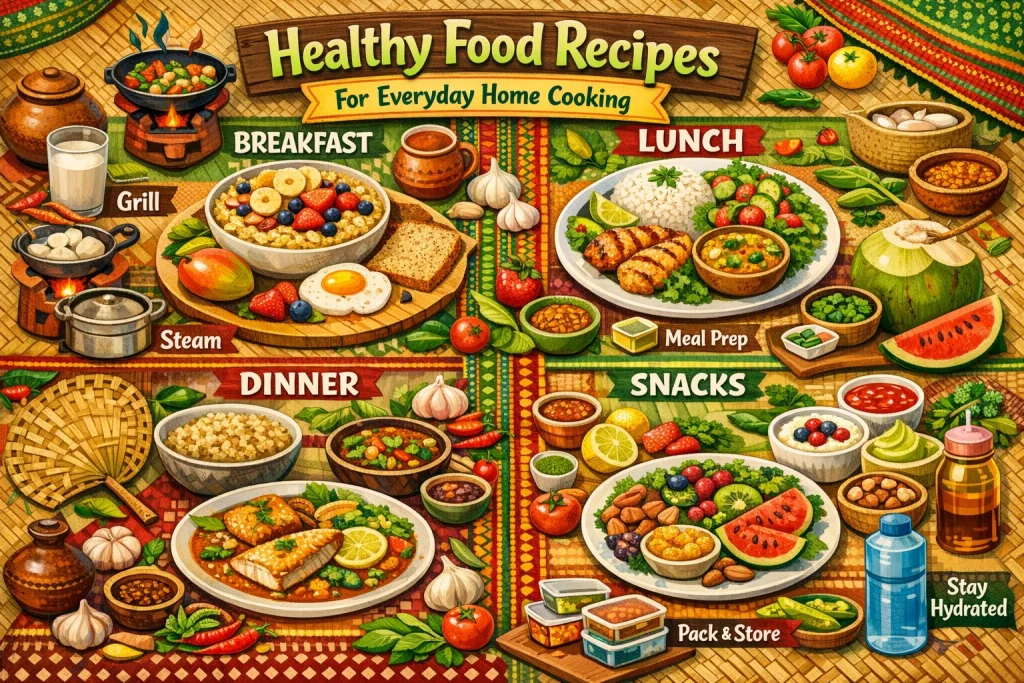
Why Healthy Home Cooking Matters
Health Benefits of Cooking at Home
Cooking at home gives you full control over what goes into your meals. Using fresh vegetables, lean proteins, and whole grains makes your diet more balanced and nutritious. Home-cooked meals usually have fewer preservatives and artificial ingredients, which can improve digestion, boost energy, and support overall health.
Budget and Lifestyle Benefits
Preparing meals at home can save you a lot of money compared to takeout or restaurant food. You also control portion sizes, which helps prevent overeating. Beyond money, cooking at home encourages healthier habits. Families who eat together often develop better relationships with food and make smarter nutrition choices.
Essential Nutrients in Healthy Meals
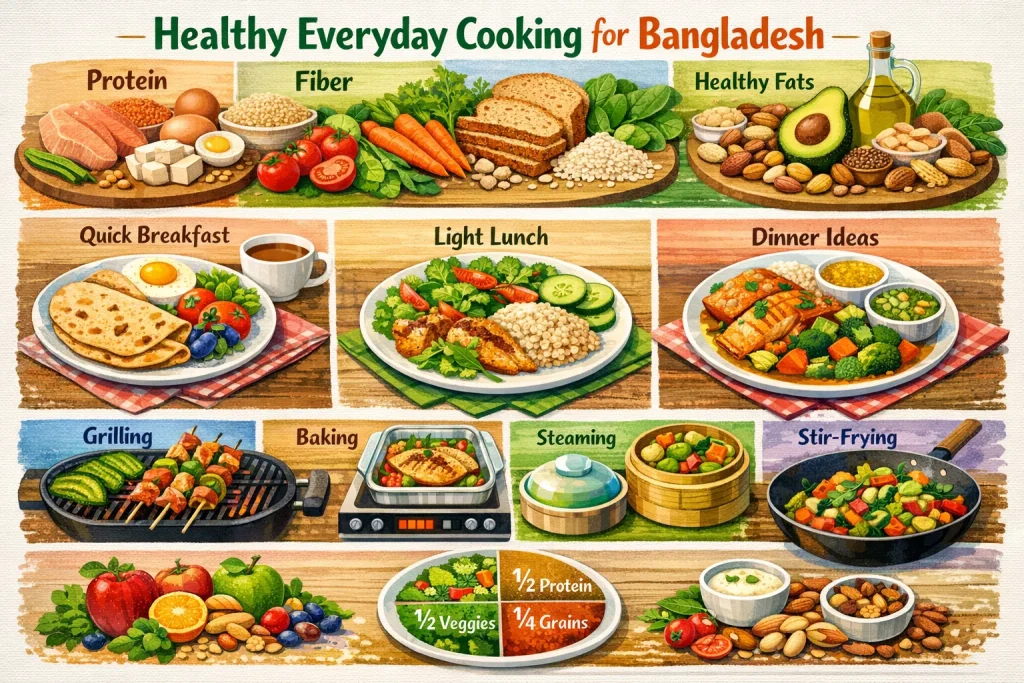
A healthy meal typically includes three key components:
- Protein: Builds muscle and provides lasting energy
- Fiber: Aids digestion and keeps you full longer
- Healthy fats: Supports brain and heart health
Adding colorful vegetables and fruits not only makes meals look appealing but also provides essential vitamins and minerals your body needs.
Essential Ingredients for Healthy Everyday Recipes
Healthy cooking starts with having the right ingredients on hand. When your kitchen is stocked with fresh and nutritious foods, preparing balanced meals becomes much easier and more enjoyable. Here are the essentials to include in your daily cooking.
Fresh Vegetables and Fruits
Vegetables and fruits are the foundation of healthy meals. They are packed with vitamins, minerals, and antioxidants that support overall health.
Some easy choices for everyday cooking include:
- Spinach and other leafy greens
- Carrots and broccoli
- Tomatoes and cucumbers
- Apples, bananas, and berries
Buying seasonal produce is not only fresher but often more affordable.
Healthy Protein Sources
Protein keeps you full, maintains muscle, and helps your body function properly. Including a variety of protein sources ensures balanced nutrition.
Some healthy options are:
- Chicken breast
- Fish like salmon or tuna
- Eggs
- Beans and lentils
- Tofu and chickpeas
Plant-based proteins like beans and tofu are excellent additions to any meal.
Whole Grains and Complex Carbohydrates
Whole grains provide lasting energy and fiber, which help regulate blood sugar and support digestion.
Some popular choices include:
- Brown rice
- Quinoa
- Oats
- Whole wheat bread or pasta
These grains are versatile and work in breakfasts, lunches, and dinners alike.
Healthy Fats
Healthy fats are important for heart and brain health. Use them in moderation to enhance flavor and nutrition.
Some great options are:
- Olive oil
- Avocados
- Almonds and walnuts
- Chia seeds or flaxseeds
Pantry Staples for Everyday Cooking
Having a few staple ingredients makes cooking simple and flavorful without extra calories.
Keep these on hand:
- Garlic and onions
- Fresh herbs and spices
- Low-sodium sauces
- Lemon juice or vinegar
These basics can transform simple meals into tasty, healthy dishes.
Healthy Breakfast Recipes to Start Your Day
A good breakfast sets the tone for the day. Eating something healthy in the morning gives you energy, improves focus, and keeps hunger away until lunch. Including protein, fiber, and whole grains in your breakfast helps maintain balanced blood sugar levels and keeps you full longer—perfect for students, office workers, and busy families in Bangladesh.
Quick and Nutritious Breakfast Ideas
- Greek yogurt with seasonal fruits and nuts – Use bananas, papaya, or mango for a local twist.
- Whole grain toast with avocado or egg – Add a sprinkle of black pepper for taste.
- Oatmeal with berries or jackfruit – Cook oats with milk and top with fresh fruits.
Protein-Packed Breakfast Recipes
- Vegetable omelet with onions, tomatoes, and spinach – Serve with whole wheat paratha for extra energy.
- Egg and spinach breakfast wrap – A quick option for school-going kids or office workers.
- Cottage cheese with fruits – Easy, nutritious, and filling.
Smoothies for Busy Mornings
- Spinach-banana smoothie – Blend with milk or yogurt for a quick drink.
- Berry-yogurt smoothie – Add honey for natural sweetness.
- Peanut butter-banana smoothie – Great for those who need an energy boost.
Healthy Lunch Recipes for Balanced Midday Meals
Lunch is the main meal for many Bangladeshis, but it doesn’t need to be heavy or oily. A balanced lunch with lean proteins, vegetables, and whole grains will keep you energetic throughout the afternoon.
Simple and Light Lunch Options
- Grilled chicken salad – Use cucumber, tomatoes, and carrots for freshness.
- Quinoa or brown rice vegetable bowl – Add seasonal veggies like beans, pumpkin, or bottle gourd.
- Tuna and avocado salad – Perfect for office lunches or light meals at home.
Healthy Wraps and Sandwiches
- Whole wheat veggie wrap – Stuff with fresh greens, tomato, cucumber, and hummus.
- Turkey and avocado sandwich – Swap turkey with grilled chicken for a local option.
- Hummus and roasted vegetable wrap – Simple, filling, and easy to carry.
Meal Prep Friendly Lunch Recipes
- Chicken and brown rice bowl – Cook in bulk for 2–3 days and refrigerate.
- Lentil soup (Dal) – Serve with a small portion of brown rice for fiber and protein.
- Chickpea salad with onions, tomato, and lemon – A quick, no-cook option.
Healthy Dinner Recipes for Everyday Family Meals
Dinner is a time for families to gather. Healthy dinners should include protein, vegetables, and whole grains. Light, simple dinners are better than heavy, oily meals, which are common in Bangladesh.
Quick Healthy Dinner Ideas
- Grilled salmon with vegetables – Swap salmon with local fish like rui or katla.
- Chicken stir-fry with broccoli – Use local vegetables like cabbage or capsicum if broccoli isn’t available.
- Tofu vegetable stir-fry – Easy, vegetarian, and healthy.
Comforting Yet Healthy Meals
- Baked chicken with sweet potatoes – A simple one-dish meal for busy evenings.
- Whole wheat pasta with tomato sauce and veggies – Add capsicum, carrot, and spinach.
- Homemade vegetable soup – Use seasonal vegetables like bottle gourd, pumpkin, and carrots.
One-Pan or One-Pot Healthy Recipes
- Sheet pan roasted chicken and vegetables – Minimal cleanup and perfect for small families.
- One-pot quinoa or brown rice with vegetables – Quick, filling, and healthy.
- Healthy chicken stew with carrots and potatoes – Can be served with brown rice or whole wheat bread.
Healthy Snack Recipes Between Meals
Snacks are important for keeping energy levels stable. Avoid oily, fried snacks common in Bangladesh and choose fresh, light, and nutritious options.
Quick Healthy Snacks
- Apple slices with peanut butter – A quick, filling snack.
- Mixed nuts and seeds – Almonds, walnuts, sunflower seeds.
- Greek yogurt – Add seasonal fruits for taste.
Homemade Healthy Snack Recipes
- Oat and date energy balls – Sweet, nutritious, and kid-friendly.
- Roasted chickpeas – Crunchy and high in protein.
- Homemade granola bars – Replace sugar with honey or jaggery for local flavor.
Low-Calorie Snack Ideas
- Fresh fruit bowls – Mango, papaya, guava, or banana.
- Vegetable sticks with hummus – Carrot, cucumber, or capsicum.
- Air-popped popcorn – Light and great for movie nights.
Simple Cooking Tips for Healthy Everyday Meals
Cooking healthy in Bangladesh doesn’t have to be time-consuming. Using simple techniques, local ingredients, and a few smart habits can make daily meals nutritious and tasty.
Smart Cooking Methods
- Grilling or baking – Less oil, more flavor.
- Steaming – Perfect for vegetables and fish.
- Light stir-frying – Use minimal oil.
Portion Control Tips
- Use smaller plates to avoid overeating.
- Fill half the plate with vegetables, one-quarter with protein, and one-quarter with rice or grains.
Healthy Flavor Boosters
- Fresh herbs like coriander and mint.
- Lemon juice for tangy flavor.
- Garlic, ginger, and mild local spices.
Common Mistakes to Avoid in Healthy Cooking
Even healthy cooking can go wrong if you’re not careful.
- Too many packaged foods: Instant noodles, sauces, and snacks have excess salt and preservatives.
- Skipping balanced meals: Include protein, vegetables, and healthy carbs, not just rice or curry.
- Overcooking vegetables: Steam or stir-fry lightly to keep nutrients and flavor.
- Ignoring portion sizes: Even healthy food can lead to overeating if portions are too big.
Avoid these mistakes to keep your meals nutritious and tasty.
Summery
Healthy food recipes for everyday home cooking do not require complicated techniques or expensive ingredients. Simple meals with fresh vegetables, lean proteins, and whole grains can provide balanced nutrition for individuals and families.
By planning meals, keeping healthy ingredients in your kitchen, and using simple cooking methods, you can prepare nutritious dishes every day. Over time, these habits create a healthier lifestyle and improve overall well-being.
Start with a few easy recipes and build your routine gradually. Small changes in everyday cooking can make a big difference in long-term health.
Frequently Asked Questions (FAQs)
What are the easiest healthy recipes for beginners?
If you’re just starting, simple recipes are best. Try vegetable omelets, grilled chicken salads, oatmeal bowls, or fruit smoothies. These use common ingredients found in most Bangladeshi kitchens and don’t take much time to prepare.
How can I cook healthy meals quickly every day?
Cooking healthy doesn’t have to be slow. Chop vegetables in advance, keep ready-to-use grains like brown rice or oats, and cook larger portions to save for lunch or dinner. Simple one-pot dishes also save time and effort.
What ingredients should I always keep for healthy cooking?
Keep your kitchen stocked with fresh vegetables, seasonal fruits, eggs, lentils, chicken, fish, whole grains, and healthy oils like mustard or olive oil. A few herbs and spices—like garlic, turmeric, and coriander—make dishes flavorful without extra fat or salt.
Are homemade meals healthier than restaurant food?
Yes! Homemade meals are usually fresher, contain less oil, sugar, and preservatives, and let you control portion sizes. Eating at home more often is better for your family’s health and your wallet too.
How can I make healthy meals that kids enjoy?
Kids often prefer colorful and fun meals. Try adding fresh vegetables in pasta, wraps, or fried rice. Smoothies with bananas, mango, or berries are a hit, and small healthy tweaks like using less oil or sugar won’t affect taste much.

