
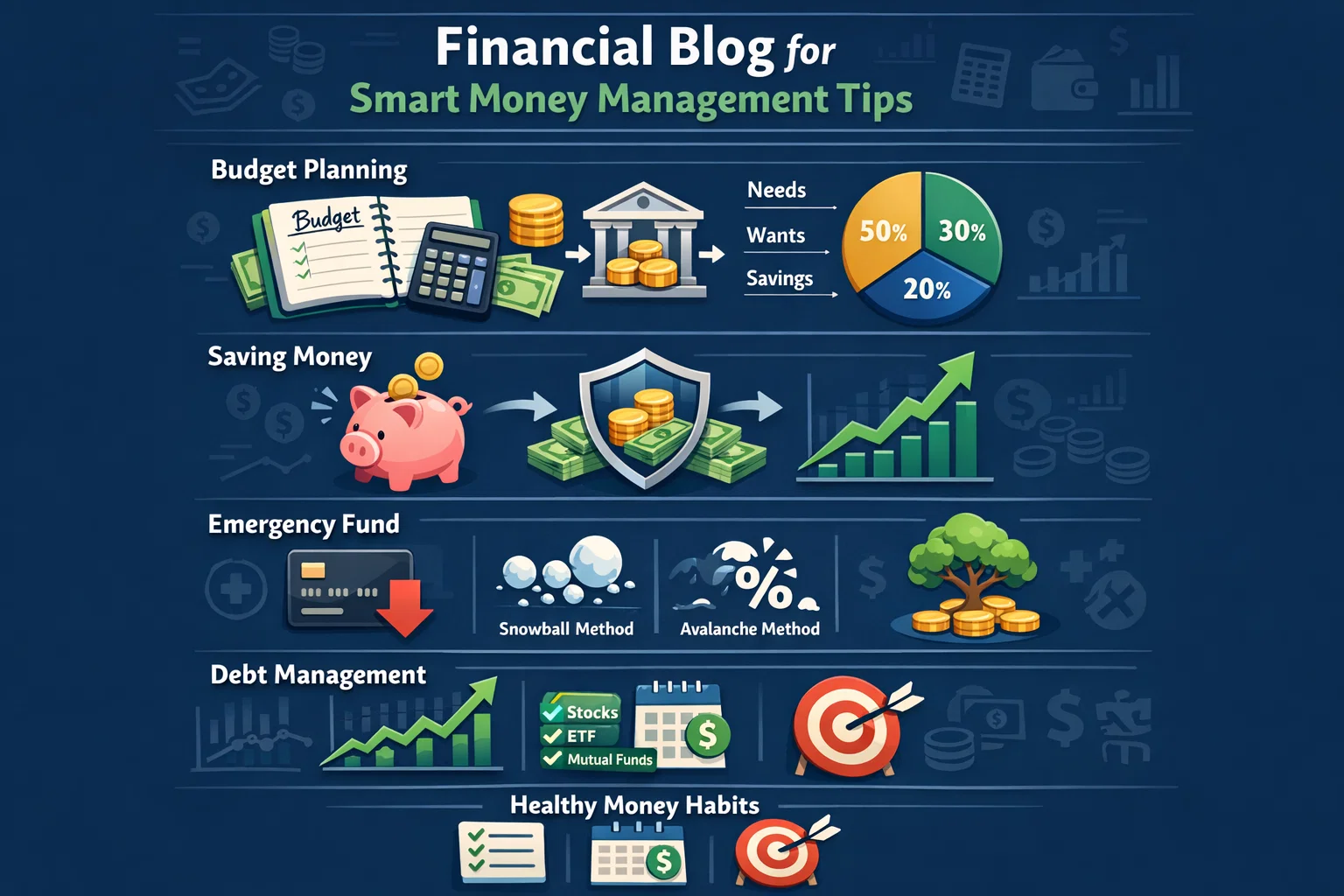
Financial Blog for Smart Money Management Tips
Money affects almost every part of our daily life. Still, many people struggle with budgeting, saving, or handling debt properly. In this Financial Blog for Smart Money Management, we focus on practical steps that make money easier to control. The reality is clear. Earning more money does not automatically make someone wealthy. Making wise financial choices does.
This guide explains how to control spending, grow savings, manage debt wisely, and start investing with confidence. You do not need complex strategies. You need clarity, discipline, and consistent habits.
When you manage your personal finance properly, you reduce stress and build long-term financial security. Let’s explore practical steps you can start today.
Why Smart Money Management Matters
Smart financial planning gives direction to your income. Without a plan, money disappears quickly. With structure, every dollar works for you.
Financial control improves daily life in several ways. It helps you avoid late payments and penalties. It reduces reliance on high-interest credit cards. It builds a strong emergency fund. Most importantly, it creates peace of mind.
Financial Stability and Confidence
When you know where your money goes, you feel more confident. You can make informed decisions about housing, education, travel, and retirement. Financial stability allows you to plan for the future instead of reacting to problems.
Long-Term Wealth Building
Wealth grows through consistent saving and smart investing. Even small monthly contributions can grow significantly through compound interest. The earlier you start, the greater the impact.

Creating a Practical Monthly Budget
A budget is the foundation of smart money management. It is not about restriction. It is about awareness and control.
Start by calculating your total monthly income. Include salary, business income, freelance work, or side earnings. Use realistic numbers. Overestimating income creates an imbalance.
Next, list your fixed expenses. These are costs that stay mostly the same every month, such as rent, loan payments, insurance, and utilities. Then track variable expenses like groceries, dining out, transport, and entertainment.
Tracking expenses for two to three months reveals spending patterns. Many people discover hidden leaks during this stage.
Using the 50/30/20 Rule
The 50/30/20 rule simplifies budgeting:
- 50% for essential needs
- 30% for lifestyle wants
- 20% for savings and debt repayment
If 20% feels high, begin with 10%. Increase gradually as income grows. The goal is steady improvement, not perfection.
Building a Strong Emergency Fund
Unexpected expenses can disrupt financial plans. Medical emergencies, job loss, or urgent repairs often lead to debt when savings are low.
An emergency fund acts as a financial cushion. Experts recommend saving three to six months of living expenses. If that feels overwhelming, start with one month. Small milestones build momentum.
Keep emergency savings in a separate high-yield savings account. Avoid investing this money in risky assets. Liquidity and safety are more important than high returns.
Smart Saving Strategies That Deliver Results
Saving money requires intention. It does not require extreme sacrifice.
Automating savings is one of the most effective strategies. When money moves to savings automatically, you reduce the temptation to spend. Paying yourself first creates strong discipline.
Reducing unnecessary expenses also helps. Review subscriptions regularly. Compare prices before major purchases. Cook more meals at home. These small adjustments create significant yearly savings.
Practical Saving Habits
You can strengthen your savings with simple habits:
- Wait 24 hours before non-essential purchases
- Use discount codes and cashback offers
- Track daily spending for awareness
- Increase savings when income rises
Consistency matters more than amount.

Debt Management Made Easier

Debt becomes dangerous when interest accumulates faster than payments. Managing debt strategically protects long-term wealth.
Start by listing all debts, including balances, interest rates, and minimum payments. A clear understanding helps you choose the right strategy.
Snowball vs Avalanche Method
Two popular repayment methods exist:
- Snowball method: Pay the smallest debts first to build motivation
- Avalanche method: Pay the highest-interest debts first to save money
Both methods work. Choose the one that keeps you consistent.
Strengthening Your Credit Profile
A good credit score improves loan approval chances and lowers interest rates. Maintain strong credit habits by:
- Paying bills before due dates
- Keeping credit usage below 30%
- Avoiding frequent loan applications
- Monitoring your credit report
Good credit is a powerful financial asset.
Beginner Investment Basics
Saving protects money from emergencies. Investing helps money grow over time.
Many beginners feel intimidated by investing. However, understanding basic options reduces fear. Common investment choices include stocks, bonds, mutual funds, and ETFs. Each offers different risk and return levels.
Diversification reduces risk. Spreading investments across industries and asset types protects against major losses.
Long-Term Investment Mindset
Market prices fluctuate daily. Emotional reactions often lead to losses. Long-term investors focus on steady growth rather than short-term swings.
Start investing only after building an emergency fund and clearing high-interest debt. Patience and consistency drive success in financial markets.
Developing Strong Money Habits
Healthy financial habits create sustainable growth. Without discipline, even high income fails to create wealth.
Setting clear financial goals improves focus. Goals should be specific and measurable. For example, saving $10,000 in one year provides clarity and direction.
Review your finances monthly. Check progress toward savings targets. Adjust budgets when needed. Regular review prevents small mistakes from becoming large problems.
Avoid lifestyle inflation when income increases. Instead of upgrading every expense, allocate extra income toward savings and investments.

Common Financial Mistakes to Avoid

Many financial problems result from repeated habits. Avoid these common mistakes:
- Living without a written budget
- Ignoring emergency savings
- Relying heavily on a credit card
- Delaying investment decisions
- Failing to plan for retirement
Recognizing these risks early strengthens financial security.
Key Takeaways
Smart money management depends on consistent action. Remember these core principles:
- Create and follow a monthly budget
- Build a 3–6 month emergency fund
- Automate savings regularly
- Eliminate high-interest debt strategically
- Start investing with a long-term mindset
- Review financial goals monthly
Final Thoughts
Smart financial success does not happen overnight. It grows from small, consistent actions. This Financial Blog for Smart Money Management Tips highlights the importance of budgeting wisely, saving regularly, managing debt carefully, and investing with patience.
When you build strong money habits and review your goals often, you create lasting financial stability. Focus on progress, not perfection. Every smart decision today strengthens your future.
Start applying these practical strategies now, and take confident steps toward financial freedom and long-term wealth growth.
Financial Blog Writing Packages
4 Blog Post / Month
$85/month
- 1200 Words/Article
- Blog Image Include
- Well Researched Article
- Grammar Error Check
- Punctuation Error Check
- 100% Plagiarism-Free
- SEO Optimized Writing
- Industry Expert Writer
- Proofreading
- 1 Revision
8 Blog Posts / Month
$165/month
- 1200 Words/Article
- Blog Image Include
- Well Researched Article
- Grammar Error Check
- Punctuation Error Check
- 100% Plagiarism-Free
- SEO Optimized Writing
- Industry Expert Writer
- Proofreading
- 1 Revision
12 Blog Posts / Month
$249/month
- 1200 Words/Article
- Blog Image Include
- Well Researched Article
- Grammar Error Check
- Punctuation Error Check
- 100% Plagiarism-Free
- SEO Optimized Writing
- Industry Expert Writer
- Proofreading
- 1 Revision
16 Blog Posts / Month
$299/month
- 1200 Words/Article
- Blog Image Include
- Well Researched Article
- Grammar Error Check
- Punctuation Error Check
- 100% Plagiarism-Free
- SEO Optimized Writing
- Industry Expert Writer
- Proofreading
- 1 Revision
FAQ for Financial Blog
The first step is creating a realistic monthly budget and tracking expenses.
Aim for at least 20% of income if possible. Start smaller if needed and grow gradually.
Begin investing after building an emergency fund and paying off high-interest debt.
Financial planning provides direction, reduces stress, and supports long-term wealth building.